
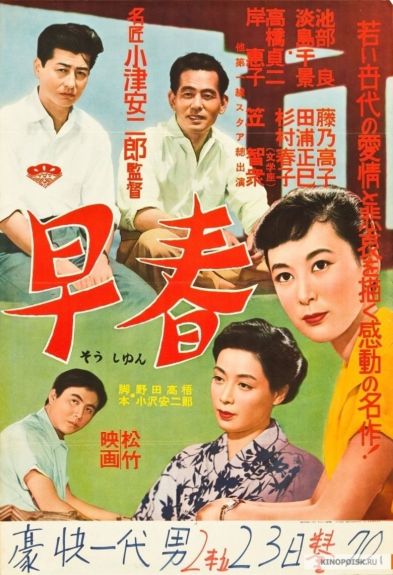
During the recent heatwave in the UK, when it was too hot to go out for much of the day, I did one sensible thing at least and turned to an Ozu film on BFI Player that I hadn’t seen before. There is something about Ozu’s filmmaking that is at once soothing and at the same time stimulating. I feel better watching his films but I’m also energised to think about cinema and about Japanese history and culture. Early Spring turns out to be one of the best Ozu films, marking the shift into the final phase of the director’s career. Between 1956 and his death from cancer in 1963 eight Ozu features were released including some of the most critically acclaimed of his long career. What typifies these final films and in what way was it a shift in Ozu’s approach? There was a three year gap between the release of Tokyo Story and Early Spring and one possibility must be that Ozu took a step back from his work to consider the critical and commercial success of Tokyo Story as the film which would make him known as a filmmaker around the world. I don’t know what Ozu thought about his work in this period but things were certainly happening at Shochiku, the leading Japanese studio where he spent most of his working life. In David Bordwell’s book Ozu and the Poetics of Cinema (1988) we learn that though the Japanese film industry was buoyant and returning to its No 1 status in international terms, Shochiku was seeing its profits fall because of the rise of new types of films aimed at a younger audience. The types of films Ozu made at the Ofuna studio in Kamakura were becoming less viable and the studio wanted to see Ozu moving towards including younger characters in his films while still remaining within the category of the shomin-geki – films about the lower middle-class or ‘ordinary people’. This change is apparent in Early Spring with its focus on a relatively large group of characters in their late twenties/early thirties based in the Kamata district of Tokyo. The main parts in the film are played by actors who were better known by the contemporary audience than Ozu’s regular players. Ryu Chishu and Sugimura Haruko from the ‘Ozu stock company’ have relatively small, but in Ryu Chishu’s case important, roles.
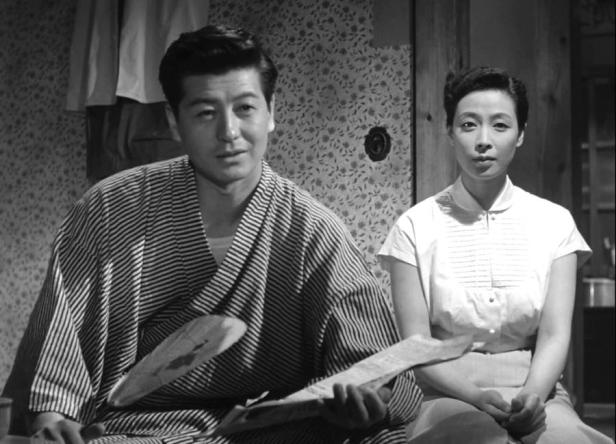
The major change in terms of themes concerns how the ‘economic miracle’ of 1950s Japan is effecting relatively young adults. In one sense the country is modernising after the retrenchment of the Occupation period but this does not yet mean that everyone is benefitting from the resurgence of industry and in particular we are presented with groups of ‘old soldiers’ in their early thirties who are struggling financially despite being in work. Where Ozu had previously been dealing with ‘inter-generational conflict’ in which parents meddled in the marriage plans of their children, here the focus is mainly on the younger adults. This is also Ozu’s longest film (145 mins) with the most scenes (43). Partly this is explained by the number of characters and a narrative structure which allows the focus on a group but then is allowed to follow narrative threads associated with different group members.
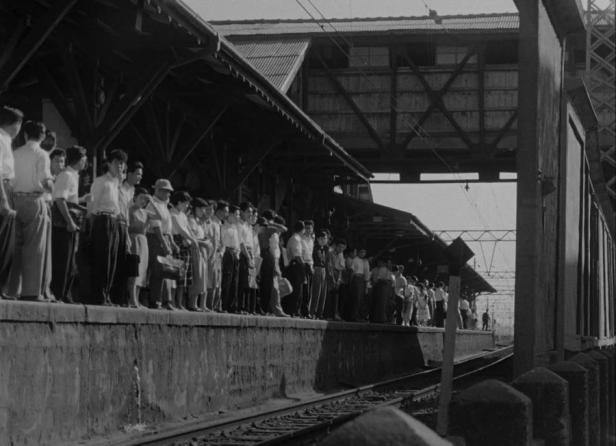
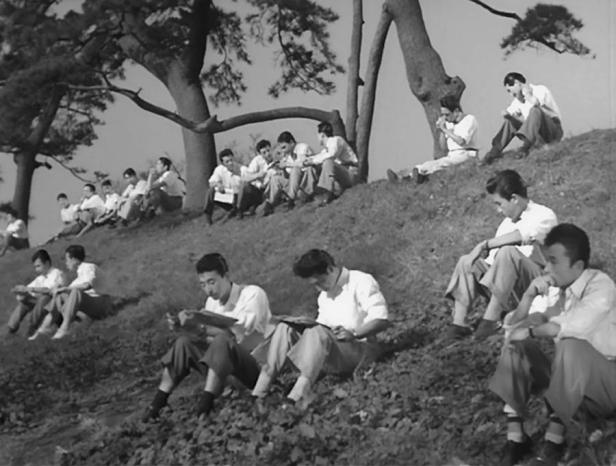
At the centre of the narrative is a marriage – one that is heading for choppy waters. Sugiyama Shoji (Ikebe Ryo) and his wife Masako (Awashima Chikage) have lost their young son and when the boy’s death anniversary occurs Shoji misses it. Shoji is a ‘salaryman’ working at a desk in the Tokyo office of a large fire-brick manufacturer. Masako doesn’t work but she needs to borrow money from her mother who runs a small bar. The office workers play mahjong in their leisure time and we see them eating noodles and going for a hike on the weekend. Though mostly men, there are a few young women and Shoji appears to have developed a relationship with one of the typists known by her nickname of ‘Goldfish’.
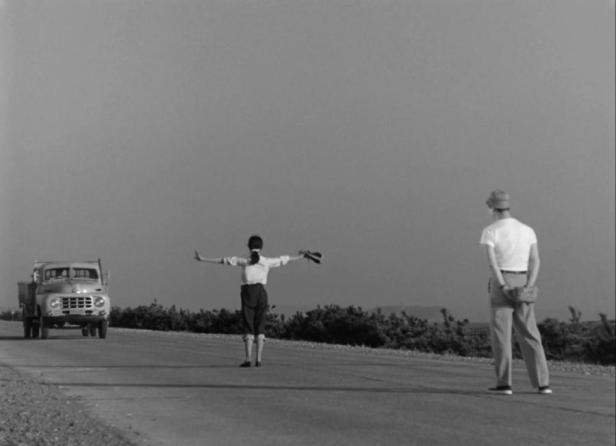
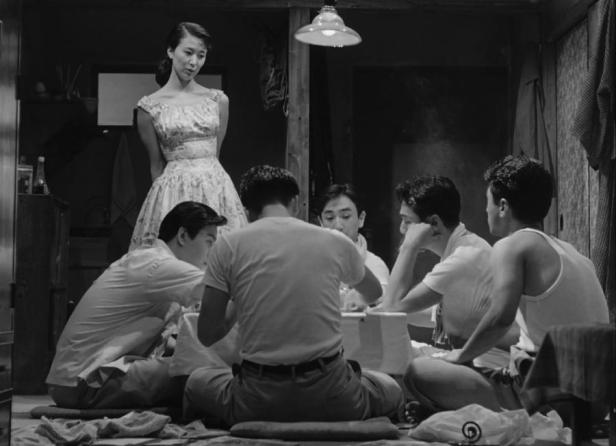
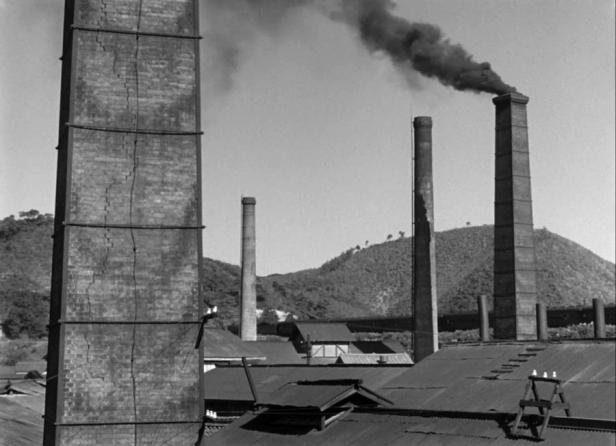
Because there are so many characters and so many scenes, this film does seem different. There are more different camera set-ups and a wider variety of ‘pillow shots’ to mar transitions and Ozu fans will be pleased to know there are plenty of train shots. But most situations are familiar and have appeared in earlier films. It’s the range of locations that is important. Shoji is informed that he is about to be transferred and sent for perhaps three or four years to another office job, this time in the mountains. Here he is closer to the manufacturing process. The smoking chimneys contrast with the views of the mountains. There is no real sense of what the office workers in the company actually do (apart from process orders), but the ‘fire-brick’ manufacturer is clearly part of the economy re-equipping Japanese industry and helping to start new businesses.
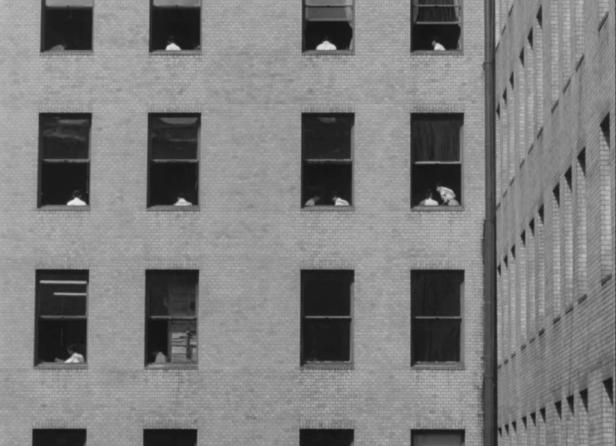
The title of the film is worth exploring. At this point Ozu’s films often used the four seasons which seem so important in Japanese culture. ‘Late Spring’ is one of the best-known Ozu films from 1949 and Early Spring shares some imagery and in particular the office/railway/country excursions. ‘Early Summer‘ (1951) and ‘Late Autumn’ (1960) are other examples. But these often seem to be English titles with the original Japanese title having a different meaning. The last two films from Ozu, ‘The End of Summer’ (1961) and ‘An Autumn Afternoon‘ (1962) do have more specific English meanings but again may not convey the Japanese meaning. Early Spring seemingly does not refer to the weather since much of the action takes place when it is very hot, both in Tokyo and in the mountains, suggesting Summer rather than Spring. Bordwell offers two possible reasons for the title. One is a reference to the title of a book of essays published in 1942 which perhaps links to the scenes of re-unions of old soldiers – but this seems problematic for the non-combatants in 1942. More plausible perhaps is the sense of the younger characters being in the ‘early spring’ of their lives, something which Mr Onodera (Ryu Chishu, playing older than his real age) suggests as he and Shoji watch a rowing crew on the water. Onodera is referring to one of the older men they both know who was once a rower. Shoji should be enjoying the ‘early summer’ of his life and Mr Onodera is trying to warn Shoji about losing his wife and the regret he will have later in life.
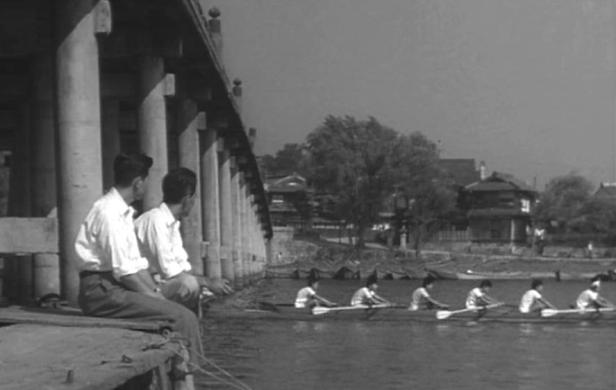
David Bordwell makes the observation that the interaction of all the characters refers to both the nature of the salary workers life and the state of marriage in this society. Salary work is secure while it lasts but the company is a cold companion, even though the attraction of the salary makes some of the young workers loyal. But a long marriage makes workers more realistic. As one character says “babies arrive faster than promotions” but since there are so many widows and widowers (e.g. Masako’s mother and Mr Onodera himself) there is plenty of evidence of how lonely later life can be. Bordwell argues that this film sees Ozu creating social satire in subtle ways. Previous films have seen a resolution in new marriages but in this film the question is whether the transfer to the mountains will change Shoji and whether Masako will join him and rekindle the marriage.
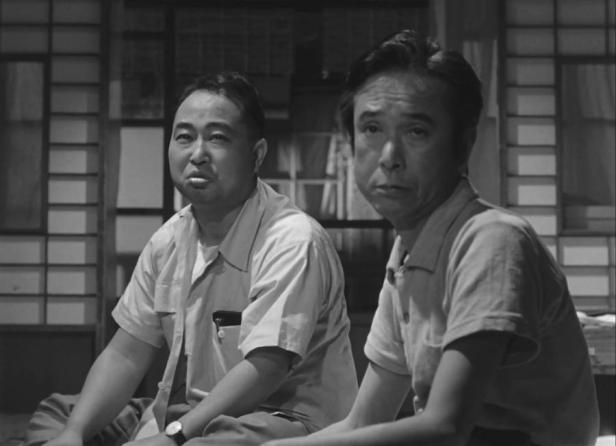
I enjoyed Early Spring very much. Partly, I think, I respond to the greater number of characters and the different locations. I’ve always been a sucker for more realism and sociological detail. There isn’t a strong narrative drive, but I never found the film to be a drag and I do feel it tells me something of life in Japan in the mid-1950s. I think it’s one of Ozu’s best.

