
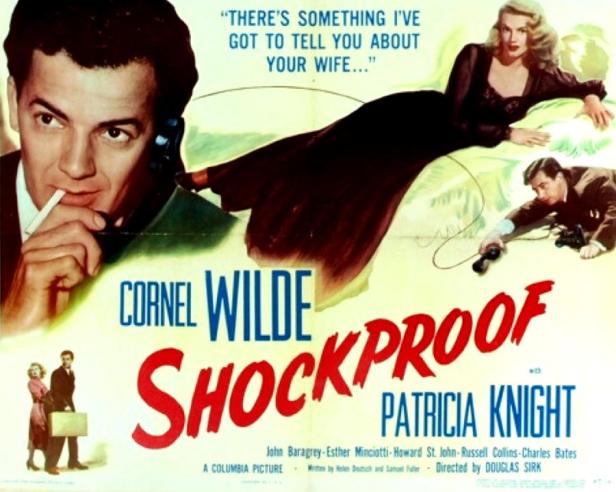
Nick Lacey posted a short review of this Sirk film back in 2018. I have no disagreements with Nick’s take but I’ve been looking again at the film because of its origins in a script by Sam Fuller. What emerges is another indictment of studio bosses such as Harry Cohn at Columbia. Sirk had entered into a contract with Columbia when he was struggling to earn a living in California in 1942. As he remarked to Jon Halliday (Sirk on Sirk, 1971), this was one of the notorious seven-year contracts and paid him, as a writer, $150 a week. Sirk did work on three scripts for Columbia in the first year or two but none of them made it into production. He then worked on independent productions during the next five years and it isn’t clear whether he was still under contract at Columbia. But finally he got a directorial job at Columbia in early 1948 making Slightly French with Dorothy Lamour and Don Ameche. This was followed by Shockproof which he shot in June and July 1948.

The script for Shockproof was based on a Sam Fuller script originally titled The Lovers. Sirk was always interested in titles and he felt the Fuller script was “gutty” (did he mean ‘gutsy’?). He liked the title which was simple and descriptive and he felt the script would make a good movie. But then Cohn stepped in and hired Helen Deutsch to change the ending of the film. He also changed the title to ‘Shockproof’ which seems fairly meaningless to me. Deutsch, as Nick points out in his post, was a writer on National Velvet (1944) the film that launched the career of Elizabeth Taylor. However, looking at her credits, she seems to have worked on quite a disparate range of films from comedies, through romance to spy and adventure films so I’m not sure it is easy to distinguish what in the script remained of Fuller’s original story and what Deutsch actually re-wrote. Fuller’s script was called The Lovers after all and perhaps it was just the ending that was changed? Fuller himself was not averse to romance melodrama (see his later picture The Crimson Kimono, 1959). Perhaps I’d better outline the plot.
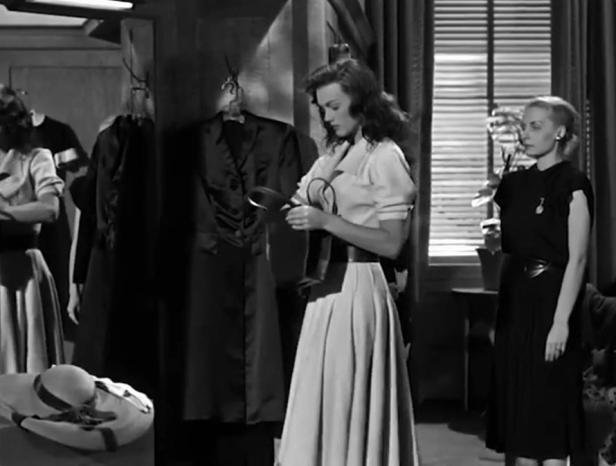
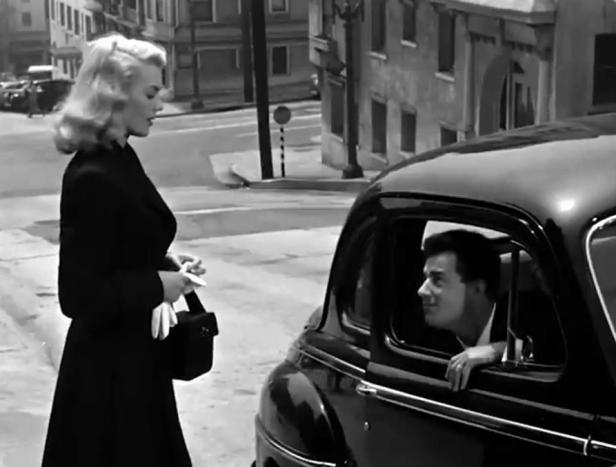
The film starts with quite a striking opening in which a young woman (played by Patricia Knight) undergoes one of those Hollywood ‘transformations’, from a drably dressed working girl to a smart and fashionable ‘girl about town’. It turns out that the woman is Jenny, visiting her parole officer after release from prison where she was serving a sentence for murder. Her parole officer is Griffin Marat (Cornel Wilde) who proceeds to read her a long list of strict rules for parolees. He’s both puzzled by her transformation and clearly attracted to her. (Knight and Wilde were married at the time.) We soon learn that there is a smooth gambler waiting for Jenny’s release and Griff tells her she must not meet him. This triangular set-up involving Jenny, Griff and the gambler Harry Wesson (John Baragrey) will underpin the rest of the narrative. Griff decides to take the dangerous step of hiring Jenny to act as a companion to his blind mother to keep her away from Wesson. Jenny is effectively on ‘life parole’ and there are two specific aspects of her parole which will govern the plot development. She is not allowed to leave the city unless a transfer is approved. However, she can travel if accompanied by her parole officer. If either of these conditions are ignored Jenny will be back in gaol. I’m reminded of the observation by Chekhov that once a gun is introduced in a narrative, it must be used. We know to expect Jenny will be ‘away’ at some point.
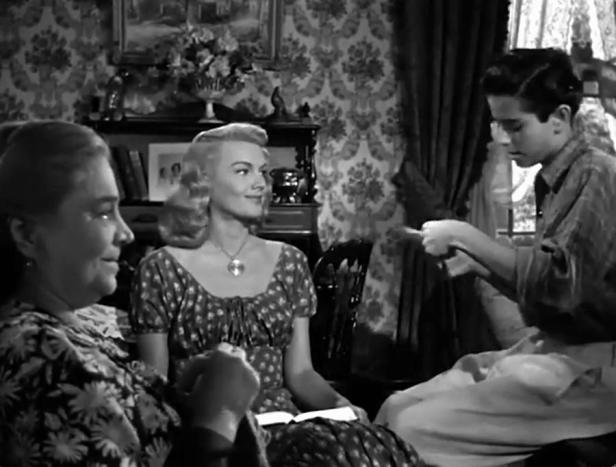
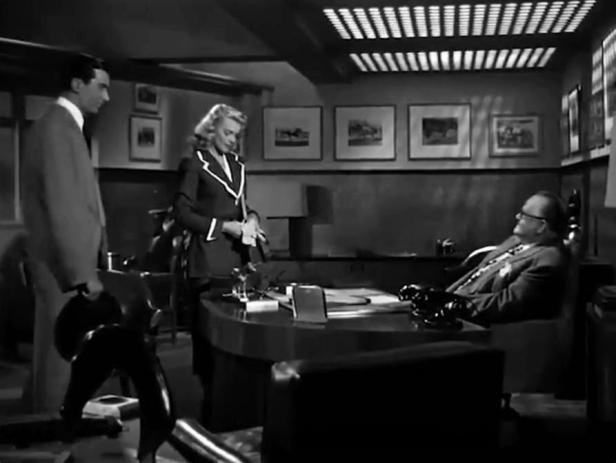
Given Fuller’s title for his story we can be sure that Jenny and Griff are going to become involved in a relationship. The burning question will be – what kind of relationship? We can reasonably ponder whether Fuller was investing in a noir narrative. Is Jenny a femme fatale, luring Griff into a trap? The change from brunette to blonde (remarked upon twice by different characters) could be a hint. Griff stands to lose everything by falling for Jenny, though he might argue that he was attempting to keep her out of the clutches of Wesson. I was a little worried by Griff when he took Jenny to a movie and behaved more like a teenage boy than a man in his thirties. Something of that behaviour might be justified by the plotting – Griff is a man still living at home with his mother and ‘kid brother’ and he doesn’t seem to have too much experience with young women (outside of his job). The age difference between Griff and his brother must be around twenty years which is possible but unusual. Cornel Wilde seems to have been one of those actors who had had been successful for a period as a leading man and had been Oscar-nominated but had fallen out with his studio (20th Century Fox) and found himself in lower budget films at Columbia.
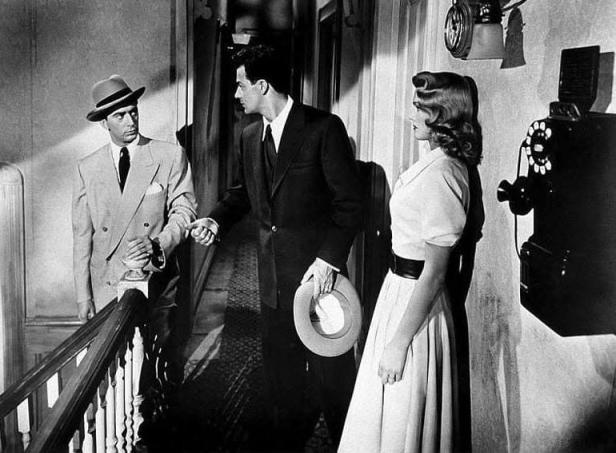
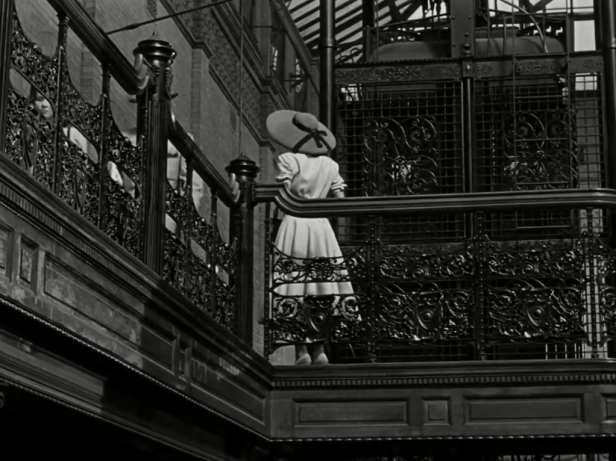
Patricia Knight does well in her role of the possible femme fatale keeping us guessing until relatively late into the narrative as to whether she really loves Griff or is simply preparing to use him in her escape plan. Neither Wilde or Knight can save the picture in the final sequences and partly that is because the genre intentions become somewhat confused. Wesson, the villain, plays a rather passive role in the dénouement. Instead the drama depends on ‘the lovers’ themselves. The last section of the narrative does still feel like a Fuller story, partly because of an influence of tabloid journalism. Jenny is a very attractive woman and Griff is an honest young man seen as a possible candidate for public office. But the ending of the narrative is abrupt and the film is wound up in 79 minutes. Some audiences might have felt short-changed and Sirk himself thought the good work he had done on the rest of the film was negated by the poor ending. At this point in his American career Sirk had proven that he could make Hollywood genre pictures and that a more sensitive or at least better managed studio might allow him to develop his work. On Shockproof he worked well with cinematographer Charles Lawton Jr. who had worked with Orson Welles on The Lady From Shanghai in 1947. Lawton worked on both location shoots and some detailed studio sets. The parole office at the beginning using the Bradbury building in Los Angeles and the set of the Marat household in Bunker Hill feel quite ‘Sirkian’. Intriguingly towards the end of the film, the setting switches to the South California oilfields. The workers’ shacks and the derricks in the background allow the development of a particular mise en scène which will later re-appear in a different context in Written on the Wind (Sirk 1956).
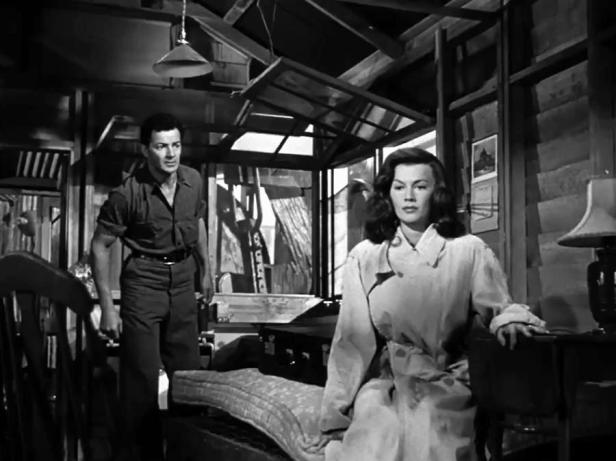
Douglas Sirk did a good job on the majority of the production. The performances, cinematography and production design are very good – this is in essence a low budget A feature. But he hated the ending and seems to have disowned the picture. He then left for a long visit to West Germany but that didn’t work out in terms of immediate production opportunities. In 1950 he returned to Hollywood and a directorial contract at Universal. At first there he didn’t seem much better off, pushed into a series of not very challenging low budget films. But the studio stuck with him and he stuck with them, eventually forming a worthwhile partnership with producer Ross Hunter and the family melodramas/romance melodramas that cemented his third career and his second stab at Hollywood ascendancy. Shockproof is now screened and discussed as a Sirkian noir. I can see why and it is interesting, following Lured (1947) and Sleep My Love (1948) with similar mixes of crime and romance melodrama traits. Both Sirk and the crew members with whom he worked followed the aesthetics of the period, dominated by the noir look. The changed ending to the original Shockproof script does no favours to either Sam Fuller or Douglas Sirk but the film is still worth your time and is widely available online in decent prints.

