
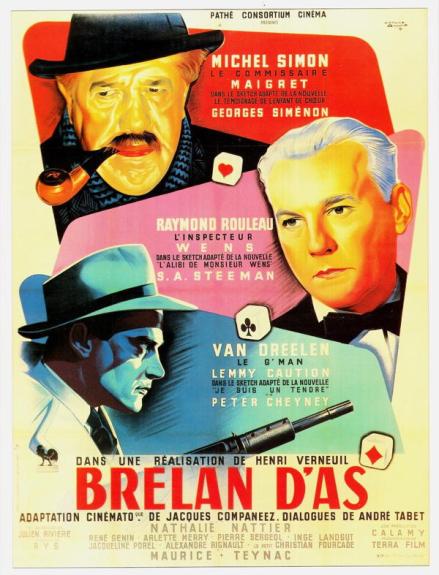
Full House (the French title translates as the term ‘three of a kind’ used in the card game poker and its derivatives) is now available as a 4K restoration from Studio Canal presented on Blu-ray by Indicator/Powerhouse in Europe. It is a form of ‘portmanteau film’ with three separate stories all directed by Henri Verneuil plus a bracketing opening and closing sequence which sets the context for all three stories. At first we wonder if this will be a ‘city symphony’ style documentary as a voiceover introduces a busy Paris street scene at 07.30 a.m. and we see people travelling to work. But there is a slight comic edge to this narrative and a focus on a city bookshop with an outside display of ‘pulp fiction’ which attracts a diverse collection of interested readers. A small boy buys a book and concludes his purchase with “Thanks cutie!”. Eventually we realise that the film will comprise three stories by popular writers of crime fiction with that unique French take on American crime fiction lurking in the background. Henri Verneuil was just starting to direct features at this point but he would go on to make several crime films including the big international production of The Sicilian Clan (France-Italy 1969).
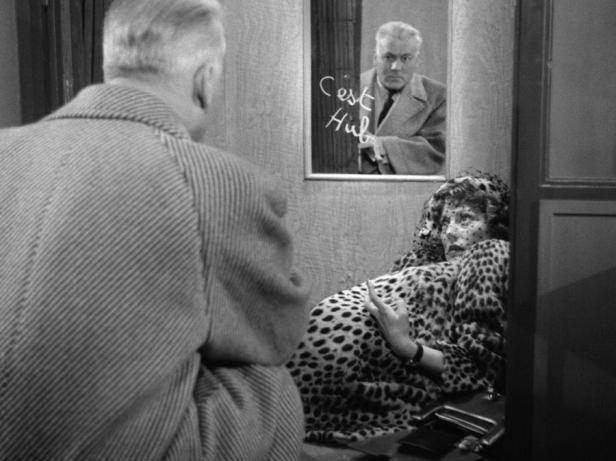
The first of the three adaptations is of ‘L’alibi de monsieur Wens’ by the Belgian writer Stanislas-André Steeman. The private investigator Wens is played by the Belgian actor Raymond Rouleau. This is in some ways a conventional ‘detective mystery’ with Wens solving the puzzle of how a murder was committed that took place in the same hotel where Wens was asking questions. It’s quite a clever little narrative and provides the local colour of Parisian society with an entertaining nightclub sequence.
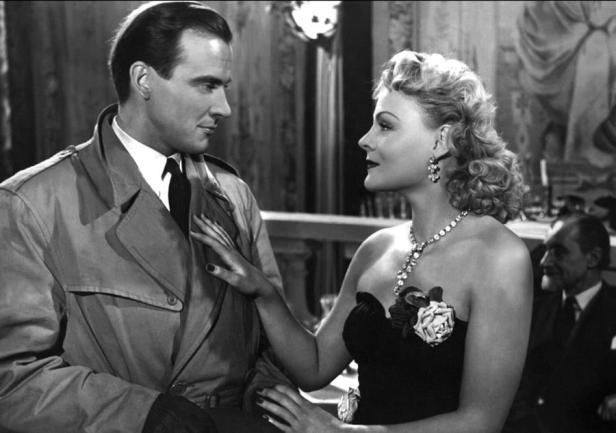
The second narrative is adapted from a Peter Cheyney story translated as ‘Je suis un tendre’. I think this must be an idiomatic French phrase because it doesn’t tell us much in a direct English translation – ‘I am a tender’. The story actually involves an American ‘G-man’ in the form of ‘Lemmy Caution’ played by the Dutch actor John Van Dreelen. I am aware of the actor Eddie Constantine who played Caution in Jean-Luc Godard’s Alphaville (France 1965). Constantine was an American actor-singer with Russian-Jewish heritage whose career blossomed in France on screen and in music performances. He played Caution and similar characters several times in the 1950s and 1960s and worked with a host of well-known directors. It was a surprise to see a rather different characterisation by Van Dreelen and I found this to be the weakest tale of the three. Caution is in Europe trying to trap a major criminal involved in international crimes and this story is awash with guns and cars and is more of a gangster story than a PI drama. For me the main benefit of the story was the location shooting in Hamburg including the port, the airport and the railway station and I appreciated the chance to see how these locations looked in 1952. An interesting trivia note is the appearance of the German actress Inge Landgut who had previously appeared as the little girl at the centre of Fritz Lang’s film M (Germany 1931).
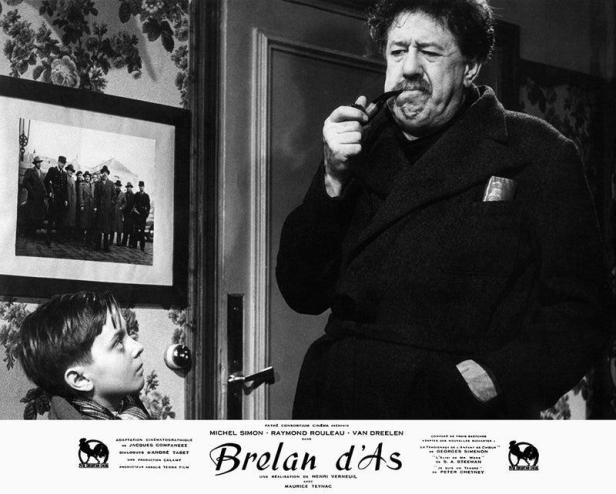
The third story is from Georges Simenon, ‘Le témoignage d’un enfant de choeur’ (‘The testimony of an altar boy’) and it is a case for ‘Maigret’ as played by Michel Simon. A small boy witnesses a murder on his street and is then threatened by the murderer to keep quiet. The boy tries to comply (an altar boy who tries to do as he is told?) but Commissaire Maigret is suspicious and worms enough of the story out of the boy to solve the crime. As several reviewers note, this story uses a realist approach but in a different way to the Lemmy Caution story. It’s more akin to the earlier style of poetic realism and the locations are more sparse and bleak. Simon was a major star in French cinema from the mid 1920s by which time he had already established himself in theatre productions. I hadn’t realised that he was born in Geneva of German heritage but his career was firmly based in France. The whole film of Full House runs for 118 minutes and offers a chance to see three different examples of the approach to crime films in France in the early 1950s and this involves the transition from the poetic realism of the 1930s to the influence of American pulp fiction and the eventual emergence of the more contemporary polar. The only ‘extra’ on the Blu-ray is a profile of Michel Simon but even so I think this is a disc worth exploring. Here is the rather good restored trailer (no English subs).

