
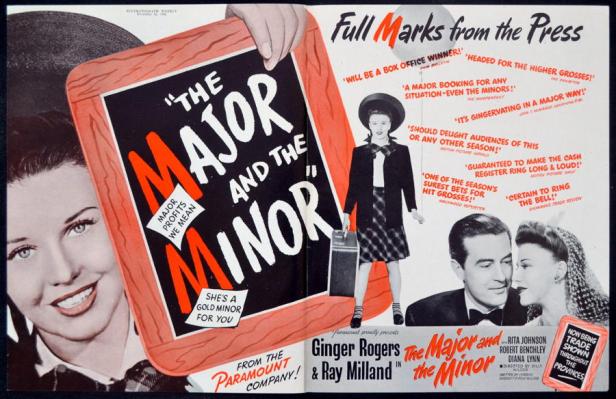
I’m grateful to Jonathan Romney in The Observer who pointed out a screening of Billy Wilder’s first directorial credit in Hollywood on Film 4 which I was able to record. I don’t know if Film 4 intended to mark the BFI Southbank season of Wilder’s work which started last week and runs for the next two months. Also on BBC Sounds you can find the Billy Wilder episode of Screenshot with Ellen E. Jones and Mark Kermode – a useful guide but tending to focus on only the best known films.
I’ve enjoyed many of Wilder’s films over the years without being a major fan and I was keen to see this film and I found it very entertaining. The BFI season’s promotional material starts with the well known quote by Wilder:
I only became a director so they wouldn’t get my script wrong.
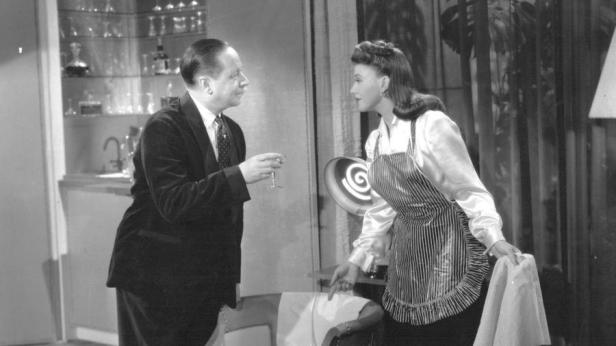
He had begun as primarily a writer and he has been most celebrated for his witty dialogue. I’m not sure if he coined the title The Major and the Minor but it is a neat presentation of the film’s plot and in a sense also points to the musicality of the performances. This script was part of the history of the Billy Wilder-Charles Brackett partnership at Paramount and IMDb suggests that it was inspired by a play by Edward Childs Carpenter and was also ‘from a story by Fanny Kilbourne’. Often too many inputs into the story construction can lead to confusion but Wilder as director seems clearly in charge of what happens in front of the camera here. The basic plot structure is straightforward. Sue Applegate (Ginger Rogers) is a young woman from the mid-West who is fed up with her lot in New York where she has been working for a hair restoration company targeting rich older male clients. She finally loses it faced with Robert Benchley as a client more interested in making her cocktails than undergoing his ‘treatment’. Sue decides to take the next train home to Iowa but is horrified to discover that the fare has risen and that the only way she can get a ticket is if she presents herself as a child of ‘nearly 12’. She can convince some but not all railway staff and once aboard the train avoids the ticket inspectors by crashing into the cabin of Major Philip Kirby (Ray Milland). From hereon in it’s a case of how long she can maintain her ‘child’ routine, which characters will believe her and which will see through her performance.
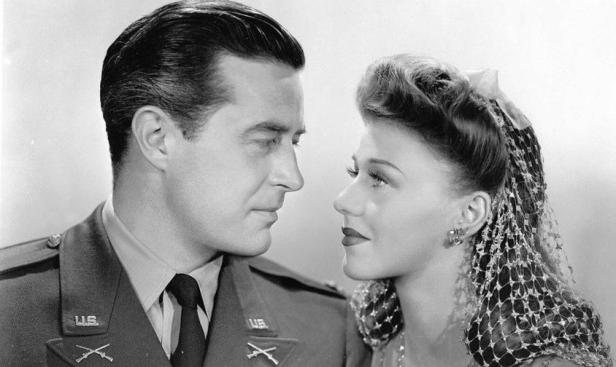
In many ways this is a classic Hollywood romantic comedy but perhaps one with a slightly darker and risqué edge. As Romney suggests it’s just the kind of narrative that Wilder could handle better than most other directors (apart from his own mentor Ernst Lubitsch). There are I think elements of Viennese comedies of identity. Wilder was one of the many talented writers and theatre/film directors born in Austria-Hungary/’Central Europe’ before the First World War who would go on to become major filmmakers in Hollywood. He followed Michael Curtiz, and Fritz Lang in migrating to California in 1933 and he was in turn followed by Fred Zinnemann and Otto Preminger. Others like the Siodmak brothers, Douglas Sirk, William Wyler and Max Ophüls were born in Germany but had worked in Vienna or with Viennese writers and actors. I’m reminded of the film Viktor und Viktoria (Germany 1933) written and directed by Reinhold Schünzel which was remade several times, including in the UK as First a Girl (1935) with Jessie Matthews and later in Hollywood with Julie Andrews in the title role in 1982 playing a female singer and dancer who has to act as a male impersonator in order to become a star. I mention this film (though it’s not Viennese) as a good example of the kind of sophisticated European comedies that were brought to America. In The Major and the Minor, Ginger Rogers must spend half the film in plaits, flat shoes and the wide eyes of innocence. She does however get to dance, albeit briefly. What I suppose might have been risqué for the Production Code was the fact that she would share a two berth stateroom with a man on the train and conversely she would be wooed by (too) young military cadets at the military academy where Major Kirby has been appointed to a senior position.
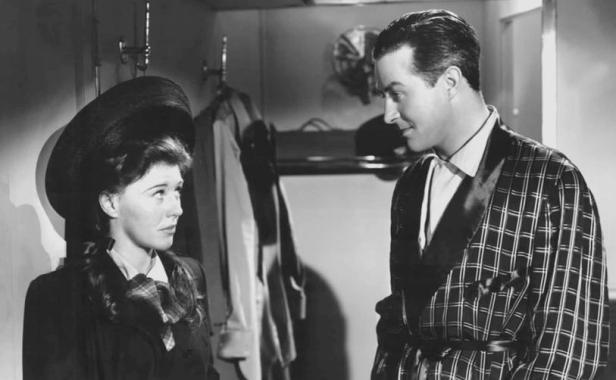
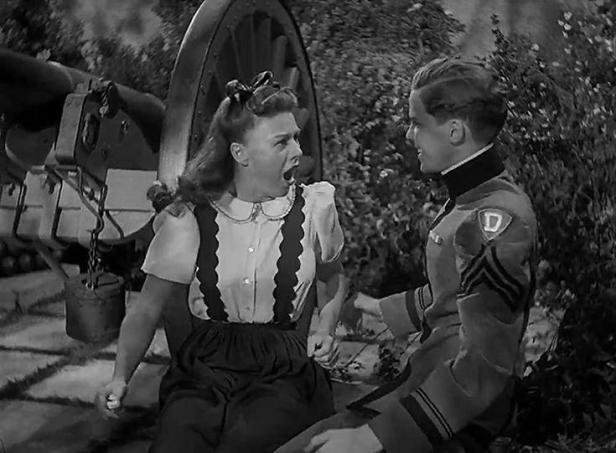
The second narrative strand to Sue’s impersonation of a child is the Major’s attempt to get a role on active service despite an eye problem he is trying to correct. Against such a move is his fiancée, Pamela (Rita Johnson), the elder daughter of the academy’s commander Colonel Hill. Pamela’s young sister Lucy (Diana Lynn) is the kind of bright teenager who sees through Sue’s impersonation but will she help Sue or expose her? Finally there are plenty of the cadets to engage with Sue at a ball where she really only wants to dance with Major Kirby. It’s a romcom and we know Sue must get together with the Major for a Hollywood ending. The enigma is how will this come about? Wilder manages everything with seeming ease and gets solid performances from his stars. Milland manages to be meek and mild and sensible enough in dealing with a ’12 year-old’ but also handsome and assertive enough to win Sue as an adult. Ginger Rogers is a revelation as she manages to convince as a very young teenager just long enough to allow us to suspend disbelief. Wilder would conjure similar performances from Jack Lemmon and Tony Curtis in one of his most famous films, Some Like It Hot in 1959 when they were required to pass as female players in the band supporting Marilyn Monroe.
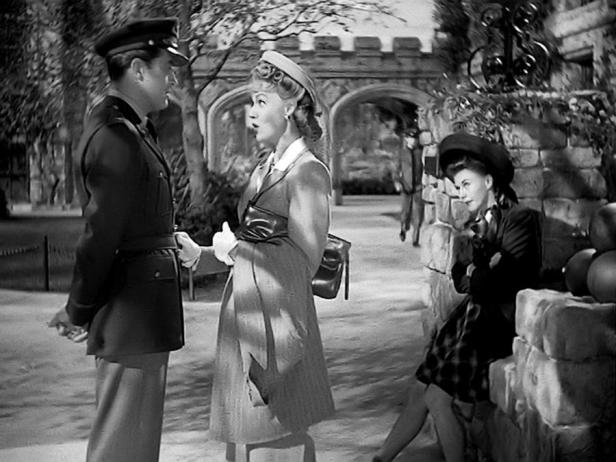
I’ve always admired and very much enjoyed Ginger Rogers as Fred Astaire’s dancing partner at RKO and earlier her work on musicals like Gold Diggers of 1933 for Warners but I don’t think I’ve seen much of her subsequent work. She seems to have worked across several studios and developed as a star of romantic comedies, dramas and melodramas. In 1942 she was 31 years-old. You do have to suspend disbelief but she does an excellent job. Here’s the original trailer which intriguingly gives Wilder an on screen credit for his first film as director of a Hollywood film (but he had already received three Oscar nominations as a writer, so in modern parlance he was ‘hot’).

