
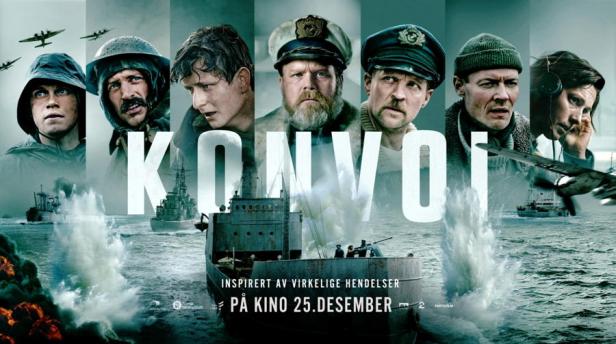
In the UK, BBC4 is still managing to show foreign language films and drama series in its Saturday night slots. This Norwegian film was broadcast a few weeks ago and is now available on iPlayer in the UK for a year or more. It offers a shipboard drama about a Norwegian freighter carrying munitions from Iceland to Murmansk in the Summer of 1942 to support the Soviet Union at a crucial stage of the Second World War on the Eastern Front. I was intrigued by this premise since I knew about the Murmansk and Archangel convoys from a British perspective but less about the involvement of other allies and the general organisation of the whole enterprise. Wikipedia now has useful pages about the convoys and as far as I can see, this film takes the real convoy ‘PQ 17’, which suffered the heaviest losses, as its inspiration and inserts a fictitious Norwegian ship into this specific convoy. There were Norwegian ships in other convoys so this is a curious hybrid in terms of being based on ‘historical events’.
The main convoy operations of the war were those caught up in the ‘Battle of the Atlantic’ in which German U-boats hunted very large convoys of shipping from North America to the UK. By contrast the Arctic convoys were shorter but faced more dangerous weather conditions and both sets of convoys faced problems in defending ships from U-boats, German surface ships and aircraft. Most escorts comprised Royal Navy ships which up to this point were limited in how far they could go before being forced to return to the Home Fleet. In the particular case of PQ 17, the escorts were withdrawn and freighters dispersed because of inaccurate reports of a German battle group in the vicinity. The German battleship ‘Tirpitz’ was based in different Norwegian ports during 1942 and made two attempts to attack the Arctic convoys. It was also used to bombard the British weather station on Spitsbergen with its Norwegian military personnel.
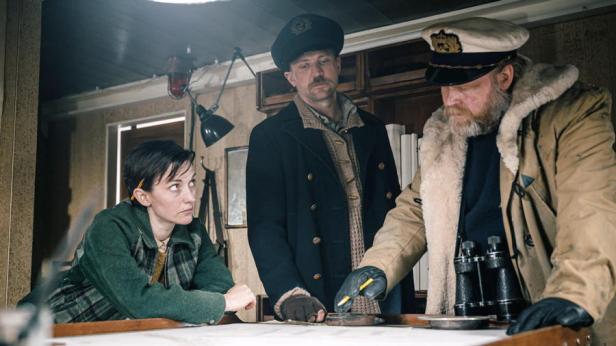
After the dispersal of Convoy PQ 17 isolated freighters were now perhaps less likely to be easily found but if they were would almost certainly be sunk by U-boats and the Luftwaffe operating from Northern Norway. The Norwegian freighter in the film is a civilian vessel and after dispersal is no longer under instruction from the convoy commander. This leads to the dramatic situation forming the basis of the film. Aboard the ship there are tensions between the captain and his first mate about how to handle the remainder of the trip to Murmansk. The engineer reports that the engine needs repairs and therefore the ship can only travel at half speed. The other senior crew member is the radio operator – a woman. I hadn’t previously come across women on merchant ships in wartime but they certainly were present and included Norwegian woman Margit Johnsen and the Canadian radio operator Fern Blodgett Sunde who earned a Norwegian War Medal for her work on a Norwegian ship during the Battle of the Atlantic.
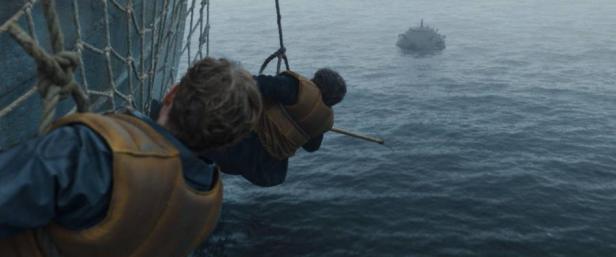
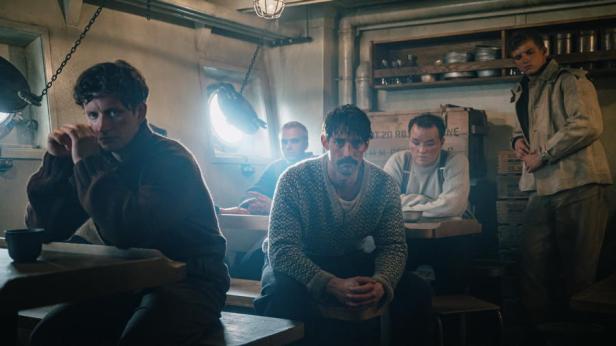
As well as the four characters listed above, the other focal characters include the bosun and the crew of the ship’s armament, an anti-aircraft gun mounted high behind the bridge. A Swedish volunteer mans the gun and his loader is the youngest crew member. The gunner is called into action and the captain is seriously wounded during an attack by a German aircraft. This provides the mate with an opportunity to command the ship and the possibility that he will attempt to turn the ship back to a corse for Iceland. But can he control the crew? There is a second German attack and the gunner discovers that among the ship’s cargo of munitions is a Swedish Bofors gun, an intriguing weapon I’ve written about before on a posting about the UK film The Bofors Gun (UK 1968). The ensuing action is exciting but I don’t know if it is believable. This in turn prompts consideration of the use of CGI in the long shots of the convoy and the aerial sequences. It’s a cliché now that re-construction of Second World War battles have to use CGI with so few period aircraft and ships operational. Since most of the dramatic scenes are ‘internal’ this isn’t too much of a problem and it didn’t worry me. You can best see the CGI action scenes in the trailer below.
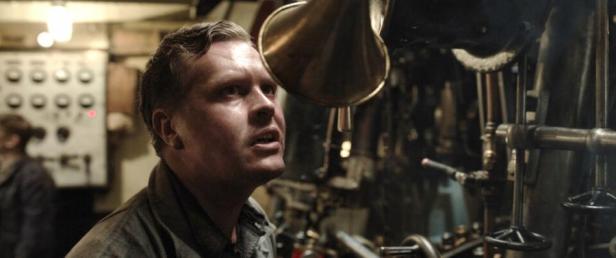
Konvoi was a big budget picture by Norwegian standards and it opened in Norway on Christmas Day. It appears to have done well in its home territory as the latest example of a Second World War film made by local filmmakers in countries that were occupied by the Germans during 1939-45. It joins earlier Norwegian films such as Max Manus (Norway-Denmark-Germany 2008) and Gold Run (Norway 2022) in offering an alternative to British-American perspectives on the war in Norway such as The Heroes of Telemark (UK-US 1965). I enjoyed the film and the performance of the principals. I do think the ending of the film feels rather rushed and I’m surprised that there is no attempt to show the arrival in Murmansk. The struggle between the captain and first mate over the appropriate action to take after the dispersal of the convoy is well presented and there are interesting observations about British policy and the importance of getting the munitions to a Soviet port. I think that a version with English audio was prepared for the US release but the BBC screening was Norwegian with subtitles. Unfortunately there are no easily accessible figures for full audience numbers outside Norway nad I assume that in the UK and US most audiences will find the film on streamers.

