
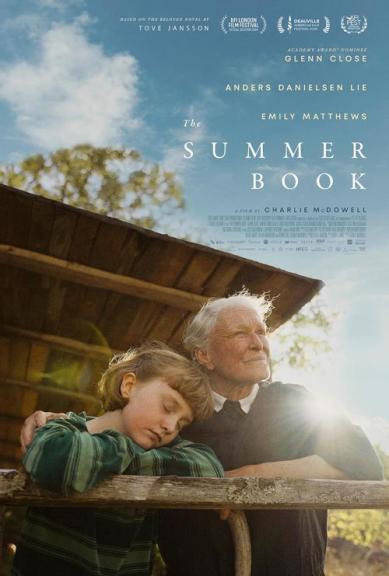
Only appearing in the UK in August 2026, this film spent a long time on the festival circuit before a release in Nordic countries and the US in 2025. I don’t think it is really a ‘festival film’ but on the other hand it isn’t made for a mainstream Hollywood audience. On IMDb its ‘User’ comments and its ‘External Reviews’ demonstrate a balance of very positive and quite negative responses. But almost all agree on its strong visual qualities and powerful performances.
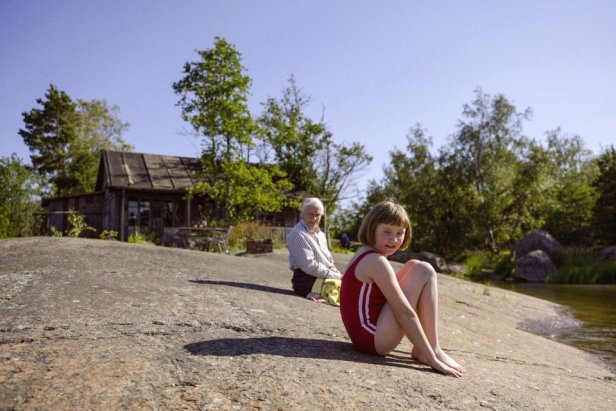
Audiences unaware of Tove Jansson, creator of the Moomins and all round wonderful anti-fascist woman, might struggle with the attractions of a book Jansson wrote in 1972. She wrote something inspired by her memories at a time when she had just lost her mother. It was not a strong narrative as such but rather a collection of ‘vignettes’ of experiences for a young girl and her grandmother during time spent various cabins/cottages by the Gulf of Finland. Several reviewers of the film adaptation by Robert Jones have questioned whether it is really possible to capture the subtle interactions between the girl and the grandmother onscreen in the same way as in a book. Jones and the director Charlie McDowell seem to have made two significant changes. Their Sophia is older by three years than the book’s 6 year-old and they present her father as a third character who is struggling to communicate with his daughter. I’ve only skim read the book (which I will go back to as it’s very good) but they seem to have fashioned the sketches into a conventional narrative of a summer holiday whereas the book ranges across more locations and different time periods. In the film the mother has only recently died.
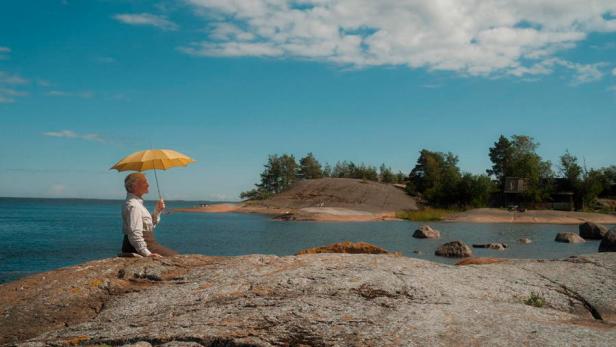
The grandmother is played by Glenn Close, the distinguished American actor, here presented as several years older with weathered skin and a stoop. The father who is present but under-used is played by the similarly starry Norwegian actor Anders Danielsen Lie, celebrated internationally mainly for his roles in films by Joachim Trier. In this context the young actor Emily Matthews who plays Sophia is very good. She appears to be Finnish and bilingual. The creative heads of department in the crew include the celebrated Norwegian cinematographer Sturla Brandth Grøvlen and the Polish musician and composer Hania Rani – she too has won recognition for her work with Joachim Trier. The crew appears to be Finnish and the film is primarily a Finnish production. I presume it has been made in English to make it an easier project to fund and to distribute internationally. It would have been fascinating to watch the Finnish premiere in January 2025. The same Finnish producers were responsible for the partial biopic Tove (Finland-Sweden 2020) and as in that film, there is some home movie footage of Tove Jansson in The Summer Book. This new film was also shot on 16mm and presented in 1:1.66.
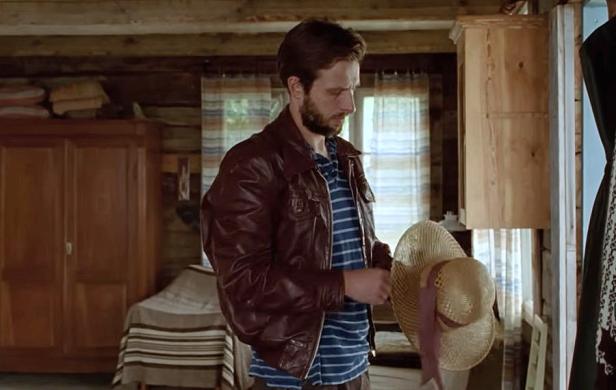
The 16mm colour is a well chosen format to capture the interchanges of Sophia and her Grandma in the beautiful landscapes of rocks, trees and water. It was for me also a reminder of classic Swedish cinema and the celebration of summer in houses by the sea. The use of English dialogue, however, does mask the sense of the characters as part of the minority Swedish community in Finland. But I’ve rambled on enough about the background to the film. What do Sophia and her Grandma talk about? Robert Jones cherry-picks from the book’s 22 short chapters. Several scenes deal with the natural environment. A good example is the episode in which a worm is accidentally cut in half by a spade. Sofia is distraught but Grandma assures her that the two halves will both live on. This doesn’t satisfy Sofia who is worried by what the two halves will think about each other. The film presents the actions of this episode very well but it hasn’t got time/space for all the dialogue between the two characters. Instead the mise en scène has to play an important role in seeding our understanding of how grandma attempts to both help Sofia to understand what is happening to her father as well as coming to terms with her own sense of loss. Sofia’s personal and social education also requires her to meet other people, to face danger and fear and to deal with it. Sofia as presented by Emily Matthews is a willing pupil both daring and inquisitive. She is in some ways obedient and wishing to please but also cheeky and naughty. She enjoys fantasy and her grandma’s stories but she has feet planted firmly on the ground. In short she is a ‘normal’ healthy child.
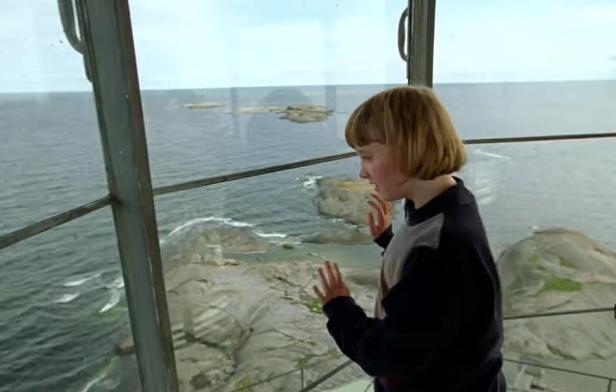
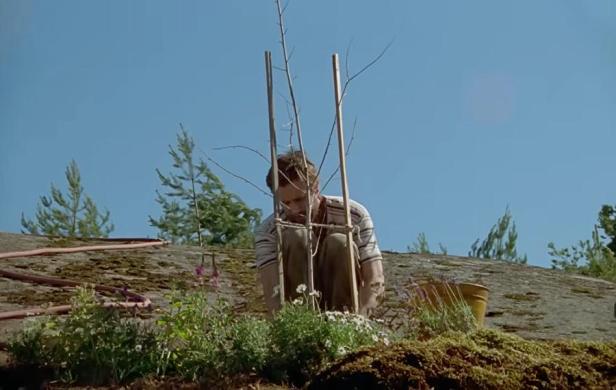
There is a clear discourse about the natural world running through the film but there is an odd moment that I didn’t understand. Sofia helps her father to tend a young sapling growing in a small crack in the rocks. At one point father has a bucket filled with seaweed, an excellent mulch and form of compost but when he has finished he pours the remaining water in the bucket on the to the base of the tree. Is it fresh or sea water? I’m not sure the tree would tolerate salt water. I mention this because the novel has a wonderful story about transporting freshwater to the island but it seems to be missing from the film. In the novel Sofia tells us that the tree was her mother’s favourite.
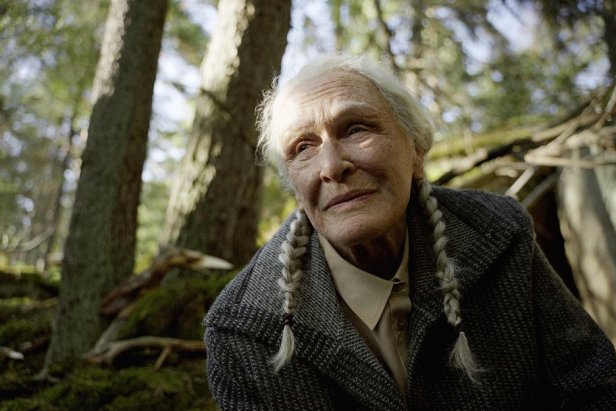
The Summer Book is a lovely film. I was never bored at any point in its 94 minutes but I can see that it might not appeal to ‘action’ fans. My partner thought it was very ‘moving’ and that is real praise. The film will still be playing in selected cinemas in the UK and elsewhere it appears to be streaming on Amazon. The book is easily available online and I recommend it.
 itp Global Film