
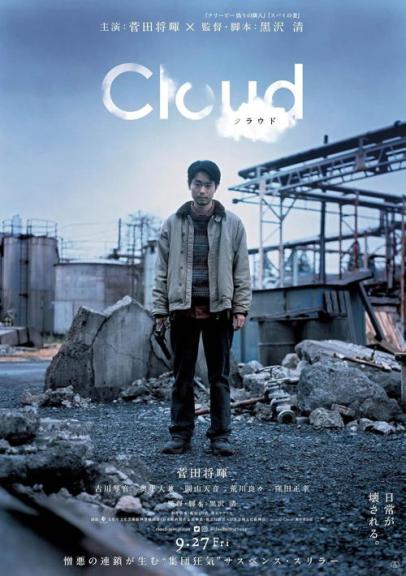
Kurosawa Kiyoshi (born 1955) has had a long career as a filmmaker and also a significant secondary career as a Professor at Tokyo University of the Arts Graduate School. In many ways Kurosawa’s film career reflects developments in Japanese cinema since 1980. In his early career he directed ‘pink eiga‘, softcore porn films, and roman porno, the more art-oriented erotic films. He worked in V-cinema, the Japanese video cinema of the 1990s. As far as his more mainstream films are concerned he has made various genre films embracing yakuza films, horror, science fiction and fantasy. The majority of these films have not been released in UK cinemas or only on DVD/Blu-ray. However, he has also made high profile art films/’quality’ films that have won prizes at festivals around the world. Some of these have received a wide release and some of them have been reviewed on this blog: Tokyo Sonata (Japan-Neth-Hong Kong 2008), To the Ends of the Earth (Japan-Uzbekistan 2019) and Wife of a Spy (Japan 2020). I’ve also written about the crime thriller/horror Cure (Japan 1997). Kurosawa has also been mentioned in recent years in relation to the success of Hamaguchi Ryosuke’s films. Kurosawa mentored Hamaguchi for a period. In 2024 Kurosawa made three films, one of which, Cloud was seen at festivals and got a limited release via Blue Finch in the UK. It has been streaming and is now available as a Blu-ray disc from Eureka.
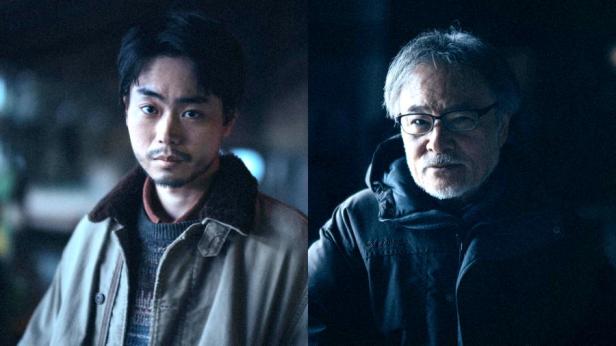
Cloud is an unusual film which begins with a drama set in the world of online ‘re-selling’. A young man, Yoshii Ryosuke (Suda Masaki), is adept at finding items to buy in bulk that he then attempts to sell online at greatly inflated prices. He operates under the pseudonym ‘Ratel’. The abiding image of the first part of the film is Ryosuke sitting in front of his computer screen on which an array of product images are in turn lit up as ‘sold’ until all have been bought. Of course, he isn’t successful every time and sometimes he has to drop his prices (and sometimes raise them). Initially Ryosuke also has a job pressing clothes in a factory. He is clearly overqualified for the job and his boss Murata is keen to promote him but when he makes a ‘killing’ re-selling some medical gadgets he decides to leave the job. The opening scenes emphasise that Ryosuke is quite cold-blooded in buying stock from a failing company. His only goal is making money. He lives with a young woman, Akiko (Furukawa Kotone) but the relationship has little emotional involvement. He meets an embittered ex-school colleague and has an accident that might have been part of a planned attack on him.

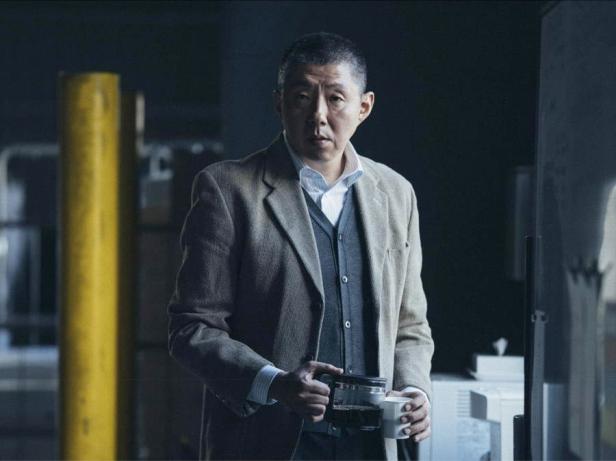
Ryosuke and Akiko have been living in a small nondescript apartment building and when he is flush Ryosuke decides to move out of Tokyo to a fairly remote lakeside house in the countryside. I was struck by the visual image of this location that reminded me of several American films noirs from the 1940s and 1950s. This section of the narrative will turn into a ‘home invasion’ sequence with Ryosuke attacked by an increasingly vicious band of armed men. Akiko’s behaviour at this point raises questions and Ryosuke is helped only by Sano, a local young man who Ryosuke takes on as a dogsbody/handyman. The gang eventually take Ryosuke back to the city, to what appears to be an abandoned industrial site where it appears they intend to execute him live online. This will be the third part of the narrative and the genre will shift again to resemble the yakuza movies Kurosawa made earlier in his career. I won’t spoil what happens in this section but there are a couple of important questions. Who are the members of this vicious gang? Is Murata involved? And what has happened to Akiko and Sano? It seems obvious that the abandoned industrial site could work as a metaphor for the damage that online practices like Ryosuke’s have on the Japanese economy. Finally, the very last scene of the film is more open-ended than any expectation of a genre shootout might suggest. With clever use of music and an almost expressionist mise en scène for the backdrop, a couple of the characters escape into a seemingly fantasy or dream world – on their way to hell?
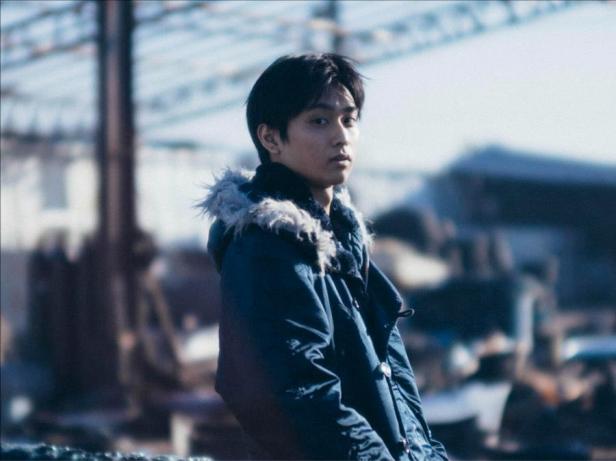
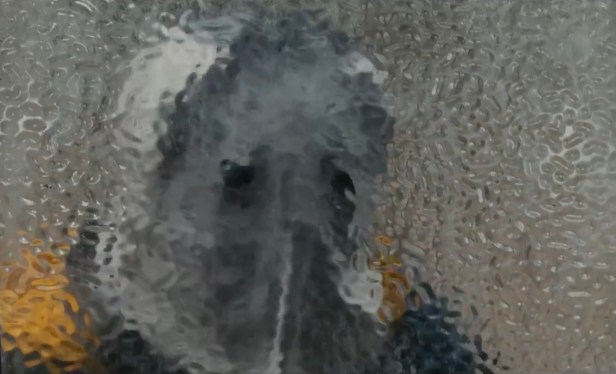
I hope I haven’t given too much away but I have tried to suggest the formal audacity with which Kurosawa explores his theme. I do fear that audiences without a sense of Kurosawa’s background will struggle with this film and it is quite long for a genre film at just over two hours. The Blue-ray comes with a commentary by Jonathan Wroot and it’s nice to have a commentary from a scholar I’m familiar with and who I think has a similar approach to mine when it comes to Japanese cinema. Jonathan is now based at the University of Greenwich and unlike many film scholar’s Jonathan is interested in distribution as an area of study. This is particularly important for Japanese cinema which has circulated in the West often via physical discs from specialist companies I haven’t listened to the whole commentary but Jonathan makes the point that he has noticed much more ‘going on’ in Cloud during his subsequent viewings following its initial cinema release and he hopes that others will too. He notes that Cloud had a bigger budget than Kurosawa’s earlier genre pictures (although by Hollywood standards all Japanese films have ‘low’ budgets). It also has a bigger name in the lead and the film managed a Venice Festival screening and was selected as the official Japanese entry for the long-list of films nominated for the ‘International Feature Film’ at the Oscars in 2025.
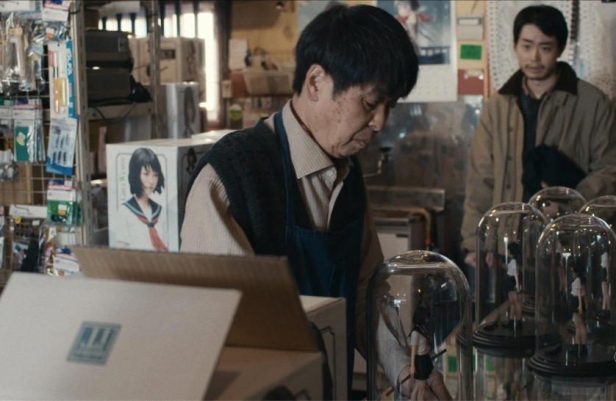
When I think back, some of Kurosawa’s earlier films have a similar structure. Tokyo Sonata starts as a salaryman/family melodrama but then moves into other genres. It’s perhaps worth mentioning that Kurosawa is much more highly regarded in France than in the UK or perhaps the US. In the French documentary The Graduation (Le concours, France 2016) about the procedures for assessment and selection of students applying to La fémis, the Paris film school, a clip from a Kurosawa film is used in a film analysis exercise. I think that Jonathan Wroot is offering useful advice in suggesting that there is more going on in Cloud than can be discerned in a single viewing. He also makes the point that this is the second film after Pulse (Japan 2001) in which Kurosawa uses the internet as a source/theme for exploration via genre narratives (Pulse is a horror film). I would recommend Cloud, but do try to get hold of the Eureka Blu-ray and check out Jonathan’s comments. I know there is more I need to discover about this film.


I saw this at the Manchester Film Festival last year, as I remember. Every year that goes by I expect to be the last for this fairly obscure film festival in March which has been wholly confined to an increasingly run-down Odeon that is slated for re-development and therefore shows no signs of any refurbishment. This last year, surprisingly still with us, it expanded for a couple of films to new venues although most were still shown at the Odeon with its sticky carpets.
Anyway, I enjoyed this very much probably because the film preceding it was dismal. It had more twists and turns than could reasonably be expected and was an excellent genre offering from a director new to me.
LikeLike
I assume that the Odeon you cite is the AMC Great Northern which was new in 2001. I’m glad you enjoyed the Kurosawa Kiyoshi and appreciated his genre expertise. I hope you can find examples of his earlier work.
LikeLike
Yes, indeed, the Great Northern. Like the centre it resides in it is a hollow mockery of its former glory. It does sometimes offer an eclectic array of films but would find it hard to compete with Home on either range or comfort. I hope the Mcr Film Festival finds a new home when this place is gone because it has proved to be a mid~March tonic over the years with some surprising guest Q&A.
LikeLike