
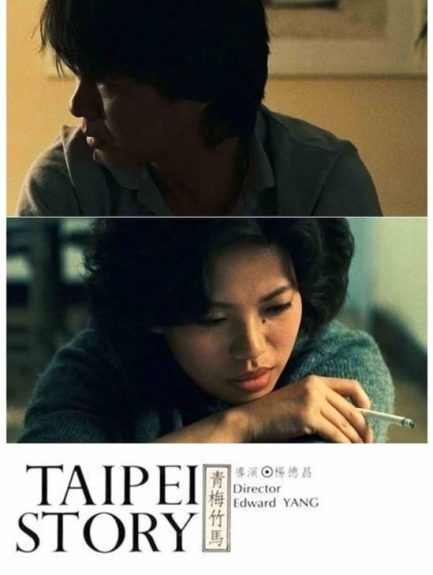
My second visit to Leeds this year was for another title in the retrospective strand of ‘The City Plays Itself’. I was delighted to be able to see Taipei Story for several reasons but primarily because films from this era of Taiwanese New Cinema have tended to be very hard to find in the UK. As with Love Letter this print of the restored film came from Criterion in the US. The second compelling reason to watch was the collaboration of the two biggest names from the TNC on the international stage, director Edward Yang and co-scriptwriter Hou Hsiao-Hsien. Hou is also the lead actor in the film playing opposite Tsai Chin who married Yang in the same year Taipei Story was first shown. The LIFF brochure presents the film as Yang’s ‘melancholy masterpiece’. I’m not sure how helpful that is. ‘Melancholy’ is a term that I’d certainly apply to Hou, who titled his ‘masterpiece’ about the history of struggles in Taiwan in the late 1940s ‘City of Sadness‘ (Taiwan 1989). But I’m not sure about Edward Yang whose films have seemed to me to have more action and general vitality. It did occur to me that in terms of its central characters, Taipei Story resembles the ‘Twilight Western‘ in presenting us with two characters, one seemingly wedded to the past and the codes of behaviour which don’t necessarily fit the new world of Taipei as a city. The other character instead embraces modernity and is looking to move forward.
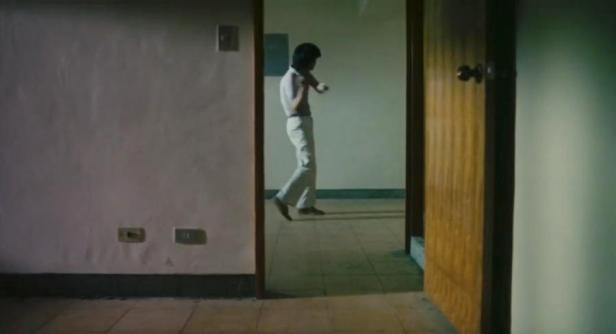
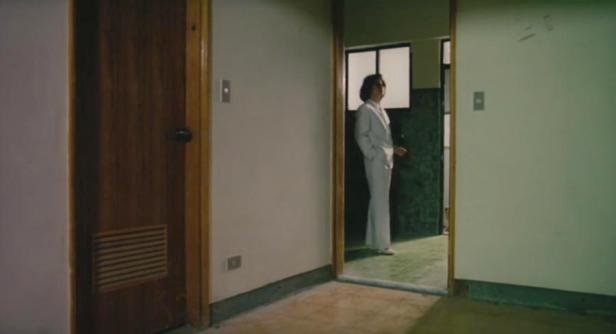
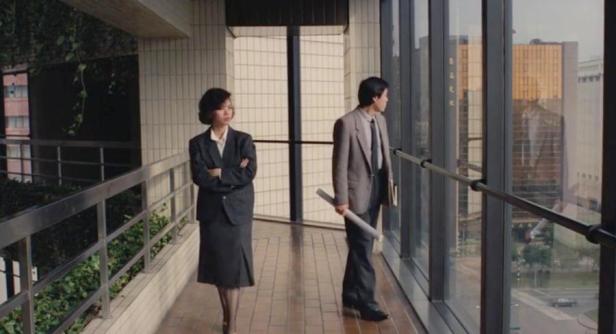
The relatively young Hou (he was 38 when Taipei Story was released) plays the central character as a seemingly morose young man prone to violence when his frustration rises. However, he is also prepared to help friends and family when they need money or support. The film opens when Ah-chen (Tsai Chin) and Ah-lung (Hou Hsiao-Hsien) are looking round an empty apartment that Ah-chen is considering as a new home. It is relatively ‘modern’ and soul-less. We learn that the aim of the couple is to move to the US on a permanent basis in the near future. However, events in Taipei soon begin to affect future plans. Ah-chen is employed in some form of PA/junior executive role for Ms Mei in a service company involved in construction. But the company is being taken over by a competitor. Meanwhile Ah-lung becomes involved in supporting an ex-colleague from his time as a baseball player. He also finds himself supporting Ah-chen’s father who has gambling debts. Ah-lung does have some resources, principally the house his father bought in the mid-1970s when the Americans were fleeing Vietnam and property became available to buy cheaply. Now Taipei is changing and there are decisions to be made. A key line of dialogue is uttered by an architect who looks out on the changing cityscape of high rise developments and laments that they all look much the same and he can no longer be sure which ones he designed.
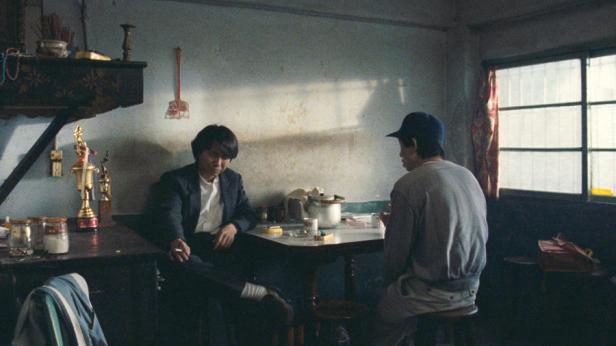
There is a useful essay by Andrew Chan discussing Taipei Story on the Criterion Collection website. Chan begins by commenting on the Chinese title which refers to a poem by Li Bai, the ‘Tang dynasty master’, and is translated as referring to ‘green plum, bamboo horse’. Chan sees this incongruous pairing as presenting the objects of a child’s game that suggests kismet – a fate that means a potential relationship lasts for many years and here might represent the relationship between Ah-chen and and Ah-lung. Chan suggests that for the contemporary Chinese audience in Taipei the title might suggest both the escapist melodramas of pre-TNC Taiwanese films and the pop songs made famous by Tsai Chin herself. Audiences were likely to be shocked by the film because it is nothing like an enduring romance and in fact the film was quickly pulled from cinemas in Taiwan after only a few days. It was more successful at international film festivals and helped Edward Yang to get attention in the US.
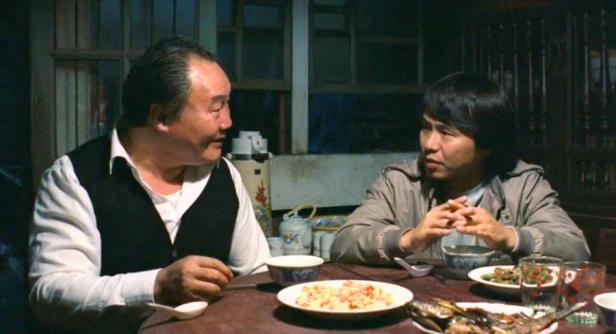
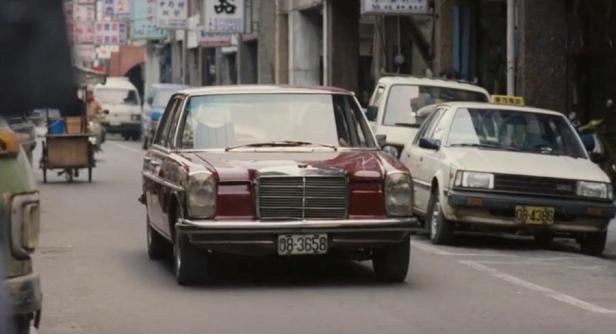
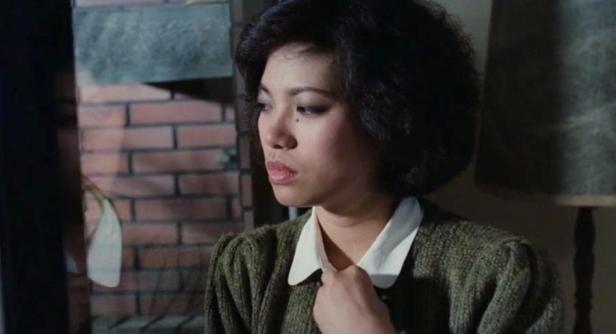
Taipei Story is in some ways a difficult film to read. Its modernist approach offers us characters who might be recognisable in a generic sense but the overall narrative is presented through a non-linear structure and the audience is required to search for clues as to the backgrounds of secondary characters and how they relate to the two principals. In his essay Chan points to the interest Yang developed in the work of European modernists and especially the work of Michelangelo Antonioni. Chan sees Yang as more of an outsider and an observer than his colleague and co-scriptwriter Hou. Yang had done postgraduate work in the US and had spent time working in electrical engineering and computing. He’d also been interested in architecture but after flirting with a filmmaking course at USC he’d later been turned towards a course which wasn’t so focused on Hollywood main stream production. This American experience gave him a different perspective on where Taiwan was headed to that of Hou. Both men were born in China in 1947 but moved as infants with their families to Taiwan in 1949. But whereas Hou tended to be interested in Chinese stories, often set in rural areas outside Taipei, Yang’s American experience clearly influences several aspects of the setting and characters in Taipei Story. I was struck by a scene towards the end of the film where one of the characters is talking about kitting out a building to act as a ‘data centre’ in Taipei, a prescient move even if the state of the new computer technology was barely established by 1985. Chan’s point is that Yang had a much clearer idea about Taiwan’s possible future and he was sceptical about the idea that Taiwan was undergoing an ‘economic miracle’, contrasting the turmoil of the PRC still recovering from the Cultural Revolution. We can argue perhaps that the story of Ah-lung and Ah-chen is to some extent a metaphor for attitudes towards a future for Taiwan as seen in 1985.
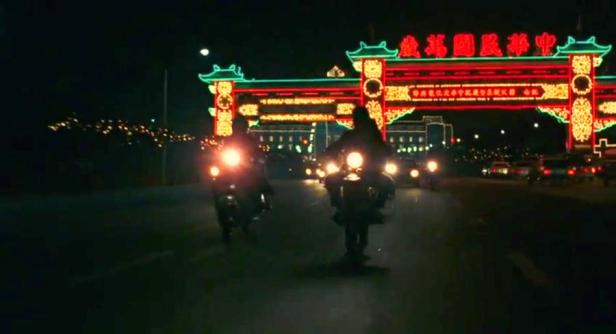
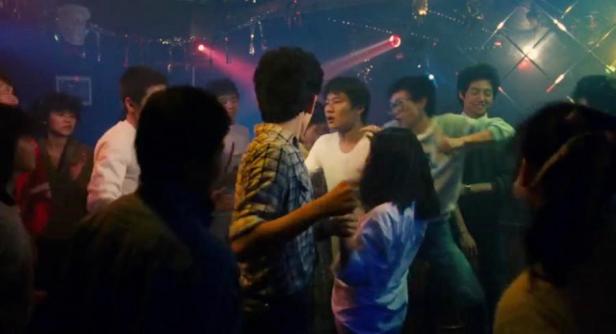
Hou Hsiao-hsien seems to have had less interest in the US but he did later make films in France, Japan and China. I have read somewhere that he has maintained a belief in the eventual strengthening of ties between Taiwan and the PRC. I won’t spoil the narrative in terms of what happens to Hou’s character in Taipei Story but he is certainly the character who is less invested in Taiwan’s economic future or those other characters who seem to have embraced Anglo-American culture, despite having relatives in the US. He does, however, support baseball. In practice it is Ah-chen who samples the US-inspired culture of her younger sister, including dancing to American music. Edward Yang’s third feature The Terrorizers (Taiwan 1986) carries on the vein of Taiwan’s move towards depicting the country through the lens of urban modernist and globalised culture.

