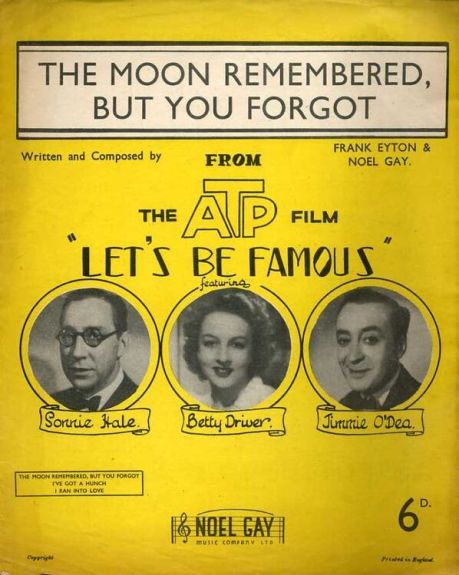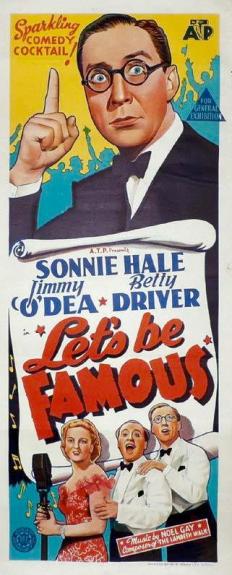
Again I enjoyed this ‘Ealing Rarity’ more than I was expecting. I thought to give it a go for two reasons – it stars the wonderful Betty Driver making a pretty good stab at compensating for ATP/Ealing’s loss of Gracie Fields and it is directed by Walter Forde, one of the studio’s more prolific and more successful directors. The film starts weakly in a studio set of a rural Irish village where Jimmy O’Dea is the local grocer/post office manager/newspaper editor etc. and the narrative is set up by an unsurprising confused telephone call made by a roving BBC commissioner looking for ‘regional characters’ to take part in a spelling bee on the Regional Programme. Jimmy thinks he has been invited to sing at the BBC. This was the period of the Irish Free State before the foundation of the Republic of Ireland in 1949 and BBC transmissions could be received. Fortunately, as soon as Jimmy arrives in the UK and boards a London-bound train, things begin to pick up.
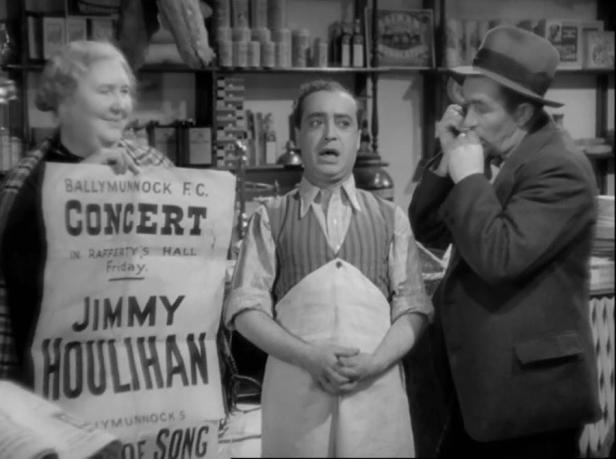
Jimmy O’Dea was a diminutive Irish comedian with a long career including stage, film and recordings. He made three films for ATP/Ealing and Let’s Be Famous was his second pairing with Betty Driver after Penny Paradise in 1938 and his first of two in which he was directed by Walter Forde in 1939. Forde had a background in music hall and had been a comedian like O’Dea. There seems to be some confusion as to whether Forde was born in London or Bradford but it is clear he knew the North of England audiences for comedy. ATP (in the form of Basil Dean) recognised that Northern audiences preferred their own stars and were not always taken by London-produced films based on West End shows. The studio had previously done very well with Gracie Fields and George Formby as its music and comedy stars. But Michael Balcon appears not to have really appreciated ATP’s success in this regard and he would allow Formby to depart after Fields.
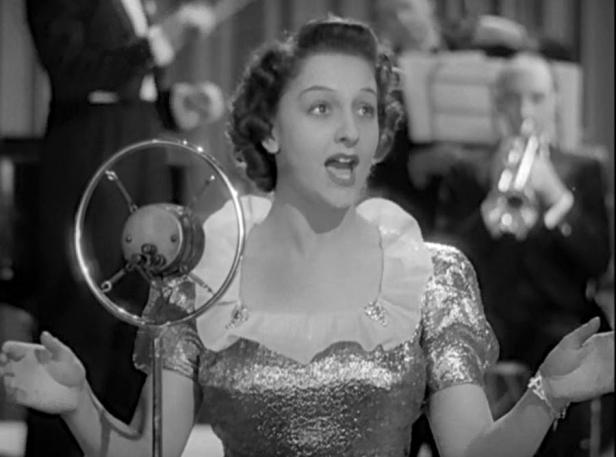
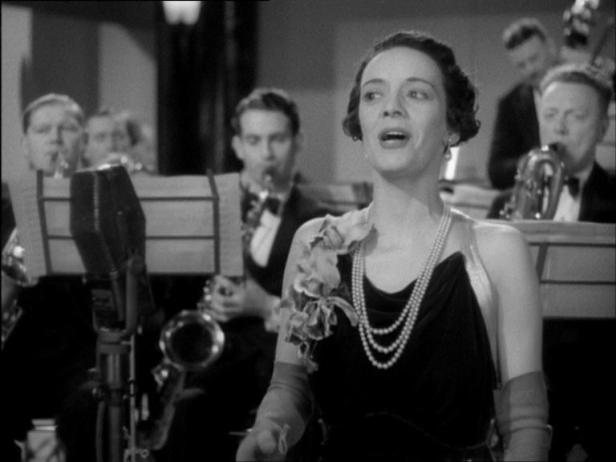
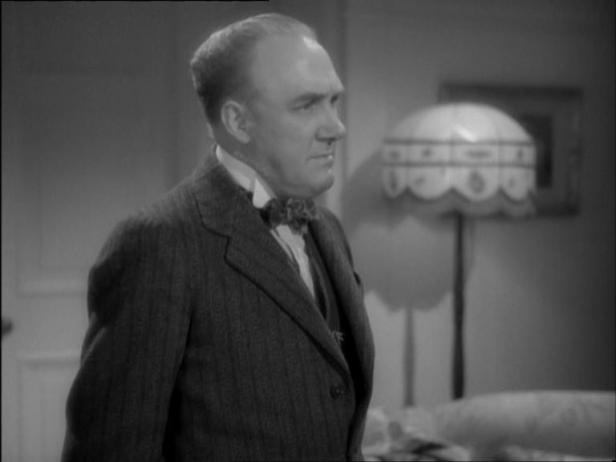
In parallel with the rural Ireland scene, the film introduces Betty Driver as an ambitious young singer, feeling trapped by her stern father, a Liverpool businessman. He wants her singing confined to morally upright church and community singing but she is determined to make her way in show-business and escapes to take part in a talent show. Betty Driver was already a professional performer at 18 with ten years of experience in theatres and clubs. It appears that her real-life parents were also controlling but more for her earning potential than her moral welfare. She would make relatively few films as a young woman with a remarkable voice and ironically her main claim to fame would be thirty years later as one of the most beloved performers in the UK’s longest running TV soap Coronation Street. In Let’s Be Famous the script allows Betty to win her talent contest, resulting in an immediate offer to sing on the newly-formed commercial radio which broadcast via European channels and offered programming sponsored by advertisers. Betty then finds herself on the same train heading down to London and like Jimmy heading for the BBC. The plot then opens up more possibilities by adding Betty’s mother Polly, a former music hall star herself, played by Lena Brown. She too has escaped her controlling husband to appear on the same radio programme as Jimmy, adding more ‘colour’ to the BBC spelling bee. All three will now meet on the train.
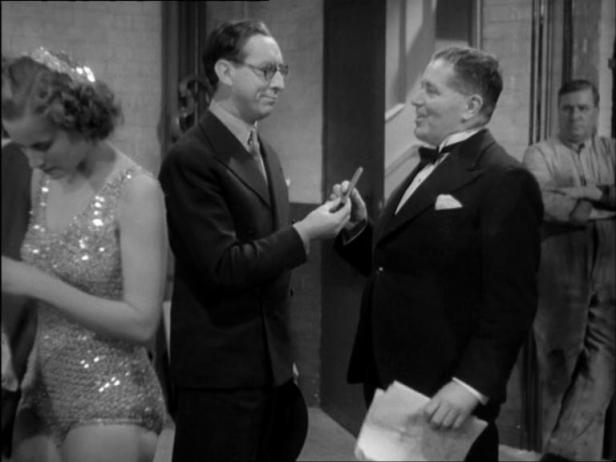
It’s perhaps worth pointing out at this stage that Let’s Be Famous has already set up a delirious melding of genre repertoires. It appears to be basically a musical comedy with songs by Noel Gay which morphs into a confused romance in which both Jimmy and one of the two advertising ‘scouts’, the smooth John Blake (Patrick Barr), have hopes of capturing Betty’s heart while she is intent on fulfilling her dream to sing. But Betty is also a hard-headed Liverpool lass who will take no nonsense and the second advertising man Finch, the ‘loser’ for Betty’s signature on a contract, is a major disruptive force as played by Sonnie Hale. Hale is the third ‘above the title’ star and in my view he takes the film up another notch. He was a star of musical comedy on stage and screen and subsequently a director. In the 1930s he was married to Jessie Matthews, the ‘Dancing Divinity’ who was arguably the only British film star of the 1930s who could challenge Formby and Fields. In Let’s Be Famous, Finch signs Jimmy to a contract when he can’t get Betty but then discovers that Jimmy can’t really sing at all. This leads us into the third genre repertoire, that of pure comedy both satirical and finally almost frantic and absurd physical comedy as all the characters converge in the studio of Radio France.
From the 1930s up to 1967 the BBC radio monopoly in the UK was challenged first by European-based channels and then by pirate radio. As a child I was an avid listener to Radio Luxembourg in the late 1950s/early 1960s. Let’s Be Famous imagines a version of Radio France broadcasting in English from London. This is the station on which Betty is meant to sing, enabling a comparison between the ‘stuffy’ BBC and the more popular music aligned commercial station advertising ‘Silverine’ soapflakes. The final section of the film brings together all the main characters in a major confrontation in the Radio France studio focused on the conflict between Finch and his boss (played by Basil Radford). The anarchy of these scenes driven by the antics of Jimmy O’Dea and Sonnie Hale is something to behold and makes me think of the Marx Brothers. Let’s Be Famous is an 83 minute feature. It looks like it was released as a second feature on the Odeon circuit but was later playing as an A picture in smaller cinemas and was still around in 1942. My impression is that the film was deemed successful overall.
My own feeling is that the combination of genre elements and the satirical representation of commercial radio (and the stuffy BBC) prefigures later Ealing comedies. Charles Barr decides that Let’s Be Famous is “a tedious experience” but he recognises the same mix of elements outlined above in his thumbnail comments for each film of Balcon’s rein. Despite this he starts his analysis of the ‘Ealing Comedy’ success postwar, the main thrust of his book Ealing Studios in 1977, by picking out the title Cheer Boys Cheer also from 1939. This is a film about two breweries and the romance between the son of one and the daughter of the other. He claims this is the model for Ealing’s later comedy success. But actually Cheer Boys Cheer is also directed by Walter Forde and written by the pairing of Roger Macdougall and Alan Mackinnon. It has the same pairing of Ronald Neame as cinematographer and Ray Pitt as editor and it also includes Jimmy O’Dea in the cast. Later Ealing comedies (both of which Barr condemns) dealing with the media are Meet Mr. Lucifer (1953) and The Love Lottery (1954). Hue and Cry (1947) also has a strong element of boy’s interest in adventure stories in a magazine. Ironically of course, Ealing would later sell its studios to the BBC and it would make two of the earliest forms of what would later become almost ubiquitous television series: The Long Arm, 1956 (the ‘cop show’) and The Feminine Touch, 1956 (the ‘nurses and docs’ show). For many film fans ‘Ealing’ means comedies, but nearly always the famous titles produced between 1949’s Passport to Pimlico and 1955’s The Ladykillers, a total of around ten films. But as Let’s Be Famous shows there is another tranche of Ealing comedies, often musical comedies with star performances by comedians and music hall/variety stars. They are less ‘sophisticated’ and less middle-class but they can be a lot of fun and many are worth looking out for. You might surprise yourself and enjoy them.