
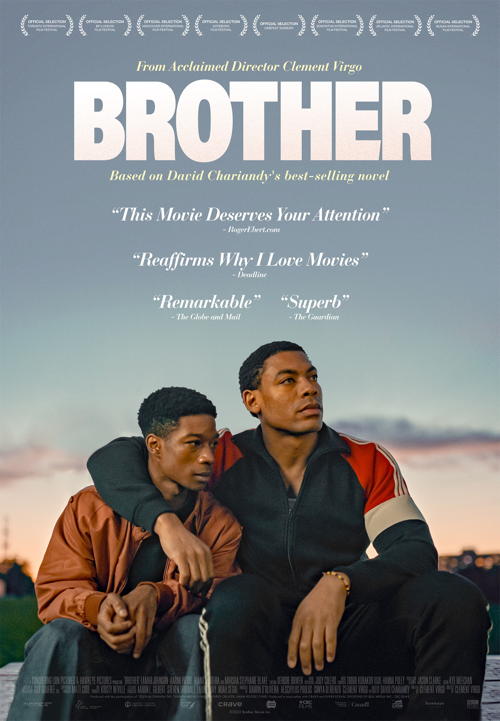
I was very pleased to find this film on BBC iPlayer for the next year. It tells a story set in a community which I knew about at a very basic level but I couldn’t remember seeing any examples of films depicting it. The community is essentially African-Caribbean in the city of Scarborough which is now a district of Toronto. Though highly urbanised, Scarborough appears to be on the edge 0f the metropolis and to have more access to green space and water. The two central characters are the brothers Francis and Michael who have been brought up by their mother alone. Their father left the family when the children were still young and he may be living locally but that is one of the enigmas in the narrative. Their mother, Ruth (Marsha Stephanie Blake) was born in Jamaica and has worked in the local hospital. The fourth central character is Aisha, the brightest girl at the neighbourhood school. She has a biracial background and lives with her father, who was born in the same village as Ruth.
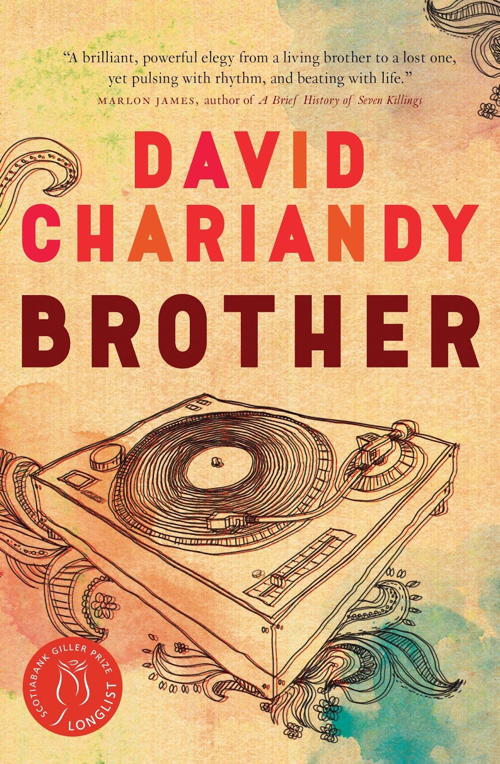
The film is an adaptation of a highly-praised 2017 novel by David Chariandy. It has been adapted by the director Clement Virgo, a very experienced and successful director of films and TV productions in North America. Virgo has adopted a non-linear narrative structure for his film but I’m not sure if this is how the novel works. There are no direct markers as the narrative shifts from one time period to another. The main period appears to be the early 1990s judging by the lack of mobile phones and the reliance on analogue music devices. The eclectic music collection of vinyl and cassettes is an important locus for several scenes and Francis is very interested in the growing hip-hop scene locally. Francis is the older brother played by Aaron Pierre, a tall and muscular actor with a string of credits in the US, UK and Canada. By contrast, Lamar Johnson as Michael is equally experienced but much shorter and more wiry than Pierre. I was very surprised to learn that both actors are the same age but here their different physical presence is used to suggest that Francis is several years older than Michael and that is supported by having two much young actors, who are clearly different ages, playing the brothers in the 1980s.
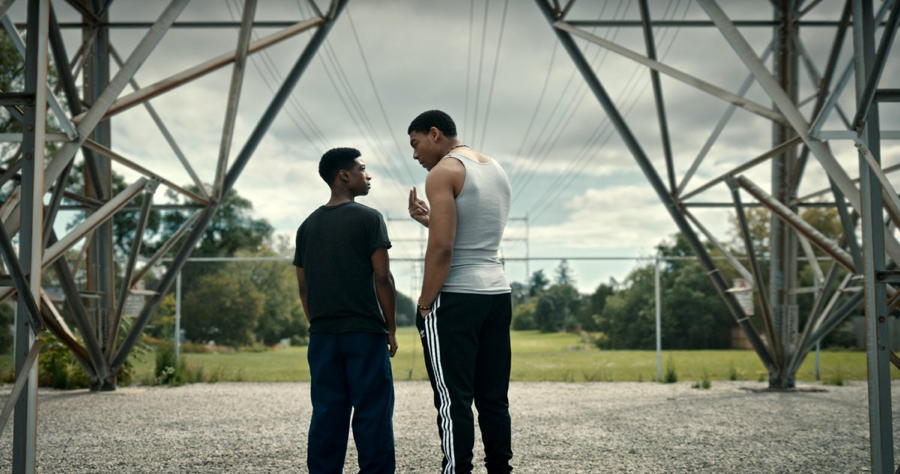
The narrative begins with a terrifying sequence for someone with a fear of heights and danger generally. Francis looks out for Michael but tries to convince him he needs to be stronger, to ‘play it cool’ and to assert himself. Here Francis suggests that they climb an electricity pylon. There is a big danger of being fried to a crisp but if they get to the top they will have a fantastic view. They begin the climb but then the narrative shifts to a few years later. The climb will remain with us and will appear again later in the film but it acts to give a sense of foreboding throughout the rest of the film. After the cut we see Aisha (Kiana Madeira) returning to the housing complex having presumably been away for some time. Michael welcomes her to stay in his mother’s apartment. Ruth then arrives but appears to be somewhere far away in her head, sitting watching TV but not speaking. Francis has disappeared. From now on we will shift time periods regularly so that as one reviewer puts it, it seems that we are actually experiencing living in the house as the same characters come and go at different times.
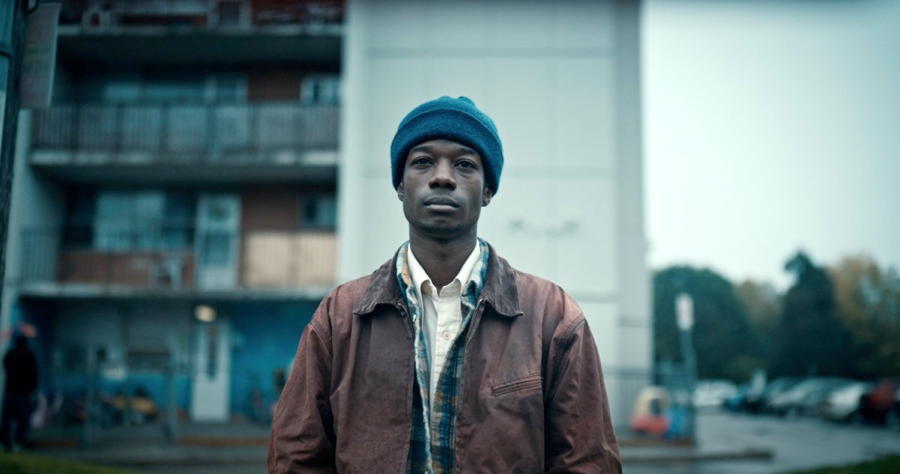
Ruth’s apartment seems very spacious, not the equivalent of the cramped spaces of UK council housing. Outside too, the environment seems softer and more welcoming and on a couple of occasions characters go down to the local river running through the trees. This isn’t to say that there is no violence. In fact the brothers are caught up in three or four incidents, though they are largely innocent of any crime and the worst violence comes from the (white) police.
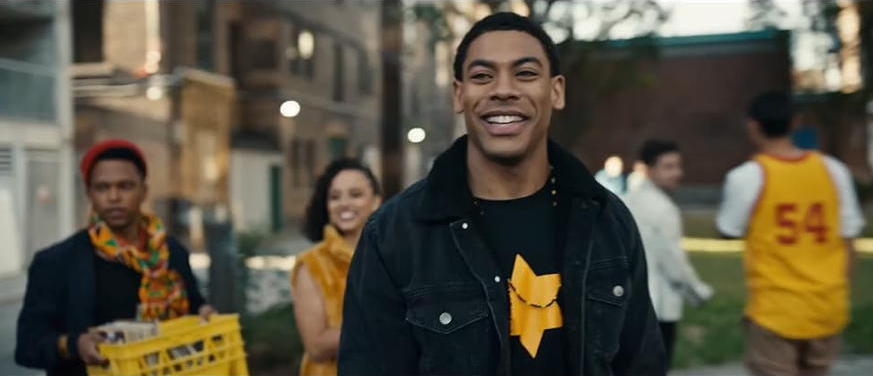
Music is very important in the film for several different reasons. Nina Simone’s version of Jacques Brel’s ‘Ne me quitte pas’ is used twice and it seems like some kind of family anthem. I also recognised Curtis Mayfield’s voice on ‘We the People are Darker than Blue’. At other times there is 1970s reggae from Desmond Decker (‘007, Shanty Town’), Dandy Livingstone (‘A Message to You Rudy’) The Mighty Diamonds and Jimmy Cliff. On the wall in the boys’ room is the sleeve of Bob Marley’s ‘Rastaman Vibrations’. When Francis tries to make his music work he has switched to early rap/hip-hop but in the 1980s it is still Jamaican music. If I remember rightly, Curtis Mayfield was one of the American soul singers whose style, especially as a singer in The Impressions in the 1960s, was an influence on Marley and Cliff. I’ve only named the musicians I know but there are others too. The Jamaican flag also appears. David Chariandy was born in Canada to Trinidadian parents but the family in the film are Jamaican. I wish I knew more about the Jamaican community in Canada. It must be significant to be part of a four-way community embracing Jamaica, UK and US from a Canadian perspective.
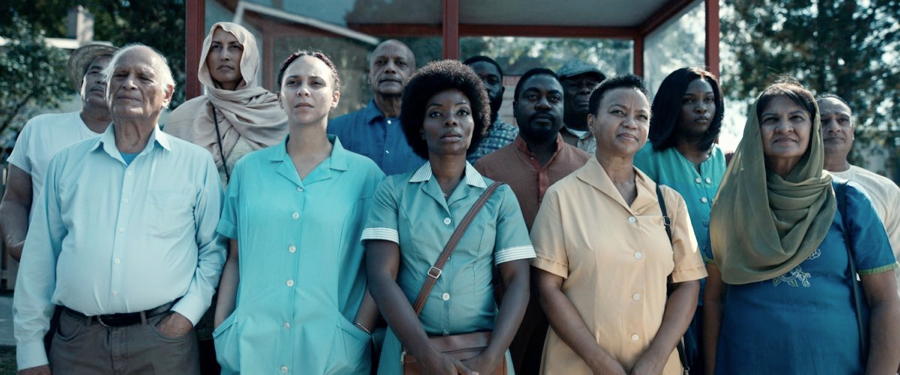
This film displays a tension between generic narrative elements – violence on the street, confrontation with cops, disaffection at school, music as a form of spiritual experience as well as romance and family melodrama – found in African-American, British and Canadian films and a carefully worked out arthouse approach of often slow-moving and carefully choreographed sequences. The music score by Todor Kobakov and the cinematography (in ‘Scope) by Guy Godfree both handle this tension well, helping to create a narrative that transcends genre and and invites reflection on what it means to live in Scarborough during the 1980s and 90s. ‘Space’ and the possibility to widen horizons seems to be the underlying theme despite the constricting factors of race, employment opportunities and policing. Editing and production design are also important in negotiating these spaces.
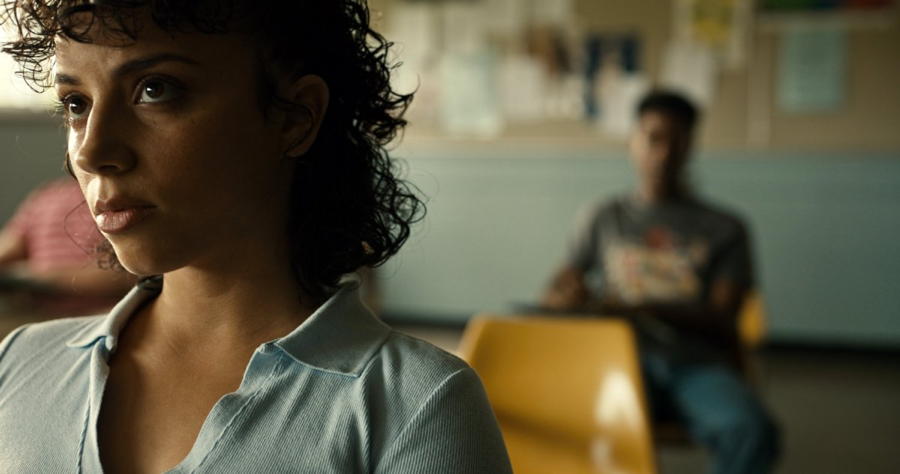
The performances are all very good and as well as the four central roles I would pick out Lovell Adams-Gray as ‘Jelly’ the DJ who supports Francis and who contributes to potential narrative developments for both Francis and the whole family. The film was generally very well-received, especially in North America. I think it deserved much wider distribution in the UK. It will certainly stay with me and I would place it alongside films such as La haine (France 1995) and Bullet Boy (UK 2004), both of which share important narrative elements. I hope I can find more examples of the work of both writer David Chariandy and director Clement Virgo as well as the principal cast members.

