
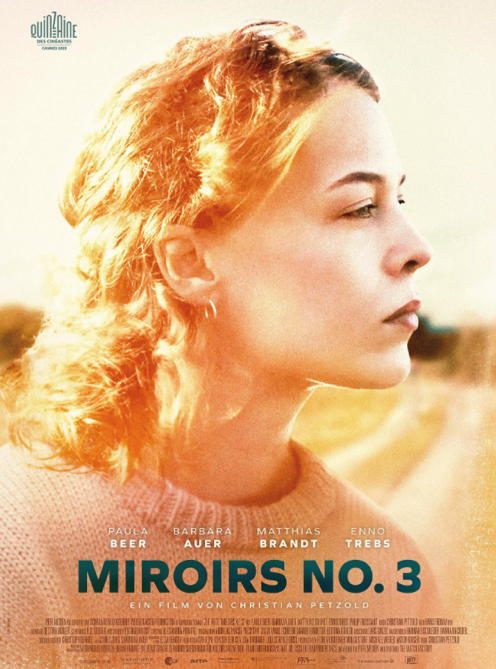
What a rare treat to get to a cinema to catch the latest film from Christian Petzold, perhaps the one current filmmaker I just couldn’t bear to ignore. Formal film studies briefly adopted the concept of the ‘auteur’ in the late 1950s as set out by Truffaut and others during the French New Wave, but had already decided to move on to more productive ideas by the late 1960s. Journalists and commentators in more mainstream public discourse picked up the idea of the director as star and now everyone appears to use it. Last week I heard a contemporary popular musician termed an auteur. The word does have a meaning in industry terms, referring to films that have generally received public funding for an artist who is considered worthy of support and whose films will feed the film festival circuit, but otherwise its use is fairly indiscriminate. On the other hand if we do want to name film artists who produce work that Truffaut might have admired as ‘auteurist’ there is no better choice than Petzold. I think anyone approaching a Petzold film for the first time can still, with some effort, enjoy the experience and recognise the skill and the imagination involved in its production. But to see all of Petzold’s films and then to recognise how the filmmaker keeps on teasing away at the same questions and exploring the same ideas with slightly changed combinations of elements is to revel in how everything interconnects. In modern commercial terms, Miroirs No. 3 is just 86 minutes long with very little conventional ‘action’ and no gimmicks. Yet it is beautiful to look at and gripping in terms of its characterisations, its performances and its use of music and sound. Give me this every time instead of Marvel comics or Christopher Nolan (I watched the trailer for The Oddyssey before the Petzold – I don’t think I’ll bother when it comes out).
Petzold originated the script for Miroirs No. 3 and he has written either original scripts or adaptations for each of his films. He also works with the same team comprising Hans Fromm as cinematographer, Bettina Böhler as editor, Katharina Ost as costume designer and others who are slightly less regular contributors. There is also an evolving core of Petzold actors as well. For the eight films since 2007, the lead female part has been played by Nina Hoss for four features and then Paula Beer for the next four. But connections go back further to 2000 as we shall see. Petzold also has a fascination for Eastern Germany and a number of his films share similar locations. Miroirs No. 3 is located in Berlin and in a village in North Eastern Brandenburg not too far from the border with Poland.
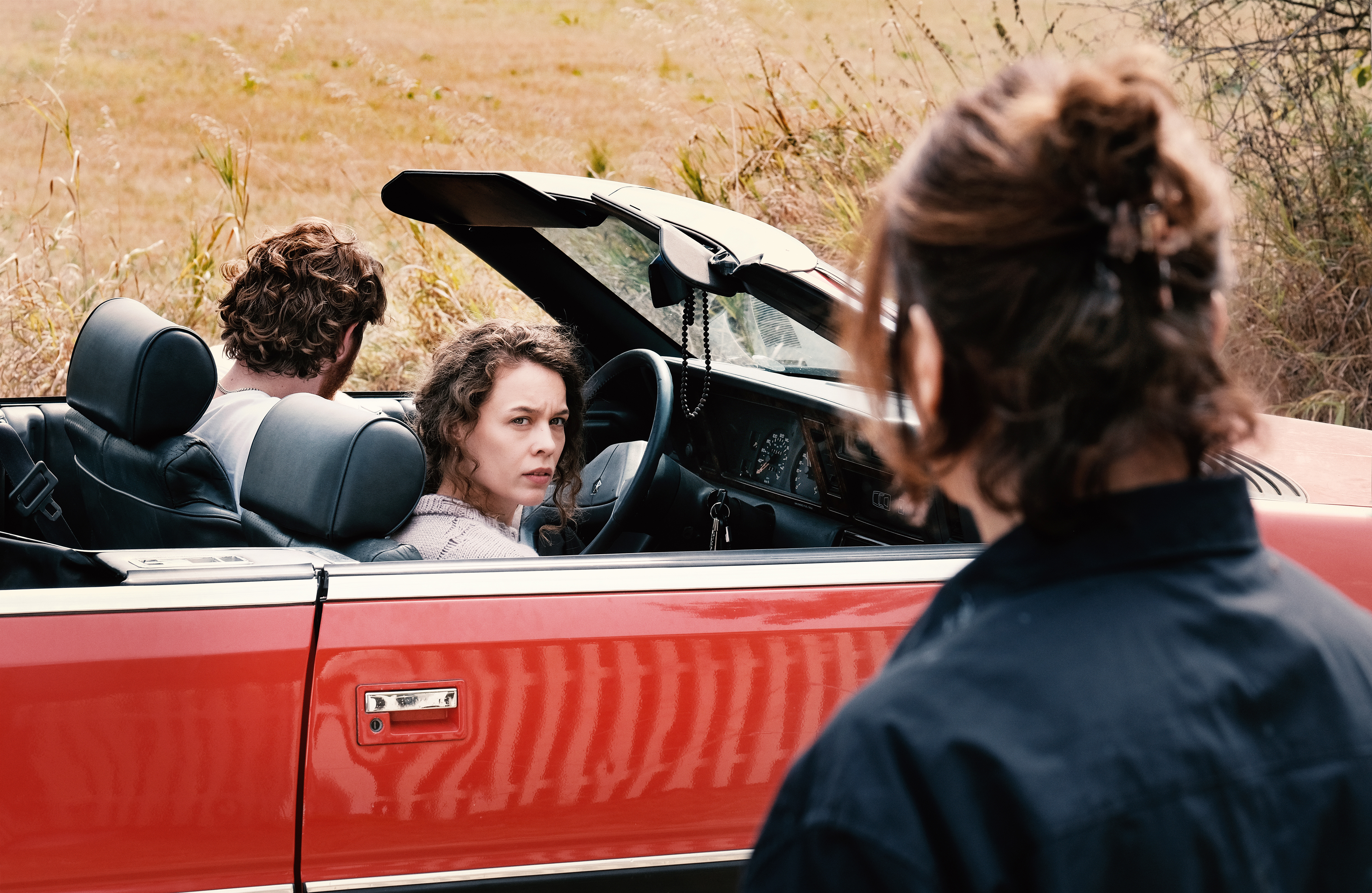
The title of this new film refers to Ravel’s five movements of a suite known as ‘Miroirs’ and specifically the third movement titled ‘Une barque sur l’océan’. This piano piece conjures up a small ship setting out across the expanse of the sea. In terms of the narrative it offers ‘mirrors’ as well as moving water. The film opens with a young woman staring down into the waters of a fast-flowing river. We notice she is dressed very simply in a loose but heavy cotton jumper. It appears to have some holes in it and a rough image of a bird on the front. Then the woman moves to the riverbank and a man dressed in a black wetsuit glides past standing on a paddle board. What on earth is going on? The woman’s rather impatient partner/boyfriend urges her into his car and they drive away, eventually reaching another body of water where they are due to join another couple in a boat. Suddenly the young woman announces she can’t get into the boat and that she needs to go home. The man of the other couple throws over his car keys and tells the woman’s partner to take her to the nearest station. The couple set off in the red open-top coupé, almost colliding with a woman painting the fence of her house on the narrow road and then moments later crashing into a field. This is the ‘inciting incident’. Later we will learn that the young woman, who survives the crash, is Laura (Paula Beer) and she will end up recovering from minor injuries in the house of the woman, Betty, who has been painting her fence. Later still we will learn that Laura is studying music in Berlin and her graduation piece is ‘Miroirs No. 3’.
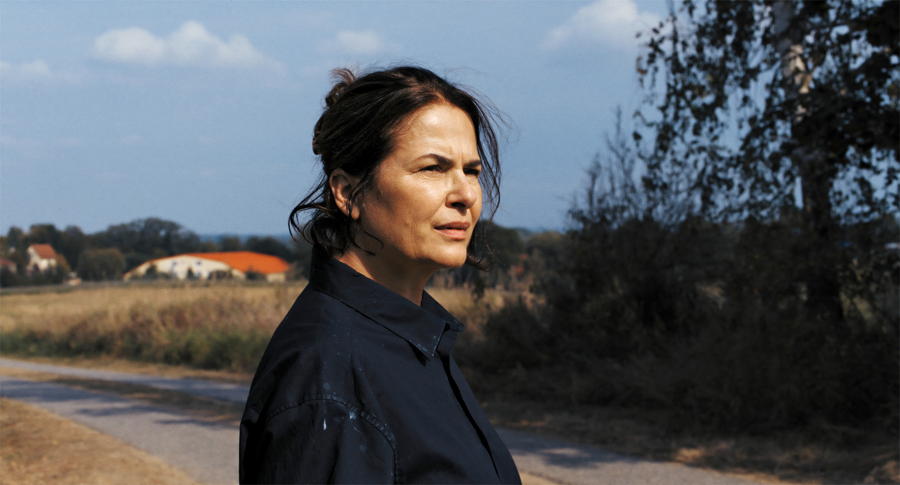
I’m not going to detail any more of the plot. I don’t think I’ve explained too much, but if you’ve never seen a Petzold film before you may be a little bemused. The most obvious point passed me by on a first viewing, though the flat countryside did alert me to some of Petzold’s other films. Later I realised that the car speeding on the narrow road reminded me of the car journey at the end of Petzold’s first cinema feature, The State I Am In (Germany 2000). The woman in that film, a fugitive associated with left political groups is played by Barbara Auer and the same actor plays Betty, the woman who was painting her fence and who now takes in Laura. Also, the early sequences of Petzold’s Yella (Germany 2007) feature a car driven off a bridge over a wide river from which Yella (Nina Hoss) emerges unscathed. In yet another early Petzold, Wolfsburg (Germany 2003) the film begins with a man driving a red car on a country road (Wolfsburg is in Lower Saxony), when he takes his eye off the empty road and hits a young boy on a bicycle. The man sees what he has done but drives away, beginning to feel guilty almost immediately. Meanwhile, the boy’s mother, played by Nina Hoss, is distraught when her injured son is in intensive care in hospital. Like Miroirs No. 3, this film includes several scenes of cycling. I could go on and make many other connections but I’ll first just remind you that ‘Laura’ is the title of the 1944 film noir directed by Otto Preminger which was a major commercial and critical hit in Hollywood. In that film, Laura is first seen in a portrait in a wealthy house and it appears that she has been killed with a shotgun. Later the investigating detective will discover that she is still alive and that the body seen by the police was someone else. Laura was played by Gene Tierney, an actor arguably as beautiful as Paula Beer.
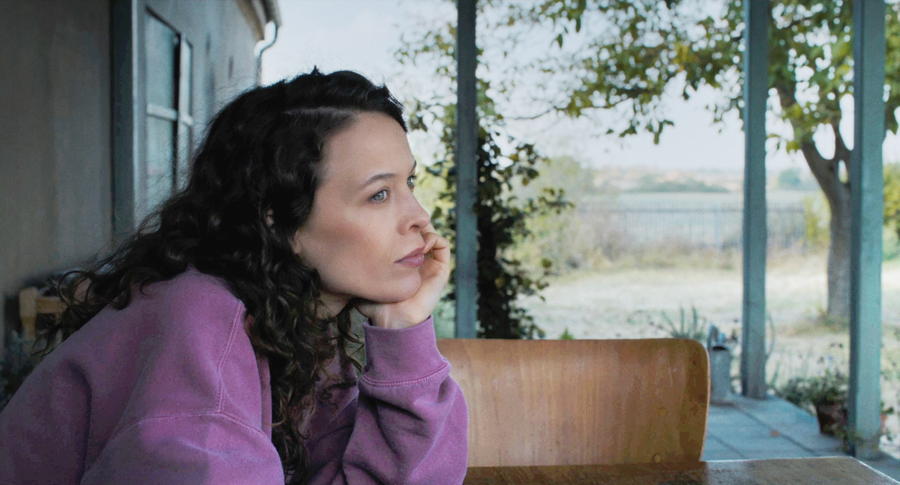
What I hope you pick up from all of these connections is a sense of Petzold’s meticulous re-working of characters and situations. Each of the films listed above involves a woman who has issues around her identity. In one of many interviews Petzold explains that his original idea was inspired by the Grimm fairy tales that he used to read to his daughters (?). These include the young daughter who dies but returns every night when her mother puts food on the table for dinner. The dead daughter appears in her shroud. We might relate this idea to the ‘man in black’ on the paddle board at the start of Miroirs No. 3 who could be Charon leading the way to the underworld. Then we remember that Paula Beer’s character in Petzold’s Undine (France-Germany 202o) is named after a water nymph.
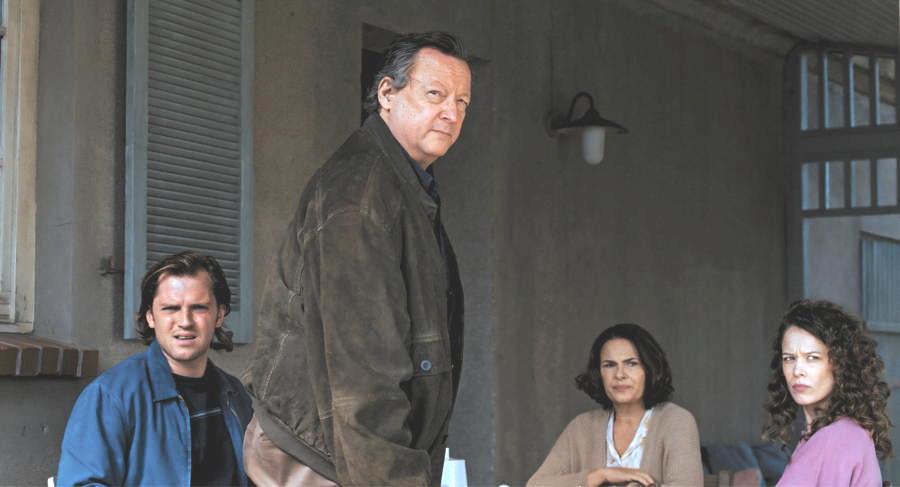
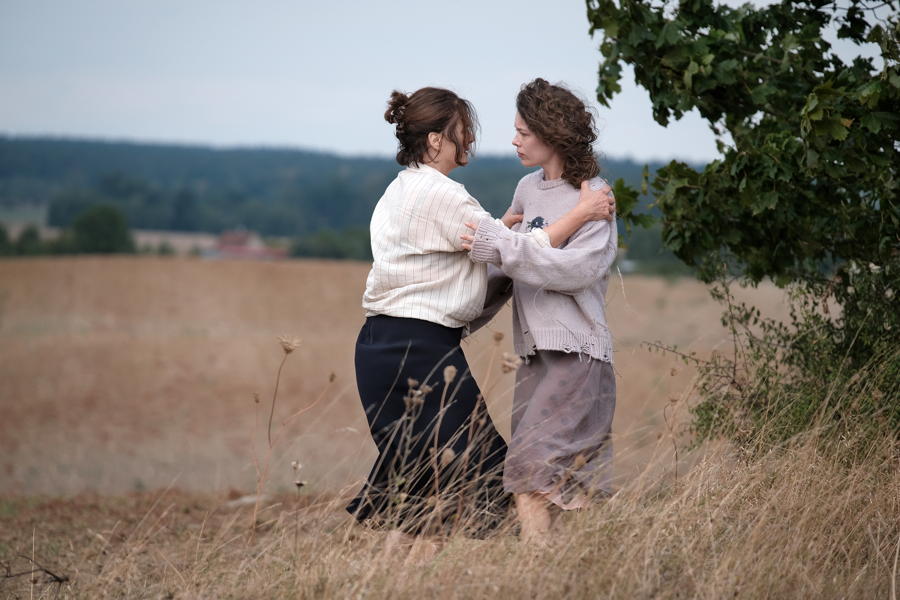
All these ideas combine to create the narrative of a film which is realist on the surface but which ripples like the water Laura observes and which the music suggests. (Petzold chose a terrific Frankie Valli and the Four Seasons track film, ‘The Night’ (1972) to mark an emotional key point in the film.) Laura finds herself being ‘mothered’ by Betty and meeting Betty’s son and daughter. You can probably guess the scenario that makes this possible. My advice is to watch the film first then go to the website of the UK distributor New Wave Films, the best arthouse distributor we have. There you will find a Press Pack and many links to Petzold interviews. The film can be rented on BFI Player in the UK and is available to stream in North America and across Europe on various streamers. Petzold’s previous film Afire (Germany 2023) is equally good and is currently available free on BBC iPlayer in the UK for the next 8 months.

