

For me, Pedro Almodóvar is the leading European auteur and belongs firmly in the company of the contemporary filmmakers whose films I will always seek out. This year I’ve managed to find the latest films by Christian Petzold and Kelly Reichardt, two of the other directors whose every film is worth striving to see and Almodóvar completes a great trio. I approached Bitter Christmas knowing that the film had not received universally favourable reviews. IMDb shows a low rating and relatively few reviews by writers in the UK/US but plenty from Europe. Some reviewers think this is a minor work, many of the ‘users’ don’t understand the film and dismiss it. On the other hand Almodóvar gets an interview in a four page spread in the September 2026 edition of Sight and Sound conducted by Maria Delgado, one of the main writers on (and supporters of) Almodóvar’s work. What are the issues that seem to divide audiences and critics over this new film?

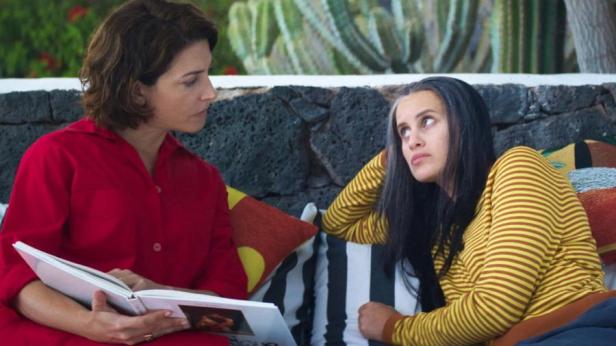
Bitter Christmas is best described as an exploration of ‘autofiction’, a formal category of literature arguably more common in Europe than in the anglophone world. In fact the new film is concerned with a double layer of autofiction. Almodóvar directs a film about a filmmaker who faces a writer’s block in his search for a new film project and then decides to create a narrative about another filmmaker based on his own experiences and the people he knows. The central character of Almodóvar’s film is a writer-director in his sixties, Raúl with greying hair and a handsome younger male companion – clearly a possible avatar of the director himself. In the present (i.e. 2025?) this director begins to write a new script about a female director who after two films that ‘failed’, but became ‘cult films’, is earning money as a director/producer of advertising films. This is Elsa who in 2004 also has a handsome young lover, a firefighter and stripper named Bonifacio (stage name Beau). She too is suffering a form of ‘blockage’ – she is mourning the death of her mother and feeling guilty because she wasn’t in the hospital when her mother died. Writing a new script that could become her third feature she experiences the pain of two of her friends, Patricia who discovers her husband is cheating on her and Natalia whose young son died in a car crash. Linking these two fictions is another important character. Mónica is central to Raul’s career, an amalgam of agent, PA, office manager etc. and she has been with him for twenty years. Suddenly in the midst of his new script production she says she must leave to do something important for a close friend. The two narratives run in parallel, though ‘2025’ proceeds in a linear fashion whereas 2004 jumps backwards and forwards. Also, there are not the same direct linkages between all the characters.
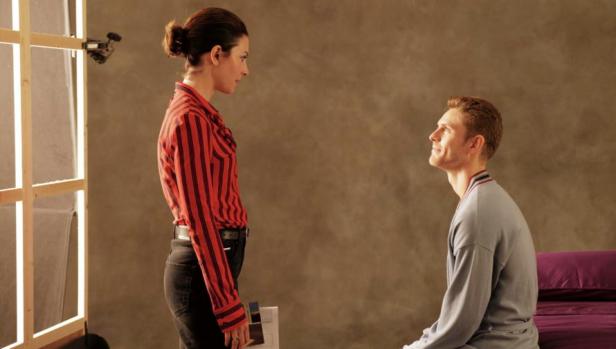
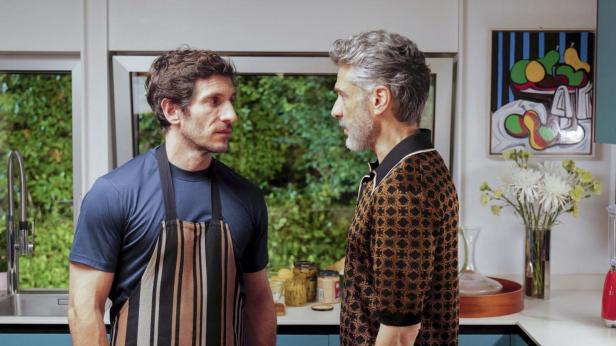
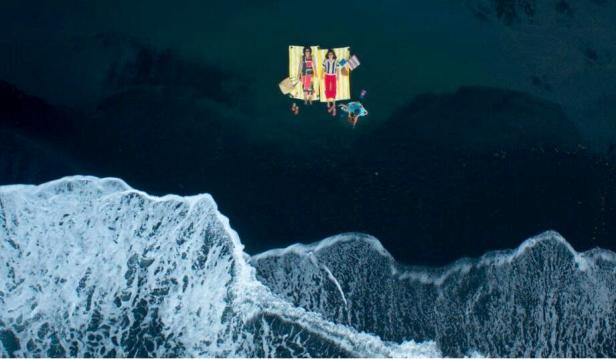
The second important factor in the film is the choice of locations. Madrid appears in both narratives but in ‘2004’, Elsa takes a break in a rented villa on Lanzarote. If you are not familiar with the Canary Islands, Lanzarote is notable for two features in particular. It does have a form of mass tourism in the south of the island but overall it attracts those looking for a quieter holiday experience and it features dramatic landscapes of black sands and brilliant white houses as well as the more familiar greenery and mountains in the north and west. Secondly Lanzarote hosts artists and is particularly known for the work of the artist, architect and nature conservationist César Manrique. Overall, the island is beautiful and up market compared to Tenerife and Grand Canaria. Almodóvar easily works the dramatic colours into his mise en scène and our first shot of the island is a high drone shot looking down on the black sand beach. For a moment it looks artificial before the camera moves closer. Elsa drives a bright red SUV across the unusual terrain. Her villa has fantastic views as well as architectural features which emphasise the ways in which doors and windows can act like mirrors. Mirrors are, of course, a visual symbol of the potential of melodrama. Mirrors show us ourselves and also ‘reproduce’ our images or split our images. Narratives are built around issues about well we know ourselves and how others see us. Almodóvar is a master of the melodrama form. Nobody else has quite his sense of colour and design and fashion. The music in his films is another major element of melodrama (melos + drama). In Bitter Christmas we not only get the usual fabulous score from Alberto Iglesias (which won the soundtrack prize at Cannes) but also a couple of songs by Chavela Vargas (1919-2012). I realise now her songs also appear in five other Almodóvar films. Here Almodóvar manages to create a scene where Elsa and Patricia listen to Vargas singing about the legendary ‘crying woman’ La Llorona with Patricia crying (I can’t remember if Elsa also has a tear). The wonderful poster for the film above and some of the images here display the director’s eye and the work of Antxón Gómez, Isabel Peinado, Carlota Casado and Paco Delgado – respectively, Production Designer, Art Director, Set Decorator and Costume Designer.

Another feature of classical melodrama is the use of a stock company of actors. Almodóvar has returned again and again to a small group of players. In this film there is only one long-time Almodóvar actor I recognised immediately. Rossy de Palma has a smallish part in this film and I think nine others for the director. She appears in Parallel Mothers (2021) and the second lead in that film is Milena Smit who appears in Bitter Christmas as Natalia, Elsa’s friend who has lost her son in a car crash. Aitana Sánchez-Gijón who plays Mónica is another actor who appeared in Parallel Mothers. Leonardo Sbaraglia plays the film director Raul and he was also cast in Almodóvar’s previous ‘auto fiction’ film Pain and Glory (2019). Victoria Luengo who plays Elsa’s friend Patricia was cast in the previous Almodóvar film, The Room Next Door (2024). This all suggests that Almodóvar is building up a new stock company of younger actors. In this film, however, he cast Bárbara Lennie in the lead as Elsa and she had appeared in just one Almodóvar film, The Skin I Live In (2011) in a relatively small part. I think I read that Almodóvar had tried to cast her earlier and she has received numerous acting awards since 2010. Needless to say she is very good here as are the rest of the cast. The stunning visual quality of the film is also dependent on the cinematography of Pau Esteve Birba about who I know very little but on this evidence is more than capable of producing the imagery that Almodóvar wishes to create.
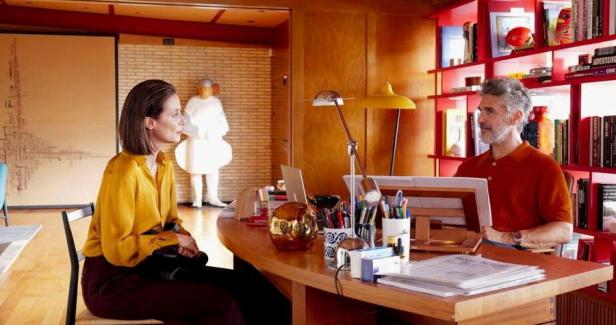
Why have some audiences found Bitter Christmas so difficult? It is an unusual title derived from the Chavela Vargas song. The song is a plea to end an affair decisively. The singer wants a new start for the New Year and is therefore willing to sacrifice the pleasures of Christmas to gain their freedom. It is a very emotional moment. But it clearly doesn’t fit the idea of a Christmas film with a happy ending. I don’t want to spoil the resolution of the narrative so I’ll just point out that one of the lead characters is the subject of a tongue-lashing from a previously close colleague, perhaps having not understood the emotion involved in their relationship. I’ve a feeling also that some audiences found the cutting between the parallel fiction narratives difficult to follow. I know myself that on occasions I had to rethink scenes when I realised I was being confused about which of the three directors (the two fictional plus Almodóvar) was ‘directing’ a particular scene. I realise also that unless you have seen many Almodóvar’s films you may find it harder to deal with the idea of autofiction and an auteur who enjoys drawing on his own experiences and creating narratives from them that also develop into explorations of melodrama and female characters who in turn draw on great female stars of melodrama as well as the women of his own family and others in his network of friends from his childhood and his life in Madrid since he arrived from his village in La Mancha in the 1970s. I think possibly that Bitter Christmas is the film in which he questions his own actions as a director more than in most of his other films. He has made 25 features, several shorts and other pieces and for me this new film belongs alongside the others and in no way suggests that the maestro is losing his power.

