
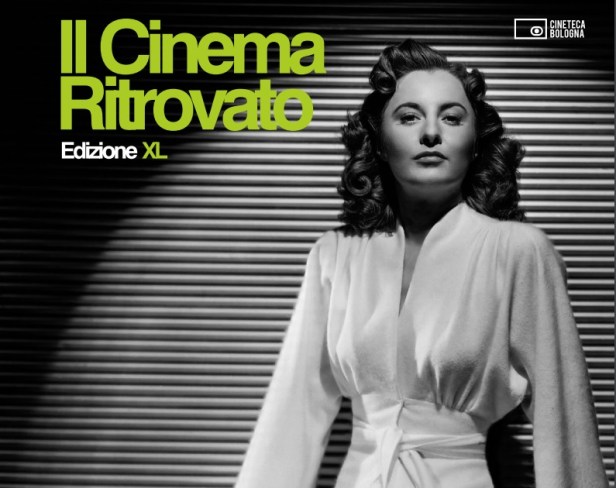
This year’s Festival, the 40th, is an ‘XL’ edition: masses of movies: many 35mm prints: and a wide selection of film-makers, stars, genres, periods and territories. This does, of course, offer festival-goers an even more difficult set of choices. And with the imperialist war continuing, and a new EEC passport system, the travel there is likely to be even more stressful.
There is a fine selection of international film-makers. Luchino Visconti is represented by a number of restorations in digital versions but also some 35mm prints, including Senso (1954) and the magnificent Il gattopardo / The Leopard (1963). And we have from Hollywood the films of Mitchell Leisen. His films were frequently romantic and often very witty, relying on talented screen writers like Preston Sturges and Billy Wilder; both also fine film directors. Leisen also worked well with a number of Hollywood leading ladies. This included Barbara Stanwyck who has a programme of films in her own right. Both Leisen and Stanwyck are favoured with a number of 35mm prints, including rarer items from the early 1930s. Including Leisen’s Cradle Song (1933), Stanwyck’s Ladies of Leisure (1930) whilst jointly No Man of Her Own (1950). All these are part of The Cinephiles’ Heaven.
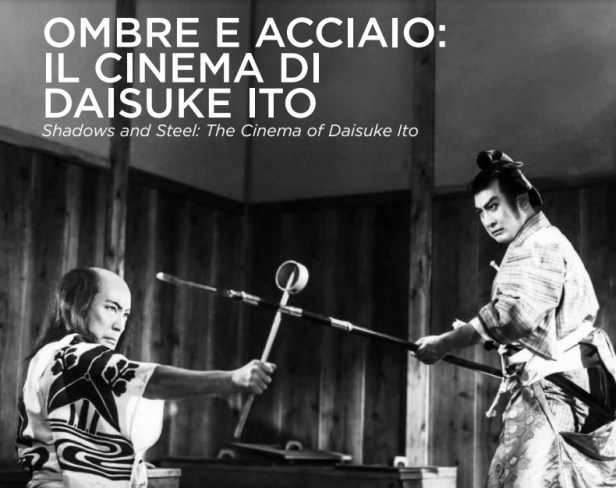
Then the pioneer Japanese director Daisuke Ito, notable for his early samurai movies. There is his classic Chuji tabi nikki / The Diary of Chuji’s Travels (1927), much of which is unfortunately lost but which has been partially reconstructed. And there are his later sound movies from the 1940s and 1950s, most in 35mm prints. From India the films of Ritwik Ghatak, an independent film-maker with distinctive narratives and style. There are a wide selection of his feature films including such classics as Meghe Dhaka Tara / The Cloud-Capped Star (1960) and Subarnarekha / The Golden Line (1965). From Spain comes the films of Juan Antonio Bardem. A Communist Party member who had to work most of his career under the censorship of Franco’s fascist regime. His films were released during the 1950s up until the 1970s. Included is Calle Mayor (1956) on 35mm and featuring the exile from the Hollywood blacklist Betsy Blair. All three feature in The Space Machine.
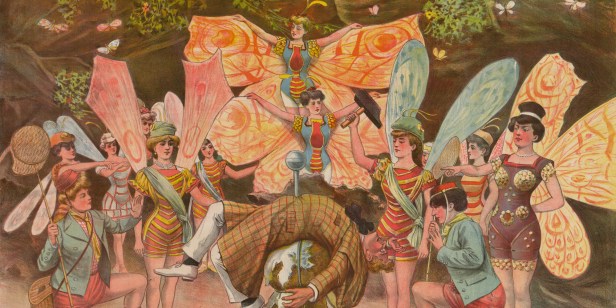
The Time Machine includes the programmes of silent; from 1906 and 1926. 1906 will include films from Albert Capellani and the Nordisk Company. 1926 will include many of the classics from that year with [among others] Po Zakonu / By the Law, directed by Lev Kulešov and So This Is Paris directed by Ernst Lubitsch. Both programmes will also feature open-air screenings in the Piazzetta Pasolini from a vintage carbon arc projector. The 1906 programme includes several films by Albert Capellani and a Topical film set in Preston. 1926 features Lotte Reiniger’s pioneering animation Die Abenteuer Des Prinzen Achmed / The Adventures of Prince Achmed. All these silents have live musical accompaniment.
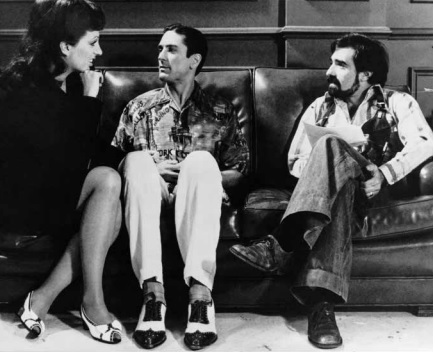
And then the Piazza Maggiore screenings, which a friend, Peter Rist, described as the finest cinema in the world; a vast space with a mammoth screen, in palatial settings and hosting thousands of people each night. This year there will be a restored Sunrise: A Song of Two Humans (1927) with a live orchestral accompaniment. Also, a restored New York, New York (1977): and two Chaplin restorations with live music.
And there is a lot more in the Festival: Cinema Libero offers critical films from a number of countries and periods: there are 1930s films with Josephine Baker: a focus on early Matinee Idols: the specialist programme of ‘small-gauge’ cinema; and numerous documentaries, talks and guest interviews. The Ritrovato is always has a rich vein of international cinema and this is as true for this year.

