
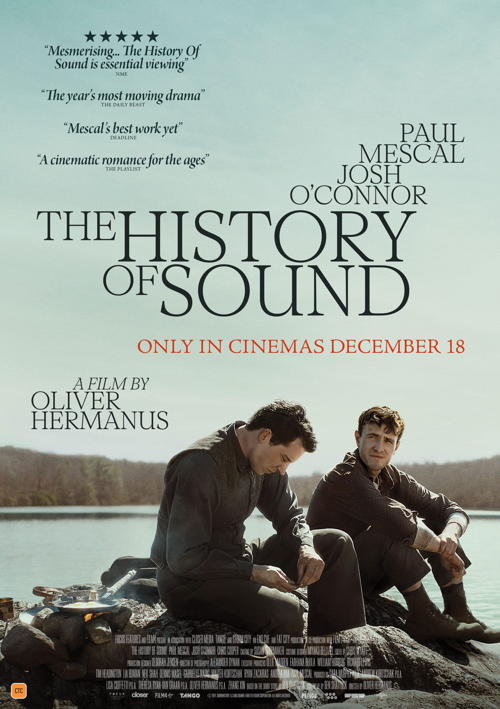
This is an unusual and very beautiful film, not without flaws perhaps but a joy for anyone interested in music – and romance/history/memory. The original ‘property’ is the short story collection (with the same title) written by Ben Shattuck and specifically two linked stories that Shattuck himself expanded to form the basis of a feature film. The director Oliver Hermanus enjoyed the stories very much and determined that he would adapt them. I haven’t read the collection but it sounds intriguing. There are twelve stories, organised in pairs and they cover an extensive period beginning in early 18th century New England. The two stories adapted for the film cover events from around 1910 to the 1980s with most of the narrative located in the period from 1917 until the mid 1920s. In commercial terms the production faced a significant problem in that assumptions grew that the film would in some way resemble Brokeback Mountain with a gay director and the central casting of two of the ‘hottest’ young actors around – Paul Mescal and Josh O’Connor. These assumptions were perhaps unhelpful (and unwanted?) because although there is a gay romance it is a rather different relationship to the modern cowboys in the adaptation of the short story by Annie Proulx. Some audiences may have been disappointed by the handling of the romance and in North America the film struggled at the box office. It fared better in Europe and overall the ‘international’ box office was roughly three times the North American take. The film was first shown at Cannes in 2025 in competition for the Palme d’Or. In North America, MUBI was the distributor but in the large European markets it was Universal. In both cases the release went wide enough to hit some multiplexes but overall this seems to have been treated as an arthouse release.
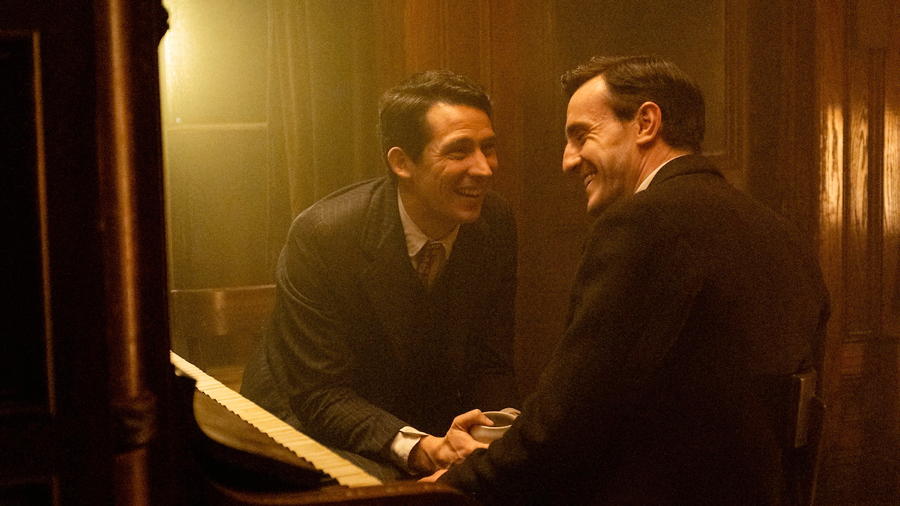
The film opens with a 10 year old Lionel by a river in Kentucky and it is revealed he has an extraordinary musical ear so that he can ‘taste’ and ‘see’ sounds. Later we will understand that the narration is voiced by Chris Cooper as the 80 year-old Lionel. Lionel (now played by Paul Mescal) enters a conservatoire in New England at 17 and meets David (Josh O’Connor) playing piano in the college bar. The two have an instant rapport singing songs to each other and eventually sharing a bed. David is drafted into the US Army and sent to France. When he returns in 1919 he discovers Lionel has returned to the farm but David invites him to join his ‘project’ to collect folk songs in rural Maine. The two men walk across the state, sharing a tent and recording local singers. The romance is re-kindled but there is a suggestion that David has been affected by his wartime experience. When they part at the end of the trip there is a clear sense that this period has been supremely important for both men. From now on the men are separated. I don’t want to spoil the narrative but I will point out that the film now follows Lionel through stints singing (and pursuing romantic relationships) in Rome and Oxford before returning again to Kentucky. This is the mid-1920s and Lionel will seek to find David again. There are some surprising twists in store and then around 1980 we meet Lionel again in his role as an ethnomusicologist.
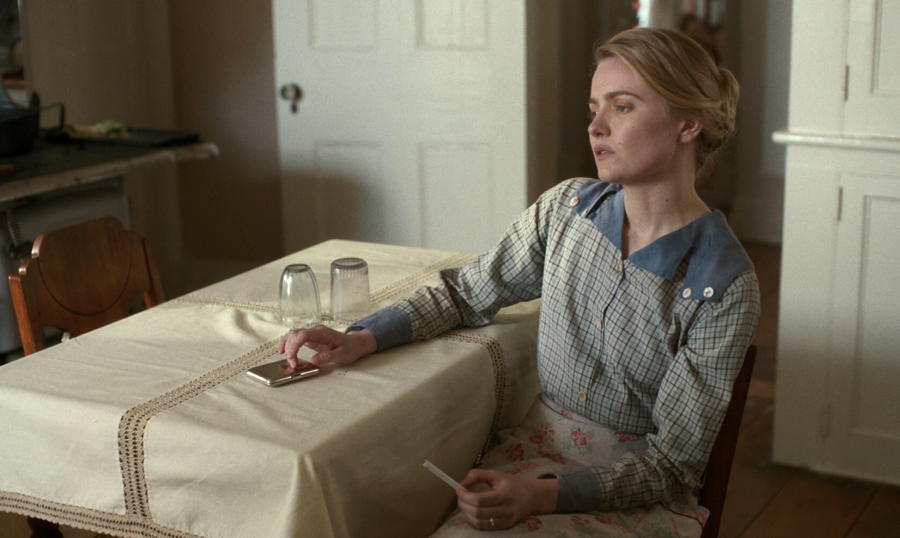
In an interview Lionel makes clear that he realised, later in his life, that he had never been so happy as he had been collecting songs with David and this admission is really the crux of the narrative – the coming together of memory, music and the recognition of the love between the two men – not ‘lost’ in the sense it ended but that it stayed with Lionel even when when David wasn’t there. There are music performances throughout the narrative. There are classical pieces performed by trained musicians and singers and traditional songs sung by Paul Mescal and Josh O’Connor and the singers they recorded (many performances arranged by the American folk singer Sam Amidon). There is also a score by Oliver Coates and a very surprising playing of Joy Division’s ‘Atmosphere’ (1980) during the final sequence when Lionel is describing the emotional power of music. I found this very moving and it occurs to me that the production methods used by Joy Division were about as far from folk music as you could get but on the other hand the feelings that their music produced/provoked were close to the powerful feelings Lionel discusses. See our posting on Control (UK 2007) for more on Ian Curtis and Joy Division.
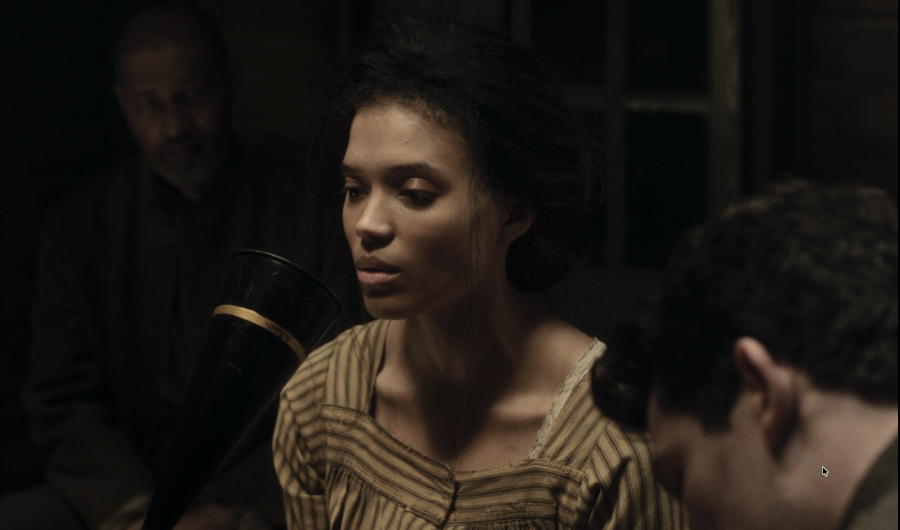
The History of Sound was shot in the US in New Jersey and New England and in Lazio in Italy. There were also shoots in the UK including what looks like The Lake District. Cinematography is by Alexander Dynan in what appears to be a palette dominated by browns – certainly the colours contribute to the sense of a rather sombre and sad set of memories. Although the river at the start of the Kentucky sequences is quite vibrant, I was never totally convinced by Lionel’s family farm that seems quite desolate. But the overall effect is of beautiful if subdued landscapes and interiors. Some reviewers have used terms such as ‘restrained’ which seems right. Watching the film I did worry that the pacing seemed very slow but that didn’t really bother me as I was simply waiting for the next sublime song recording in the dark cabins lit by candles. Maine, I read today, is the most ‘rural’ of American states. The songs are wonderful but, as one reviewer noted, it seems odd that there are no French-Canadian songs as Maine borders both Quebec and New Brunswick, two of the most francophone Canadian provinces.
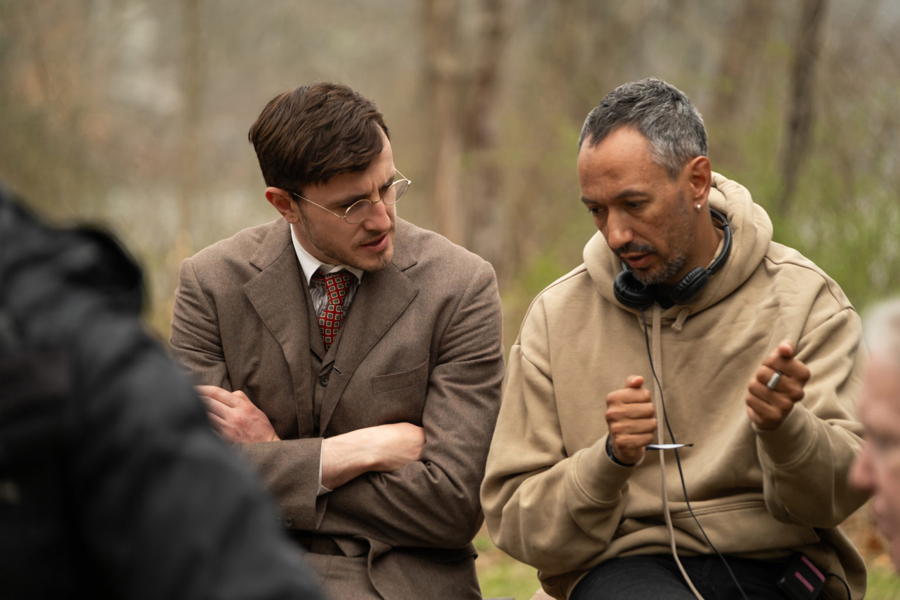
The gay romance that is one of the key issues in the narrative does not perhaps get the screen time in the form of physical love-making that some audiences were hoping for. In fact, it literally disappears after a fade to black halfway through the film. It doesn’t ‘end’ of course but continues until the final image. It becomes a memory, a very powerful memory often prompted by music or by song. The queer narrative, however, remains intact and the film marks another entry into the history of queer relationships, in this case during the 1920s.
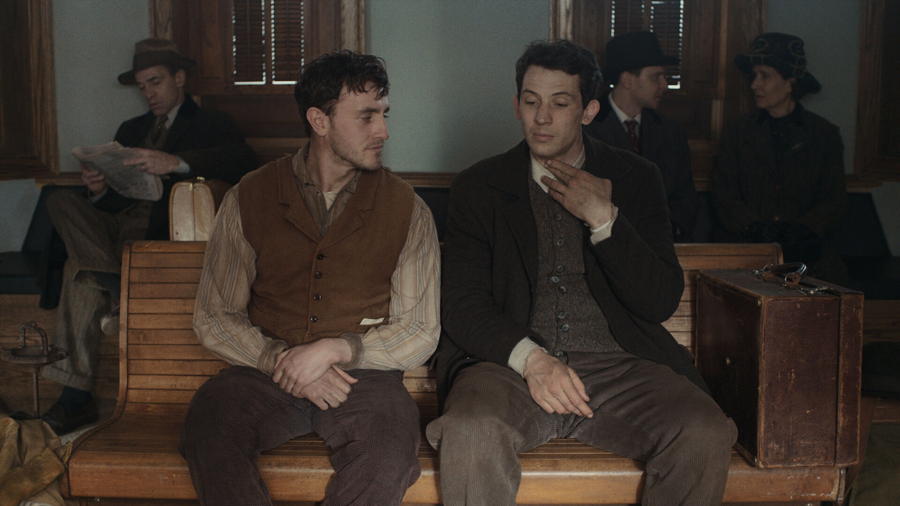
Every aspect of the film’s production is carefully worked out. The performances are terrific, as is the music, sound design and location cinematography. The locations are often sparsely populated but contain authentic detail in the mise en scène. It seems very realist but not in the sometimes chocolate-box style of European heritage films or the richly presented films of Hollywood realism. One of the major criticisms of the film is that it is perhaps too long and stretched out – and perhaps Ben Shattuck should not have written the screenplay himself but allowed a fresh eye to visualise his story. I can see this argument but I have found myself re-thinking my reading of the story which seems to invite the audience to learn about the love of two men in an age when it can’t be expressed in public but also to consider what we mean by ‘history’ and ‘memory’ and how they are experienced through music and images and actions remembered. I think this is a film that will stay with me and I’m pleased that it offers a rather different history to those of the celebrated song collectors that have informed the various folk song revival movements over the years in the UK and US.Director Oliver Hermanus made Living in 2022 and Moffie (2019), about a young gay man in the apartheid South African Army.
 itp Global Film