
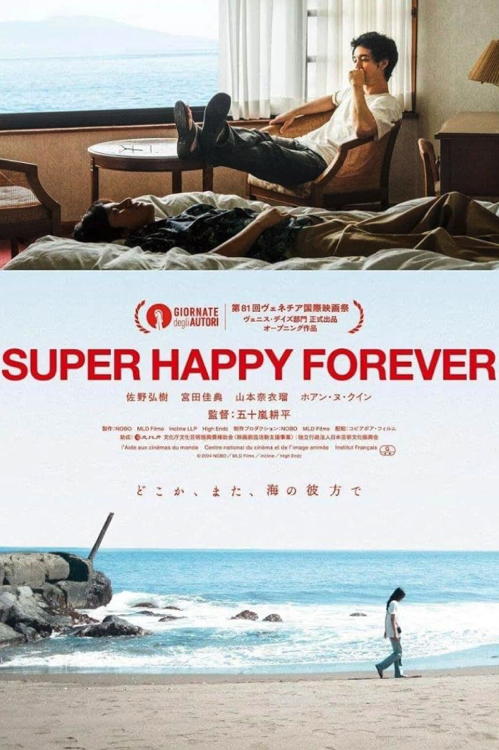
There haven’t been many new arthouse/festival films appearing on MUBI that I’ve wanted to see in the last few months but Super Happy Forever looked like it would be interesting. It turns out to have been something of a low-key hit in the Giornate degli Autori at Venice in 2024. I enjoyed the film, though I think for different reasons than most of the reviewers whose work I’ve been able to find. It’s the fourth feature by director Igarashi Kohei whose previous film was co-directed by the French filmmaker Damien Manivel. Super Happy Forever is a French co-production with Manivel’s company but in this case his contribution came at the post-production stage.
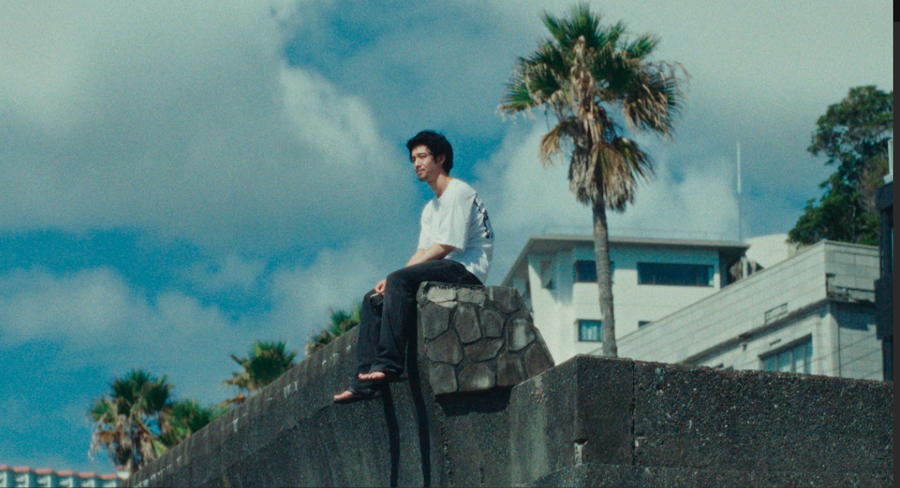
The presentation of the film by MUBI and by various reviewers suggests it is a form of romance comedy-drama. It’s certainly difficult to categorise beyond the obvious point that it is a ‘festival film’ and possibly quite difficult to programme as a commercial arthouse offer. As Guy Lodge writes in Variety, “its youthful slant and quiet formal simplicity make it a viable fit for specialist streaming platforms” – and thus MUBI. But I’m not sure that either of the conventional generic categories are particularly useful in describing the film. I was charmed but I didn’t really laugh out loud at any of the scenes. For me it’s very much about a place, a time (or perhaps ‘timelessness?) and a small group of characters. The narrative opens with two thirty-something young men arriving at a quiet seaside resort on the Izu peninsula, the nearest seaside resort area to Tokyo. Their hotel is closing in a few days but it soon becomes clear that they are there for a clear purpose, returning to the same hotel where Sano (Sano Hiroki) had stayed when he met his wife Nagi five years earlier. He is accompanied by his friend Miyata (Miyata Yoshinori) who was with him on the original trip. We learn that Nagi has recently (?) unexpectedly died in her sleep and Sano is trying to work through his grief. This trip is likely to bring many emotions to the surface and we worry about what will happen, hoping Miyata will be able to support his friend.
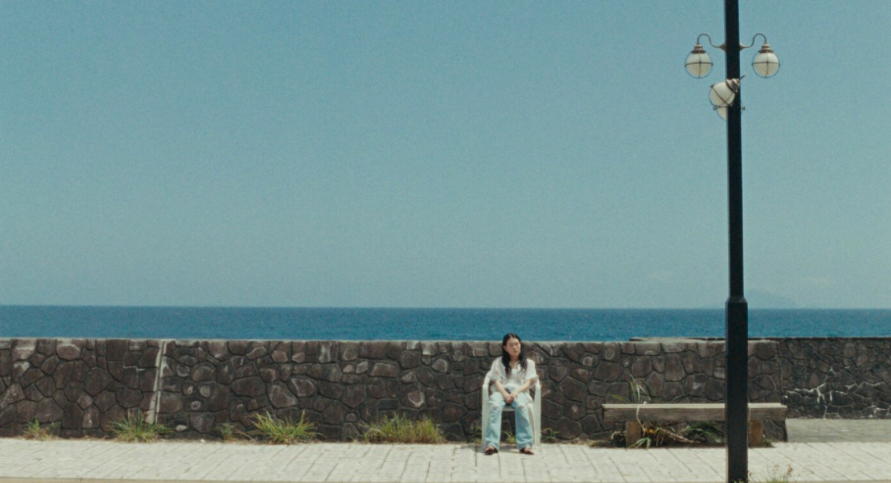
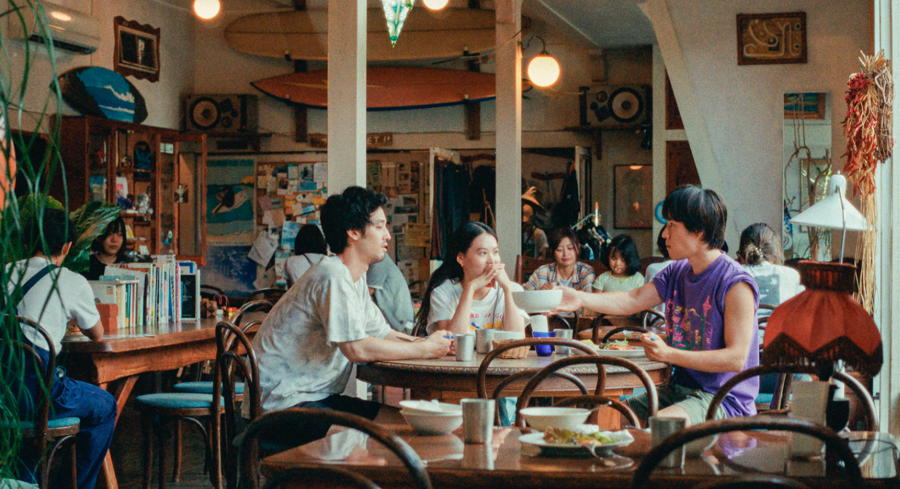
Sano has booked into the same room that Nagi had in the hotel and he spends time on what seems like a fruitless search for a red baseball cap that he gave to Nagi and which she lost. Meanwhile, Miyata has his own adventures part of which include coming across two young women who have been to the same self-help group as himself. The group’s title provides the film’s title and we fear that it is not something that Sano wants to hear about. A tough night for the two young men seems inevitable. The narrative changes tack just before the half-way point and a clever slow pan in room 819 takes us back from a suffering Sano to the arrival of Nagi (Yamamoto Nairu) in the same room five years earlier. She is on her own as her friend has had to cry off and Nagi is looking for adventures by herself. She will meet Sano and it will be a gentle romantic encounter which will end with a promise to meet up in the city. The mood is unsurprisingly very different in this flashback but there are a couple of possible warning signs in that Nagi seems to lose things quite easily and she seems to be often late for meetings. I don’t want to spoil the narrative pleasures of the film so I’ll focus on some of the elements in the narrative that make the film distinctive, at least for me.
As well as the red cap, the other recurring iconic element in the film is a song, ‘La mer’ (‘The sea’) by Charles Trenet. But actually it’s mainly the English language version by Bobby Darin from 1959, ‘Beyond the Sea’. Versions of the song, some sung by characters, link together the different parts of the narrative. It’s a good choice. Darin’s jaunty ‘swing version’ of the song contrasts with the air of melancholy that pervades an end of season resort. It’s also a timeless song – Trenet’s 1946 version was an international hit and the American version seems like the kind of song that could be popular in Japan. The seaside setting is very important, beyond the obvious link to the ‘holiday romance’. Japan is very much a maritime nation and Japanese stories very often include a trip to the sea. I remember first thinking about the Izu peninsula when working on the classic J-horror film Ringu (1998) and there seem to be a host of melodramas and crime thrillers which end up on a beach. ‘Timelessness’ also seems to be apparent in other aspects of Super Happy Forever. The film’s two time periods seem to be 2023 and a flashback to 2018. A mask worn by the hotel receptionist/night manager suggests the vestiges of COVID protection but when Sano receives a phone call he has a small clamshell ‘phone. I’m no expert on phones but I had one like that years ago. Similarly, Nagi in 2018 is an inveterate ‘snapper’, not using her phone but instead an analogue camera using 35mm film. Both Sano and Nagi smoke – something which might seem odd in a contemporary mainstream romantic comedy.
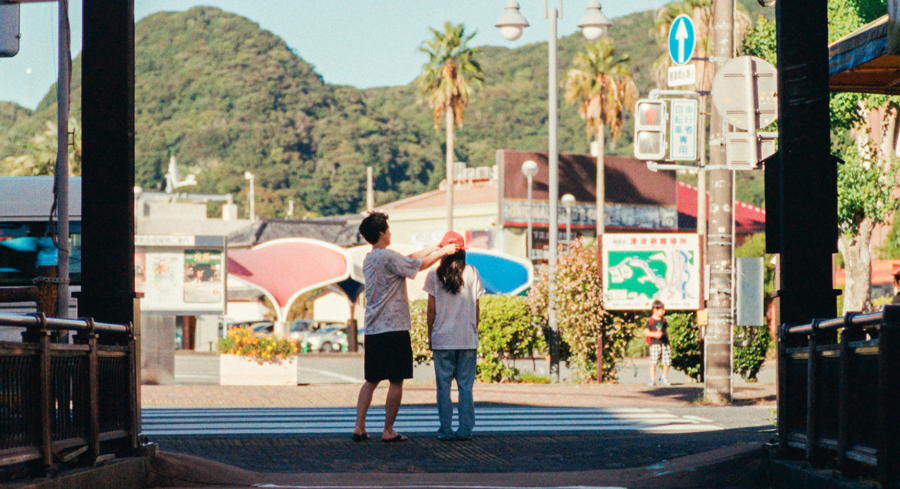
There are relatively few characters in the film and apart from the three leads the most important other character is a chambermaid An (Hoang Nh Quynh) who is a Vietnamese migrant worker. I think there might be a second Vietnamese on the hotel staff as well. Both Nagi and Sano interact with An. It isn’t unusual for other East Asian characters to appear in Japanese films but usually they are South Koreans, Taiwanese or Chinese. These are nations with past links to Japan, though the links back to the Japanese occupation of these countries are not without problems. There is a distinct group of Zainichi Koreans for instance which refers to migrants before 1945 or their descendants. Japan is the major country which is aging rapidly and one potential solution is to encourage inward migration. There does seem to be a significant Filipino community in Japan. Are the Vietnamese an example of another potential migrant group? I’m not sure what the presence of a Vietnamese character means in Super Happy Forever, but An is definitely part of the narrative and not simply a background character.
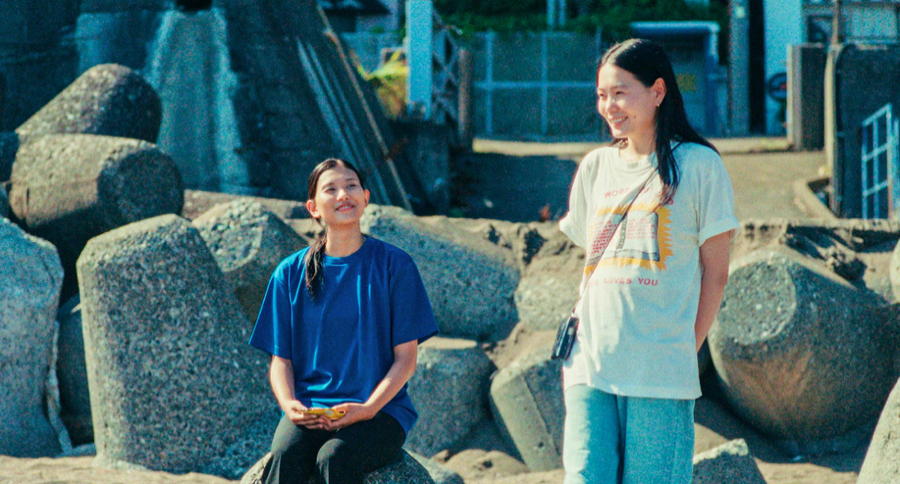
Because this is a French co-production, a Press Pack is available (in both French and English) from Unifrance. From it we learn how the unusual story came about. Director Igarashi had himself experienced the sudden death of a close friend. He was approached by the two actors (he didn’t know either of them) who wanted to appear in a film “as themselves”. Igarashi invited them to suggest scenarios and then added his own ideas. A great deal of care was taken in searching for locations and eventually the shoot used three separate resorts, so that the hotel and its environs are actually an artificial creation. Damien Manivel saw the first 120 minute cut and helped the director reduce it to a tighter 94 minutes. Igarashi also discusses the choice of the song and how the score by Sakuragi Daigo was written to complement it. He also emphasises the care with sound editing in post production in France. I did notice this and it was an important element in the presentation. Super Happy Forever is a film with slow pacing that allows us to appreciate the use of the location and the actors to fully explore their roles. Small seaside resorts offer a real contrast to the hustle and bustle of Japanese cities and I think the location here works very well with the story of four young people.

