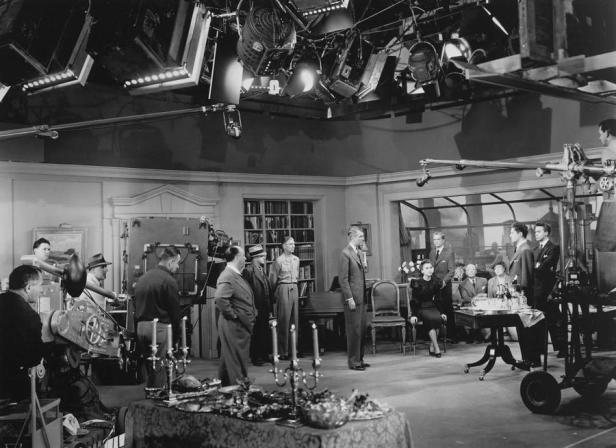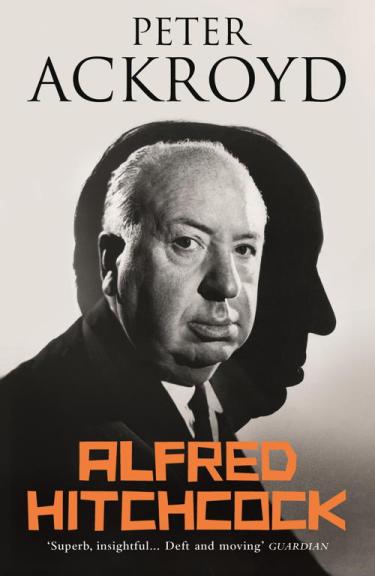
There are lots of books about Alfred Hitchcock (1899-1980). Academic and scholarly books focus on the career of the great film director, parts of the career and even individual films. They also approach Hitchcock’s work from different perspectives from within film studies. Then there are forms of biography. Peter Ackroyd’s book fits in this last category and includes a four page bibliography which is most impressive. I stumbled across his book in my local library and found it well-written and perceptive and a pleasure to read. Most important, it is an entertaining read and should prove a boon to anyone wanting an introduction to one of the greatest figures of 20th century film history, whose films have retained their appeal and their status as works of art.
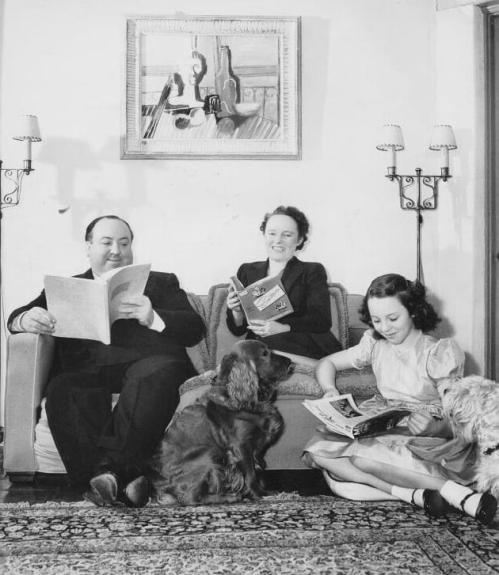
Peter Ackroyd is a gifted and celebrated novelist and biographer, specialising in the stories of the creative people who worked in London including Dickens, Charles Chaplin, Wilkie Collins and William Blake among others. Ackroyd also has the advantage of sharing the same background as Hitchcock, born a Roman Catholic in a strict East Acton home, albeit nearly 50 years later. He too was brought up largely by his mother. No surprise then that the most detailed part of Ackroyd’s book deals with Hitchcock’s childhood, teenage years and eventual entry into the struggling British film industry in 1919, initially as a designer of intertitles before he became a director producing a total of fifty features across six decades. Hitchcock’s early life and his first steps into filmmaking gave him a background that would eventually extend across British, German and Hollywood studios and approaches. His long list of titles from both Hollywood and British studios, combined with his German experience made him almost unique. His near contemporaries, Alexander Korda (1893-1956) and Michael Powell (1905-1990), matched his European and British work but neither worked in Hollywood to any great extent. The trio together offer endless ideas for ‘compare and contrast’. Korda, as far as I am aware, didn’t work with Hitchcock but Powell did, turning up as a stills photographer and managing to work on the set for Hitchcock’s film Champagne at BIP (British International Pictures), Elstree in 1928 when Hitch had chased off all the other stills photographers foisted on him by the studio. Powell and Hitch got on famously and before long Powell was part of his crew and helping out on the script for Blackmail (1929). Later Powell and Pressburger would visit Hitch and Alma in California in 1945 to learn about Hitch’s time working for Selznik. Ackroyd uses Powell’s descriptions of Hitchcock in 1928.
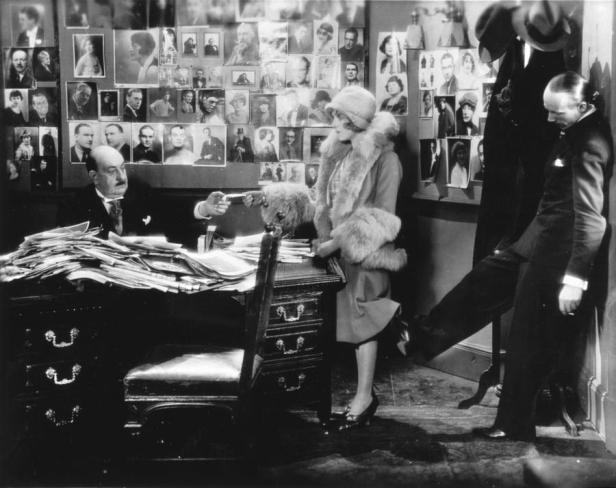
Ackroyd comments on many of Hitchcock’s films as part of his gradual trawl through the director’s career. In the main, I think he makes sensible and intelligent comments but there are a couple of drawbacks in his approach that any reader interested in Hitchcock’s work should be aware of. First, in such a book of relatively modest length there isn’t much scope for placing Hitchcock in the broader context of either the British or American filmmaking ecology of the period. Second, Ackroyd’s approach to each film tends to follow the generally accepted view of whether a specific Hitchcock film was successful or not. I think this is inevitable since Ackroyd is a biographer researching what leading critics and commentators have said but Hitchcock’s work is still being viewed and re-evaluated today. One of the most discussed later films by the director, Marnie (1964) is held by some film scholars and filmmakers as the last major Hitchcock film and not the box office disaster and ‘outright failure’ that Ackroyd presents. But don’t let that put you off. This book is a good read. You can learn a lot about the real Alfred Hitchcock and the bibliography will help you find other Hitchcock commentaries, some of which might challenge what you already know.