
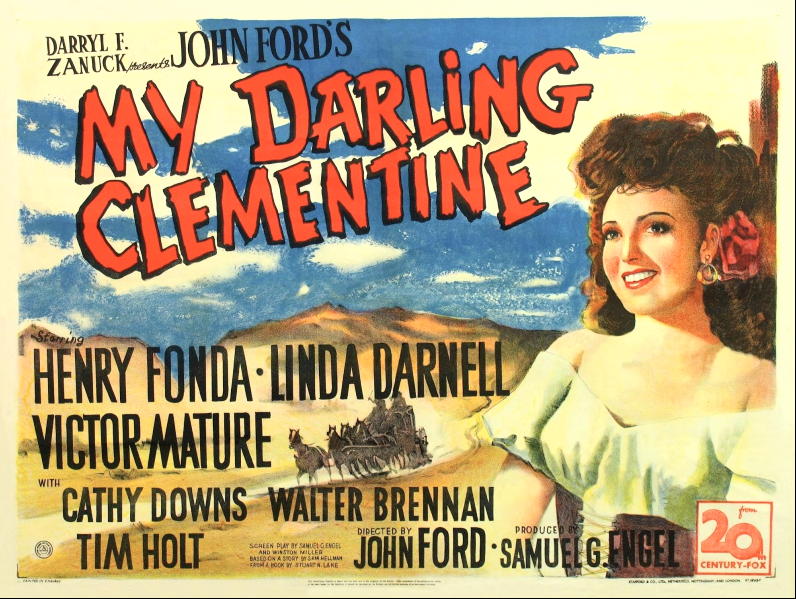
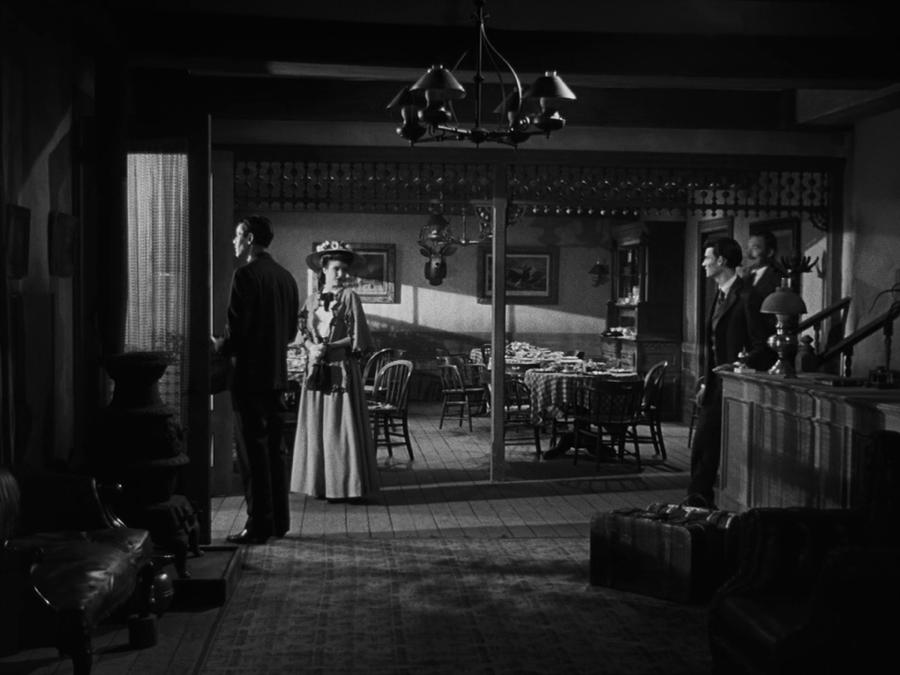
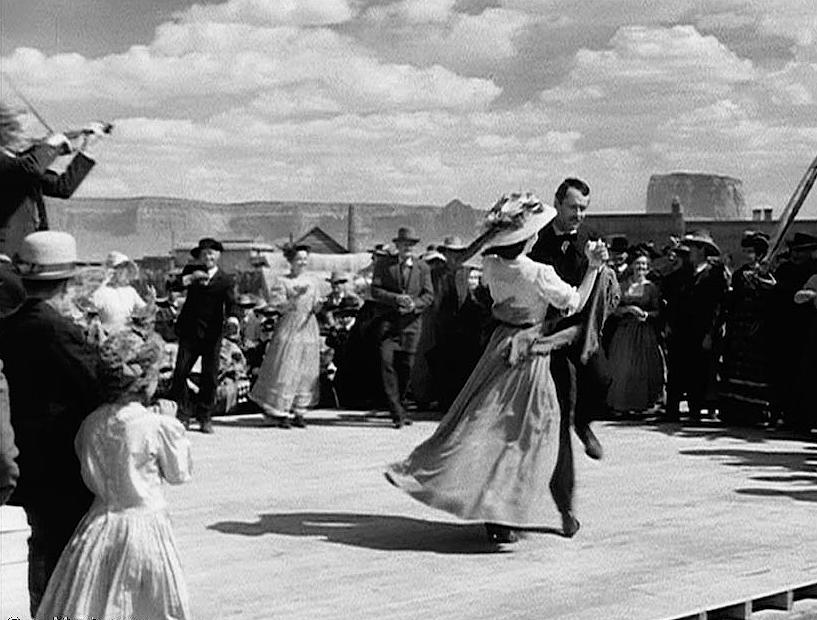
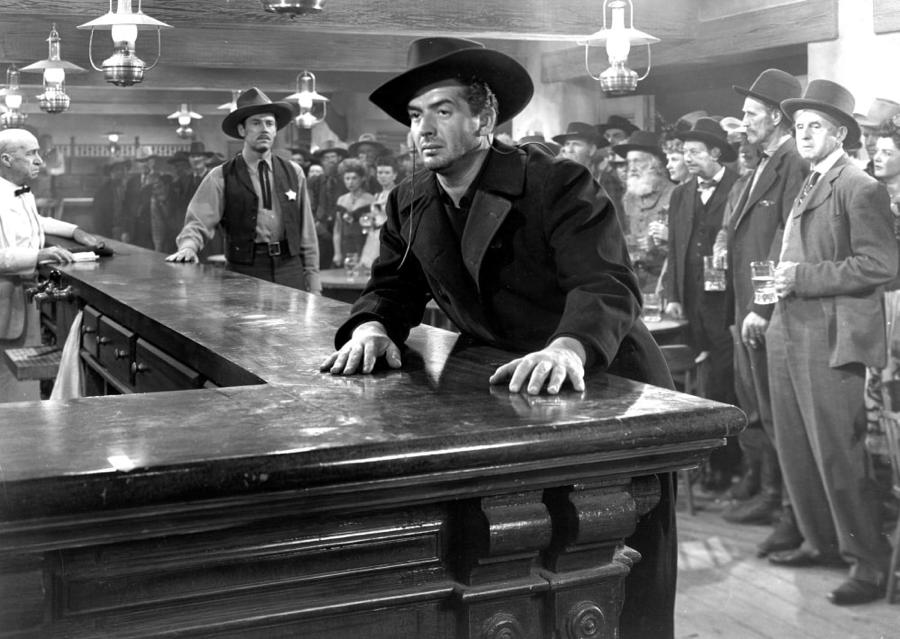
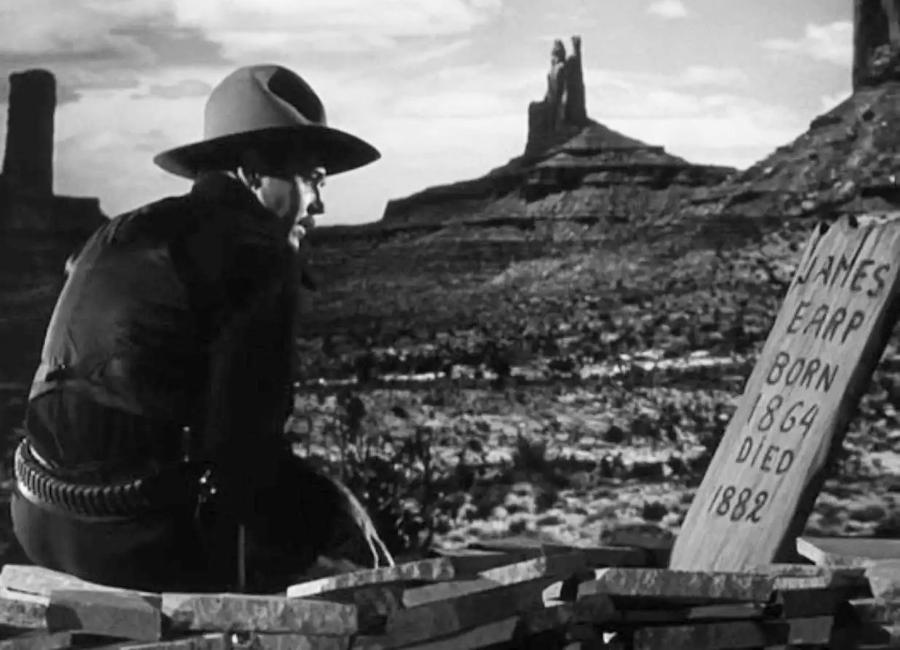
Re-watching many of John Ford’s best-known films can sometimes be surprising. Over the last fifty years or more I must have watched My Darling Clementine many times, but last night’s screening via BBC iPlayer was as if I was seeing it for the first time again. I think there are two reasons for this. Many previous viewings were on TV back in the sixties, or on old 16mm film prints, videotape recordings or cheap DVDs. Also, I have now read much more about Ford and my expectations have changed. To give just one example, I used to think of this film as relatively straightforward and not particularly visually exciting but certainly a stand-out because of key sequences such as the dance on the day the new church outside Tombstone is celebrated. I’d assumed a relatively inexpensive production before Ford became more ambitious with his later 1940s films in colour. However, I now read that with his return to 20th Century Fox for this post-war Western, Ford found studio boss Darryl Zanuck prepared to make a major picture and to increase the budget to $2 million. The price to pay for this was that Zanuck then became more concerned to oversee and augment Ford’s cutting of the picture. More on this later but my initial surprise was that I found the film to be more related to Ford’s earlier work in the 1940s than I expected, especially in the compositions achieved by Joe MacDonald. At times the film seems more than usually carefully constructed in deep focus with both the elaborate ceilinged sets for the buildings in Tombstone (and the noirish lighting style) and also in some of the outdoor sequences filmed in Monument Valley.
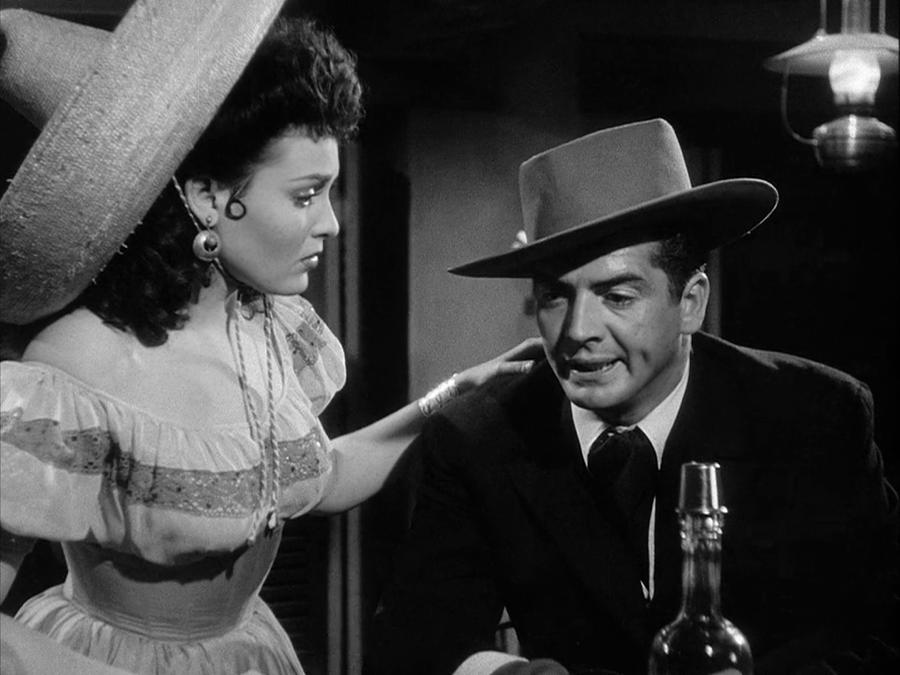
If you haven’t seen the film, the first stumbling block might be the poster which features Linda Darnell above. Much of the studio promotional material feautures Ms Darnell, then a contracted studio player at 20th Century Fox and you might assume that she is ‘Clementine’. But she isn’t, she’s ‘Chihuahua’ the Mexican-Native American young woman attached to Victor Mature’s Doc Holliday. Mature too was a star at Fox and the presence of the pair of Fox stars gives a slightly different feel to a cast otherwise dominated by familiar Ford stock company players. The film narrative is woven into a story based on the myths that developed around Wyatt Earp (Henry Fonda) and his brothers Virgil (Tim Holt) and Morgan (Ward Bond). Ford had met Wyatt Earp in the 1920s when he would appear on the sets of Western films. Earp was friends with stars like Tom Mix and W. S. Hart. Ford might later have claimed that the famous shoot-out at the O.K. Corral, the climax of the film, was shot as Earp later described it but the stories about Earp had already begun to morph into ‘myths’ during his long career as variously a lawman, gambler, fight referee, miner (and, more contentiously, a brothel owner) over more than fifty years as the Western frontier moved and the West was settled. A flattering biography by Stuart N. Lake was published in 1931 (Earp died in 1929) and this became the basis for various later films and TV shows. Ford’s film references Lake’s book but only as a resource, the screenplay by producer Samuel Engel and Winston Miller is based on a story by Sam Hellman.
Outline
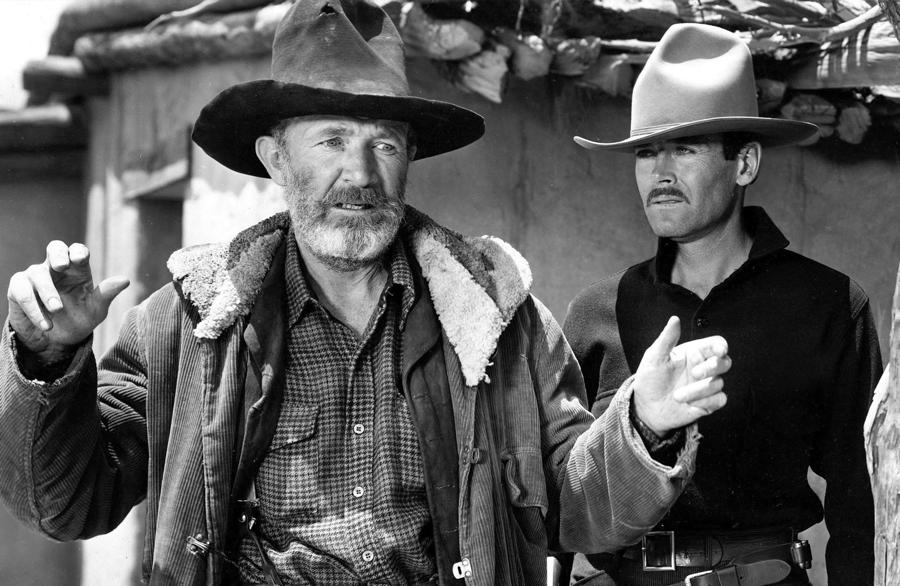
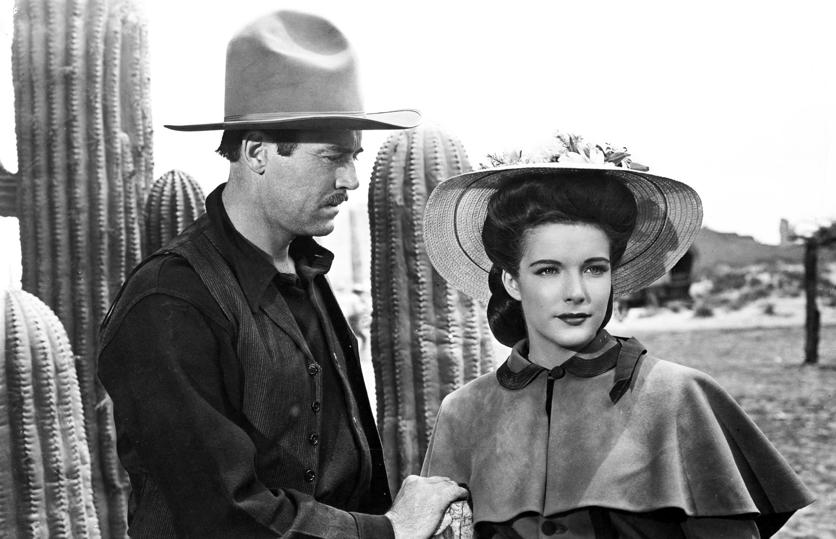
The opening sees the four Earp brothers including 18 year-old James Earp herding 500 cattle. (The real James was actually the oldest of the brothers.) Wyatt meets Old Man Clanton (Walter Brennan) out on the range with his oldest son Ike. The music suggests danger and the exchange is strained but Wyatt foolishly tells Clanton (who we believe he hasn’t met before) that he and his brothers might go into the town of Tombstone that night. The three older brothers do go into town and the Clantons kill young James and steal the cattle. When he learns what has happened (and realises that it was probably the work of the Clantons), Wyatt returns to Tombstone and accepts the job of town sheriff with his brothers as deputies. They are determined to arrest the Clantons and avenge their brother’s death. The main part of the plot will then lead to the shoot-out at the O.K. Corral – but the story up that point is complicated by a sub-plot involving Doc Halliday, Chihuahua and Clementine. Clementine (Cathy Downs) arrives early on the Sunday morning by stagecoach. She’s from Boston and comes seeking Doc Holliday who isn’t very pleased to see her. He has seemingly run away from respectability and other problems. I won’t spoil more of the plot except to say that Wyatt, unaware of the Holliday connection, falls for Clementine on sight. There are plenty of other distractions including the church dance and a show put on by a travelling theatre company led by the drunk Shakespearian thespian ‘Granville Thorndyke (Alan Mowbray). Fonda’s Earp seems rather unworldly and shy in his dealings with Clementine Carter, though earlier his brash racist stance against a rowdy Native American drunk helped get him the sheriff’s job.
Commentary
How does the film ‘fit’ with the other films of Ford made after 1939? One obvious point is that, leaving out Ford’s wartime documentary work, this is the period when Henry Fonda was Ford’s leading man in Guns Along the Mohawk and Young Mr. Lincoln (both 1939) then Tom Joad in The Grapes of Wrath (1940) before Clementine, The Fugitive in 1947 and Fort Apache (1948) when Fonda was up against John Wayne. Wayne would then become the main man up until Donovan’s Reef in 1963 – i.e. he appeared in more leading roles than anyone else. Fonda and Wayne had very different screen personae even if for Ford they both became vehicles for his ideas about an heroic figure at the centre of Ford’s changing vision of American history. Tag Gallagher suggests that Clementine was part of a ‘trilogy of sadness’ which began with They Were Expendable (1945) and ended with The Fugitive (1947). Gallagher sees Clementine as an allegory in which Earp represents America and at the beginning of the narrative he has put behind him his days as a lawman in Dodge City (American involvement in the First World War) but is then forced to take on the Clantons (America in the Second World War) and finally, job done, must leave Tombstone now that Clementine Carter is to open a school and the church will be built. Gallagher finds ways to ‘explain’ My Darling Clementine, whereas Lindsay Anderson falls upon the film when it arrives in the UK and in the opening of his book About John Ford, he tells us he was “affected by it more powerfully and somehow more intimately than I had ever been affected by a film before”. Anderson was well aware that this placed him at odds with most British critics at the time. He quotes some of the worst reviews and it is clear that in the UK in 1946, Ford was completely out of tune with expectations of more ‘realism’ and the clearly signalled literary and socially concerned storytelling of a David Lean or Carol Reed.
Another way to approach the film is via its importance for Zanuck and 20th Century Fox. Having assigned a bigger budget, Zanuck insisted on re-cutting parts of the film to Ford’s dismay. Zanuck’s edit seemingly removed some of Ford’s ‘comic business’ but also instituted some new scenes directed by Lloyd Bacon, including a changed ending between Earp and Clementine. It also changed some of the music cues and I confess I missed some of the Fordian music choices of his other Westerns. The current print, presumably the release print, runs to 97 minutes but a longer nitrate print of the preview version has some ten minutes more and is preserved by the UCLA Film and TV Archive in co-operation with the Museum of Modern Art (see Jospeh McBride’s book). Zanuck’s judgement was proved correct in terms of box office performance even if critical responses at the time were mixed. Since then the film has risen significantly in terms of status with critics. On the other hand, Ford himself in effect disowned the film. He turned instead to revive his ideas about his company formed with Merian C. Copper, Argosy Pictures and his plans to make a picture in Mexico, an adaptation of Graham Greene’s The Power and the Glory to be made as The Fugitive, with Fonda again in the lead role. The Fugitive deserves its own post but what is important here is that Argosy and Ford lost money on it and its commercial failure would send Ford onto work on his US cavalry trilogy and other more commercial pictures to cover the losses.
I’m left with mixed feelings about My Darling Clementine. I’m inclined to share Lindsay Anderson’s response to the overall ‘poetry’ of the film but it does now seem more of an oddity compared to the films that followed. Victor Mature and Linda Darnell do seem like ‘unFordian’ additions, though there is nothing wrong with their performances. I think now that Clementine should be viewed alongside The Man Who Shot Liberty Valance (1962) as it comes across as an earlier attempt to explore the ‘printing of the legend’. There are many film and TV versions of the same story – two before Clementine and several more after it. Ford’s version may well be the most beautiful.
References
Lindsay Anderson (1981, 1999) About John Ford . . . , London: Plexus
Tag Gallagher (1986) John Ford: The Man and His Films, Berkeley: University of California Press
Joseph McBride (2004) Searching for John Ford, London: faber and faber

