

Currently on BBC iPlayer in the UK, after a BBC4 screening I presume, this is a very good gay romance with many layers and is adapted from a prize-winning novel from 2017 written by Philippe Besson. There has also been a stage production. Stéphane Belcourt (Guillaume de Tonquédec) is a well-regarded French novelist who, after agreeing to be the ‘brand ambassador’ for his home town’s cognac producer, is invited back the town he hasn’t visited for many years as part of its bicentennial celebrations. He is taken aback to discover that the young man acting as a tour guide for the distillery is the son of the schoolfriend who became his lover when they were both 17. The son, Lucas Andrieu (Victor Belmondo) eventually reveals that his father has died and he begins to ask Stéphane questions about what his father Thomas was like as a young man. As this narrative develops, the director, Olivier Peyon, sets up a parallel narrative about the beginnings of the affair between the two boys. The young Thomas is played by Julien De Sant Jean and young Stéphane by Jérémy Gillet.
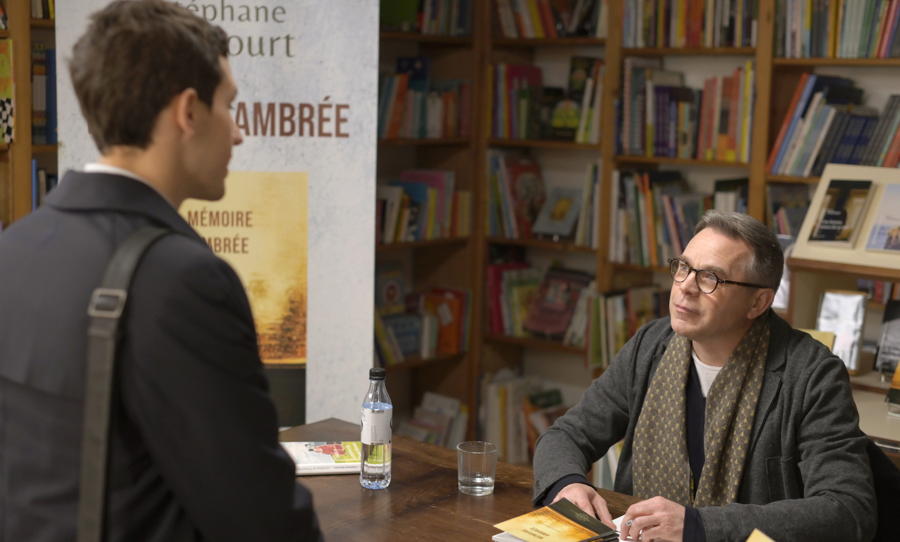
The gay romance develops in the 1980s when Thomas and Stéphane must hide their relationship from the school, their classmates and their parents. It is also a relationship governed by class difference and tradition. Young Stéphane is able to think about his own future but Thomas is tied to the family farm and must stay to work the land. The relationship between Lucas and Stéphane is different but also complicated. More obvious in the present day story are the binary oppositions between rural and metropolitan France and between the writers’ predilection for using the past as the basis for new fictions and Lucas’ desire to uncover the truth of his father’s life as a 17 year-old. In this respect the usual question about the title of foreign language films changed for Anglo-American audiences becomes germane. The English title (from the translation of the book by Molly Ringwald) seems to refer directly to the gay romance whereas the French title refers to that seeming French passion for ‘auto-fiction’ or writing stories based on the writer’s experiences. A further ‘opposition’ in the narrative is between the American tourists and the traditional French leaders of the village society such as the mayor and the cognac family enterprise. This isn’t developed but Stéphane has more problems than Lucas in understanding the differences in cultures.

The adaptation changes the narrative of the original novel but the director states in the Press Notes that the original writer was pleased with the film which captures the meanings of the story even if some events are changed. The reactions to the film seem to have been very good in terms of general audiences (a high rating of 7.5 on IMDb) but some of the newspaper critics have been unimpressed. Wendy Ide in the Observer refers to it as “a handsome but ploddingly predictable drama” with storytelling that is “oddly insular and fussy”. It is true that we have seen similar events before when a writer does a book reading/signing and struggles to write and give a speech to dignitaries etc. But whether such conventional sequences work for audiences depends a great deal on the playing and the presentation. I think that this film was very well cast. The two young men playing 17 year-old boys were convincing for me and the pairing of Guillaume de Tonquédec and Victor Belmondo (yes, he’s Jean-Paul Belmondo’s grandson) works extremely well.

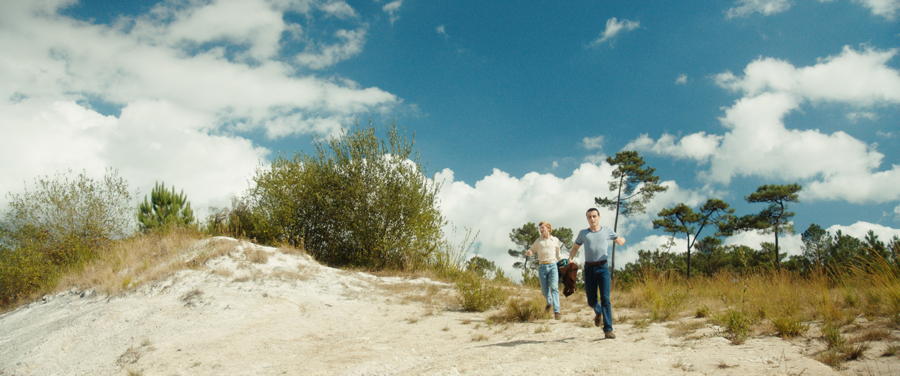
It is indeed a “handsome drama” presented in 2.35:1 and shot on location in the Charente region of South-West France. In fact, the director was able to shoot on the Hennessy estate and show the authentic home of the leading cognac brand and also to cast some of the real Hennessy workers as extras in their actual work roles. He did, however, invent a different name for the brand. One of the triumphs of the casting is to achieve a sense that we are seeing in Stéphane now something of the boy he was at 17. In the case of Lucas/Thomas it’s more a case of relating the Thomas we see as a teenager to the description of his father by Lucas the son trying to understand him. I think that also works and the result is that I found the exchanges between Lucas and Stéphane very moving. The cinematography of Martin Rit is important and particularly in the scene when Lucas takes Stéphane to the quarry pool which served as the trysting place for Thomas and Stéphane. It isn’t clear if Lucas knows exactly what he is doing at this point.
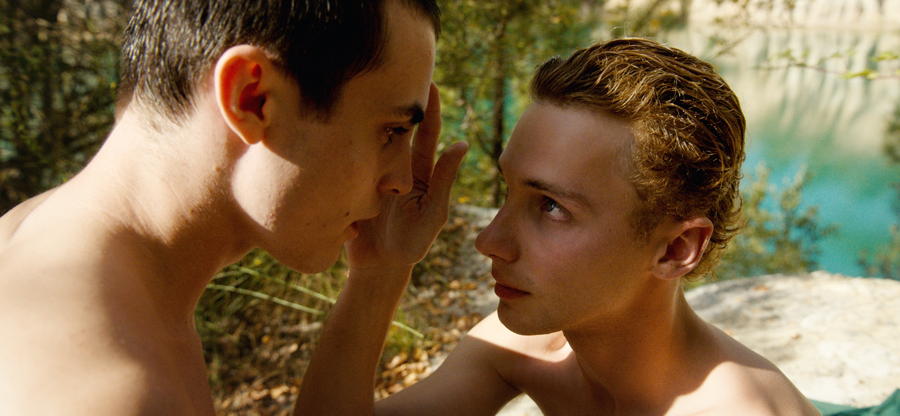
The film is distributed in the UK by Peccadillo Pictures which is well-known for LGBTQIA+ films but also for foreign language cinema. It is relatively rare, I think for the company’s titles to be shown on the BBC. There are a couple of gay sex scenes and Olivier Peyon says he had not shot sex scenes before but that the two scenes were essential because he had to show one which is urgent and almost brutal in its intensity and the other showing the beginnings of a loving relationship. He was dead right I think to make this decision. The film was first seen in the UK at the BFI’s LGBTQIA+ Flare Film Festival. As far as I can see it was warmly received by critics at the festival. When it comes to exposure to the wider audience available via the BBC what does its approach offer? I think that the compelling and dangerous gay romance from the 1980s actually broadens out into a complex narrative for the present which has plenty to offer to a more general audience as I’ve tried to indicate above without too many spoilers.
I should add that the director had two or three more collaborators in fashioning his adaptation and there are also two other significant characters. Guilaine Londez plays the woman whose job in the town is to co-ordinate the events around Stéphane’s visit and to make sure he is able to carry out his different tasks. But there is more to the character than we first suspect. The other significant figure is Lucas’ grandmother played by Marilou Gallais.
In the UK you may have to search the BBC iPlayer website to find this title as the BBC don’t seem to be promoting it. It can also be found on various streamers internationally, including Amazon and Apple. I recommend it highly for all audiences. If searching for it, use the English title but beware there are several other films with the same title.


You have to search the BBC Iplayer in a line by line way to find anything thei’re not promoting as ‘featured’ , it’s a task I undertake once a week and it’s rarely worth it; well done for finding this untypical offering…
LikeLiked by 1 person