
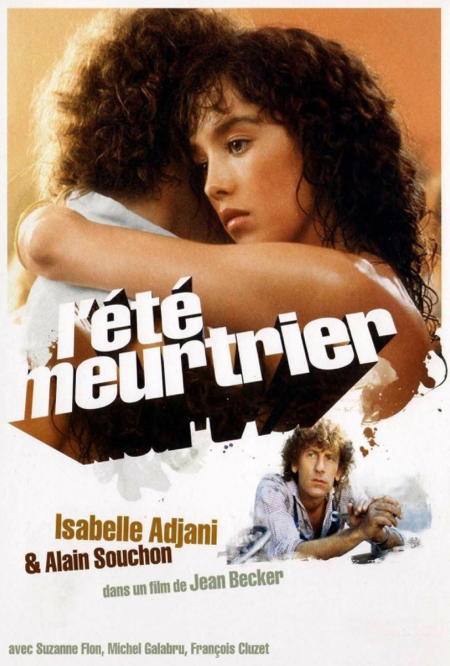
I’m not as familiar with French films of the early 1980s as I should be and I’m not sure why I decided to rent the Blu-ray of this film from 1983. It was probably because of Isabelle Adjani or Jean Becker, son of Jacques, as director. But it could also be because of Sébastien Japrisot, the popular novelist who provided the source ‘properties’ for several films and in this case also scripted the film.
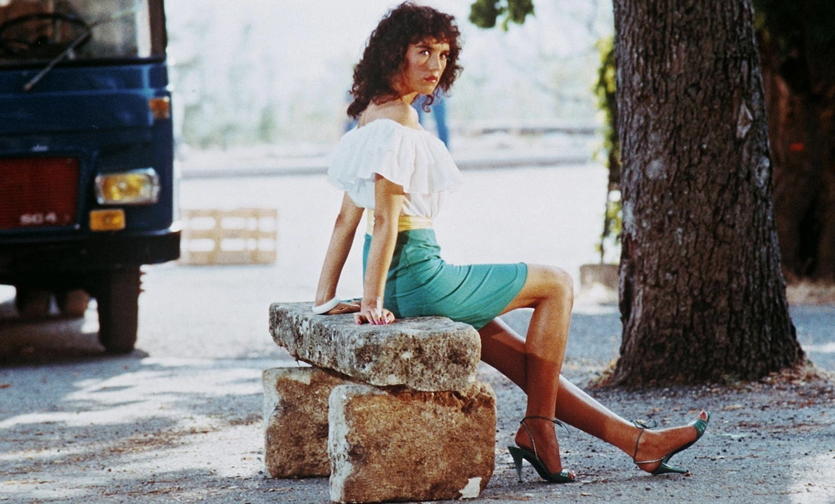
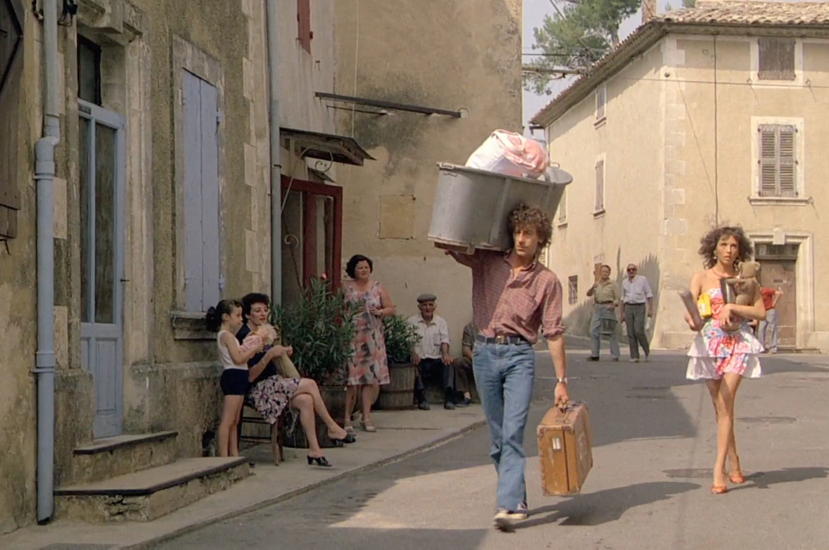
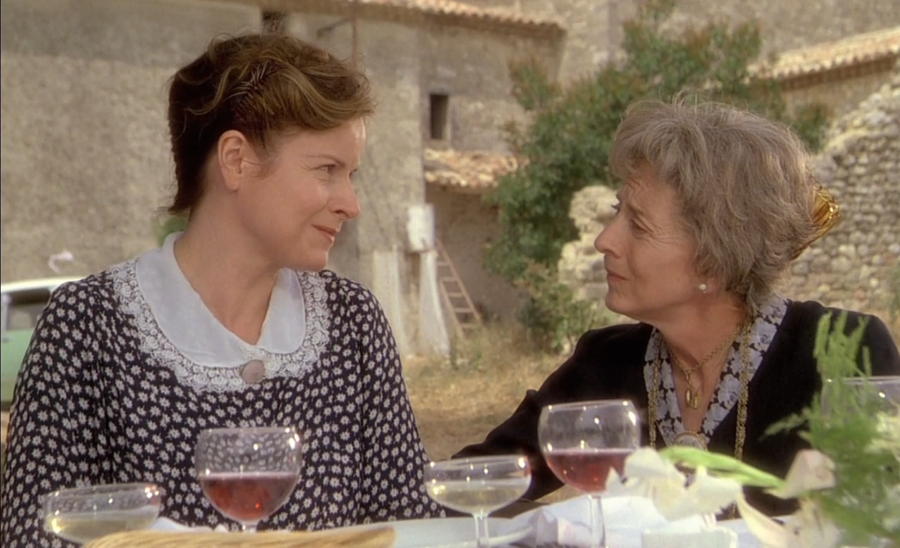
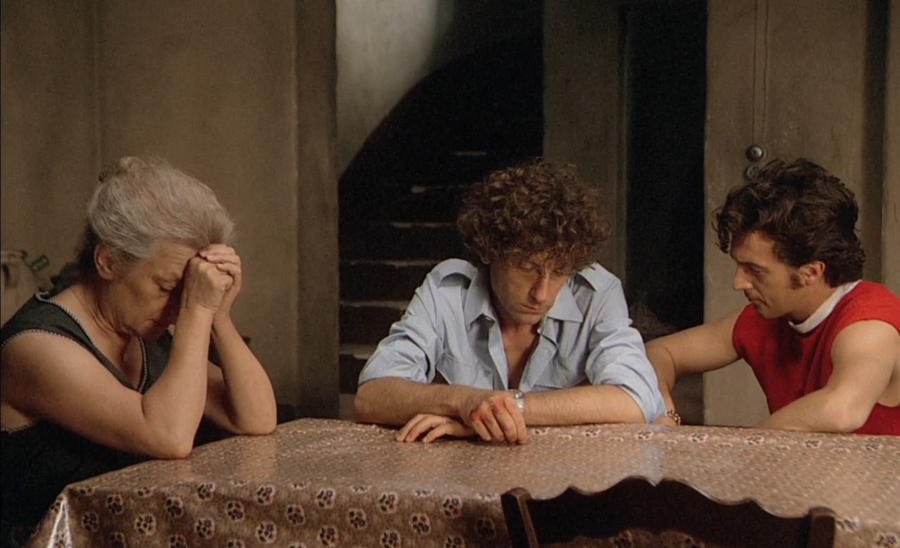
There are two features of this film that make it stand out as a form of crime melodrama. One is the central performance of Isabelle Adjani and the other is the French cultural tradition of stories of rural life and especially stories set in the South. The narrative begins some time in the 1930s when an itinerant with a player piano on a cart travels around the mountain villages of the French Alps. We see this in a montage under the credits. A player piano will become an important object later in the narrative. The setting for the story in the mid 1970s is in the Vaucluse départment in the Alpes-Maritime region. Eliani, more commonly known as Elle (Isabelle Adjani) arrives in a village with her mother and her disabled father, something of a recluse. The 20 year-old Elle is a stunningly beautiful young woman who dresses provocatively and attracts a great deal of male attention. But she soon fastens onto a family of Italian descent with three sons and becomes established as the fiancée of the eldest son known by his nickname of ‘Pin-Pon’ (Alain Souchon). Pin-Pon acts as a narrator with a voiceover that tells us his family’s back story. He’s a garage mechanic and volunteer firefighter. The second son, Mickey, is played by François Cluzet in an early role but the youngest son is still a boy really. Pin-Pon’s mother doesn’t take to Elle but the young woman does make friends with Pin-Pon’s Aunt, who is conveniently deaf with most of the family but finds Elle easy to deal with because she speaks slowly enough for the older woman (played by Suzanne Flon) to lip-read.
It takes quite a long time for the audience to understand that Elle has actually ‘chosen’ this family as part of a revenge plan. We eventually discover what they might have done to Elle’s family. I don’t want to spoil the narrative pleasure so I won’t delve further into what she’s plotting. I will tell you that Elle’s mother was a German migrant after 1945 and kept her German name but Elle took her father’s name. The prospect of marriage for Elle means that she must obtain her birth certificate and we realise that she expects this to tell her something. This is quite a long film (133 mins) so it’s no surprise that there are multiple strands to the narrative and we learn about quite a wide range of characters in the small town. Alain Souchon was known for his music skills and there is quite a bit of music in the film with an eclectic score comprising traditional and contemporary popular songs overseen by Georges Delerue. Mickey is an amateur cyclist taking part in local events. Elle also seduces/controls a rather conservative older woman who was her teacher. Elle’s wedding provides a focal point and there is a long flashback to the incident that explains why Elle’s family moved before her birth in 1955. In fact there are several other flashbacks, one almost subliminal and another to Elle’s childhood.
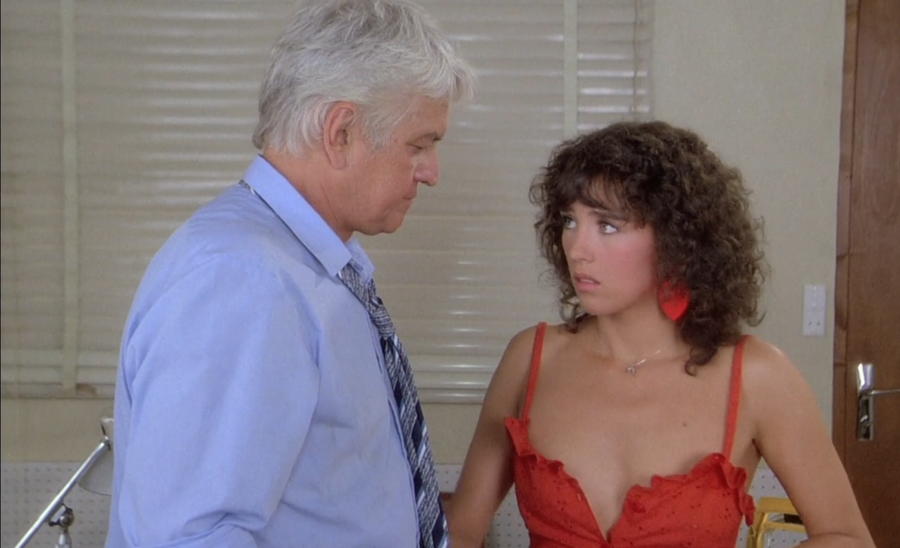
For the first third or so of the film I found it difficult to categorise, mainly because of Elle’s behaviour in her revealing outfits leading up to her relationship with Pin-Pon and her interaction with his family. I wondered if this was meant to be a comedy or a soft-porn drama. I remembered that there had been similar ‘small town’ films with female central characters and a high level of sexual activity in the 1970s. The two examples I remember are Nelly Kaplan’s La fiancée du pirate (France 1969) and Francois Truffaut’s Une belle fille comme moi (France 1972). The first of this pairing was hailed as a feminist film, the second was as a Truffaut comedy with his familiar weak men and a ‘magic’ woman. But at this point I stopped thinking along these lines and turned my attention to Sébastien Japrisot and Jean Becker. Japrisot is credited with several standout titles beginning with The Sleeping Car Murders from Costa-Gavras in 1965, two versions of his novel The Lady in the Car with Glasses and a Gun (1970 and 2015) and the Jean-Pierre Jeunet Great War epic, A Very Long Engagement in 2004. The first and last of these were popular in France and internationally and the 2015 French language version of the Lady in the Car made money in its home territory. All three had distinctive ideas about presenting a story. Equally Jean Becker had had a long apprenticeship as his father’s assistant in the 1950s before beginning his own career as a writer and director. We might expect a more sophisticated narrative from Becker and Japrisot, so why the seemingly gratuitous nudity and provocative costumes? I think this might be a result of the popularity of soft porn generally in French cinemas in this period and also the possible influence of the idea of visual/stylistic ‘excess’ in films associated with the cinéma du look of Luc Besson/Leos Carax/Jean-Jacques Beneix. I’m not arguing here that Becker’s film should be included in such a categorisation. Rather, I’m simply wondering what kinds of suggestions might have been made by Becker’s producers and funders.
The flashbacks change the tone of the narrative and Elle begins on her plan around the time of her wedding. Several reviewers raise the question of whether the film is a film noir, despite the fact that most of the narrative (apart from the flashback and the opening credits) takes place in the Summer and in broad daylight. Elle also has a voiceover and I guess that this and the fact that Elle appears to be a femme fatale and Pin-Pon a ‘doomed man’ are further elements we associate with noir. But I’m not convinced, the other generic factors seem stronger. The focus on the Italian family in this region reminds me of the realist melodrama of Toni (France 1934), the Jean Renoir film that has been argued to be the first neo-realist film. The wartime references seem to suggest that the narrative is some type of commentary on post-war France and its emergence into modernity. It’s a far more complex film than I first imagined and I’ve gone back over it to check things I’d missed as the central narrative pushed me onwards. The last section will justify the film’s title and lead us to a much darker place than the assumptions of a sex comedy melodrama given by some of the earlier scenes.
The film was screened at Cannes and went on to become the second most watched French film of the year. Isabelle Adjani was rewarded with the César for the Best Actress and Suzanne Flon for Best Supporting Actress in 1984. But the Anglo-American critics were less supportive. In Monthly Film Bulletin (June 1984) Gilbert Adair, the novelist who lived in Paris for many years, gave it one of the worst reviews I’ve ever read of a mainstream film. He knew French culture very well but perhaps he was too Paris-centric? The popular French audience clearly disagreed. I was amused to see that on videotape the film became one of the most popular choices in the US. Isabelle Adjani was also known for the film Possession (France-West Germany 1981) an ‘erotic arthouse horror’ film from Andrzej Zulawski. Overall I think One Deadly Summer is a well-made and intriguing film which deserves its popular reputation. It’s available on Blu-ray from Cult Films in the UK and widely available on streamers in most markets. Here is the Cult Films trailer for its restoration:

