
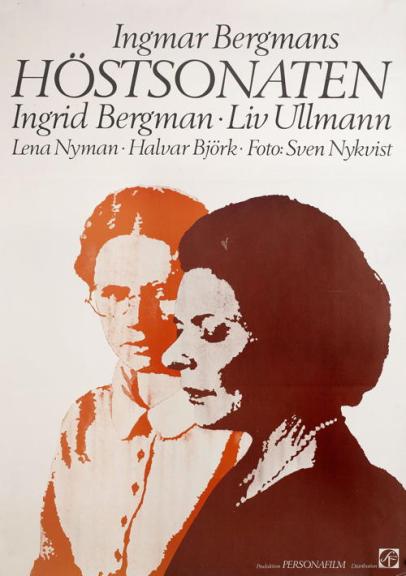
Desperately searching through titles on BFI Player and rejecting most of the more recent titles added to the streamer I stumbled across Autumn Sonata. I have mixed feelings about Ingmar Bergman. Unlike most cinephiles I tend to favour his early films rather than the ‘masterpieces’ of the 1970s. Also I find Bergman himself seems to have been a fairly unpleasant person, though I’m aware that many of the great film artists are often deeply flawed in their personal lives and I can see that doesn’t necessarily mean that their films should be dismissed. Autumn Sonata is a genuine ‘chamber piece’ with most of the action taking place in a vicarage on the Norwegian coast. The cinematography is by Bergman’s long-term collaborator Sven Nykvist and the two stars of the film are Ingrid Bergman and Liv Ullmann as mother and daughter. This was actually Ingrid Bergman’s last cinema film and she was the main reason I decided to watch the film.
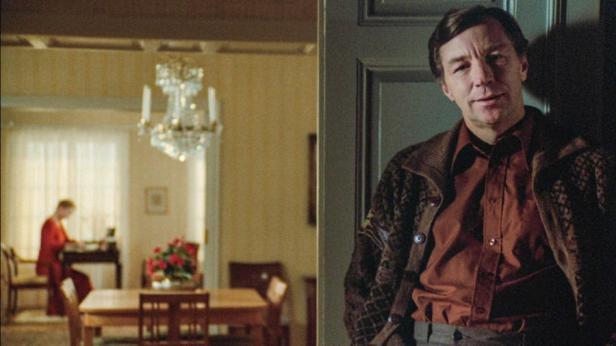
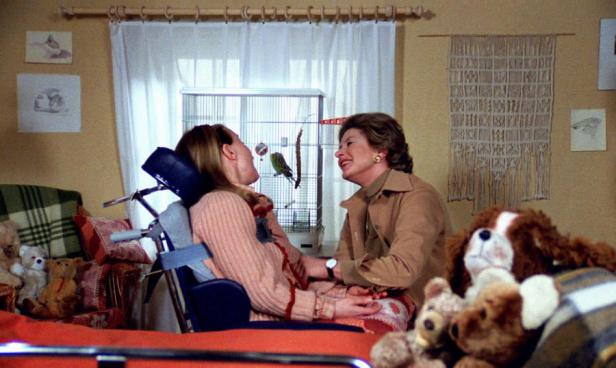
The film begins with a presentation to camera by Halvar Björk as Viktor. He’s telling us about his wife Eva (Liv Ullmann) – how he came to meet her and how they came to be married. Throughout his talk we can see Eva in her room in the far background writing a letter. Eva will then bring the letter to her husband to read. It’s an invitation to her estranged mother, Charlotte (Ingrid Bergman) who has just witnessed the death of her lover Leonardo. Eva and Charlotte have not seen each other for seven years. Viktor says Eva’s letter is very good and we cut to Charlotte’s arrival a few days later. Charlotte is a famous concert pianist and she neglected her children for much of their childhood. She isn’t yet aware that Eva has also brought her sister Helena (Lena Nyman) to the vicarage. Helena has a degenerative disease which means she is confined to bed and she finds it difficult to speak. Charlotte had placed her in a care home. Gradually more of the history of the mother and daughter and their family history will be revealed. This is a form of family melodrama and over its 90 plus minutes the tension will build until it is released and a form of equilibrium will be restored with Eva writing another letter.
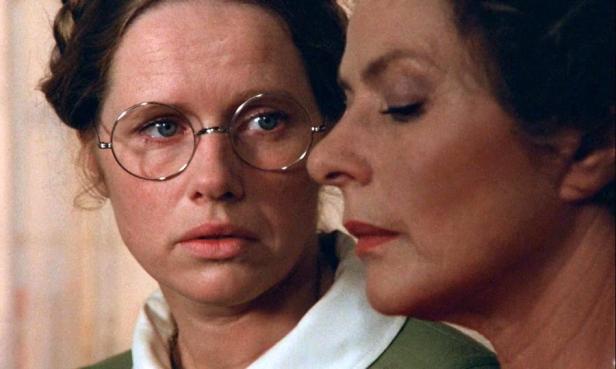
Ingmar Bergman wrote and directed the film and it may be useful to consider how the title encapsulates some of the ideas in the narrative and how it is presented. ‘Autumn’ perhaps indicates the season and suggests a time for looking back but also forward to the final phase of life. It could also refer to the seasonal colours of Autumn – the reds and browns and golds. Apart from a couple of exteriors at the beginning and end of the film all the other scenes are inside the large house or in flashbacks to other interiors and the colours are controlled by the lighting of the set. A ‘sonata’ is a musical form that has its own three part structure of ‘exposition’, ‘development’ and ‘recapitulation’. This is similar to the traditional sense of a ‘three act’ narrative in cinema. In this film a key sequence sees Eva, the daughter, attempting to play Chopin’s Prélude Opus 28, No. 2 in A Minor for her mother. This is a very ambitious not to say foolhardy piece for an amateur pianist to play. According to the experts it is not technically difficult but it is almost impossible to find the right ‘feel’. It has been called ‘a presentiment of death’. Charlotte then takes over and plays the piece as the renowned concert pianist she is, commenting that Chopin here deals with emotion not sentimentality. “There is a chasm between them,” she tells Eva. As Charlotte plays a piece she has been grappling with for 45 years, Eva stares straight at Charlotte’s profile before finally looking down at her hands.
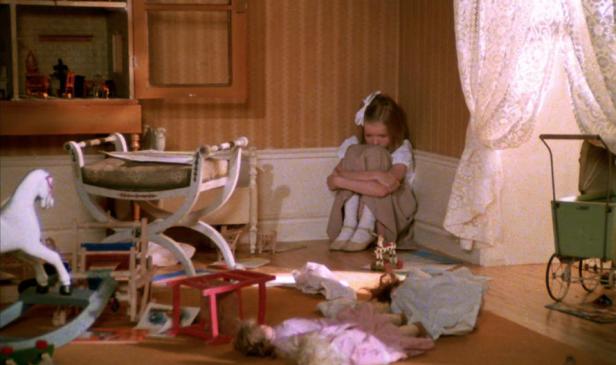
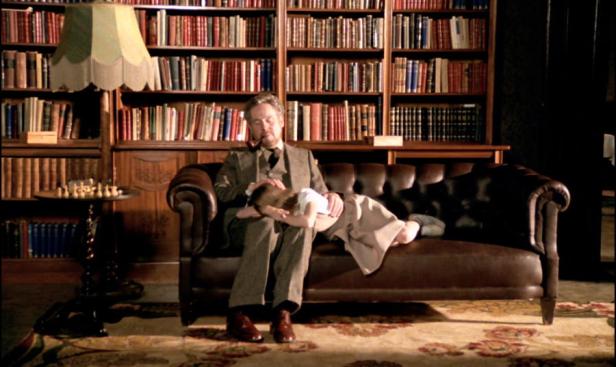
In one of the several Bergman documentaries released over the last few years (Bergman: A Year in the Life, Sweden 2019), there is the suggestion that the character of Charlotte is another of Bergman’s frequent uses of his own autobiography in his characterisations. He has claimed that his father neglected him as a child but it seems likely that it was Bergman’s brother who was the one who suffered most. In this film Ingrid is Ingmar presenting a characterisation of his father? But has Eva chosen this Prélude deliberately to test her mother? Is it a challenge to see if her mother can take this intellectual exercise, discoursing on how the piece should be played and felt and turn it into something which will enable her to demonstrate her emotional response to her daughter’s playing and in more general terms, her married life in the vicarage. I personally find the distinction between emotional and sentimental quite difficult to make, albeit the second tends to usually be used pejoratively and to carry a sense of moral failing. In Ingmar Bergman’s case the underlying question seems to be whether you have to put your family second if you want to achieve artistic superiority. Is it the sign of a true artist to cast both your lover Liv Ullmann and your daughter Linn Ullmann as the victims of your neglect?
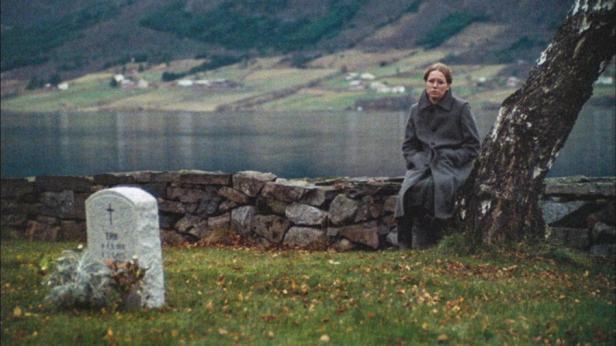
I feel as if each Ingmar Bergman film I watch just confirms and hones my view that what happened to Bergman is precisely that he seemed to attract lovers and admirers at the expense of neglecting his children in particular as well as possibly some of his friends and colleagues. The documentary referenced earlier certainly suggests this. Of course Autumn Sonata is a beautifully made film and a testament to Bergman’s directorial skill – but how could it not be so with actors of the calibre of Ingrid Bergman, Liv Ullmann and Erland Josephson (these latter two featuring in many Bergman films) and creatives such as cinematographer Sven Nykvist and editor Sylvia Ingemarsdotter? Still my concerns about Ingmar Bergman’s behaviour didn’t stop me enjoying Ingrid Bergman’s performance, though it also reminded me how much more I enjoy her melodramas with Rossellini.

