
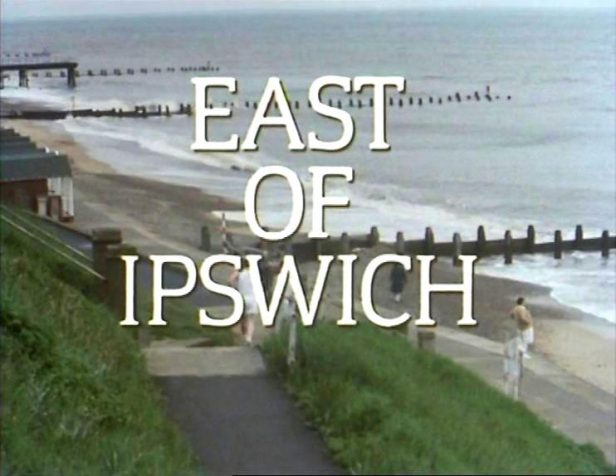
In the 1980s the BBC decided to replace one-off TV plays with a form of television film. There had already been ‘filmed’ plays on the BBC since the early 1970s – a good example being the Alan Bennett play Sunset Across the Bay (UK 1975) directed by Stephen Frears and before that the Loach-Garnett plays such as Cathy Come Home (UK 1966) written by Jeremy Sandford. These two titles were part of the ‘Wednesday Play’ series which ran as the flagship of BBC drama programming but in 1984 the BBC decided to re-brand its dramas under the new series title of ‘Screen Two’ and to present them as ‘television films’ on BBC2, perhaps hoping to repeat the success of Channel 4’s ‘Film 4’ output. Some of the later Screen Two films did get a cinema release, following the Film 4 model. From 1989-1998 the BBC also presented a similar series of ‘Screen One’ films on its more mainstream channel BBC1.
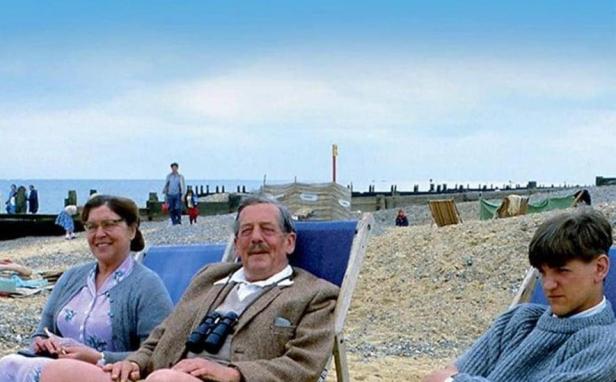
The oddly titled East of Ipswich is a 73 minute film in 4:3 ratio written by Michael Palin. As in TV drama generally at this time the writer was seen as the key figure rather than the director (Tristram Powell). [The Loach-Garnett partnership was perhaps an exception to this rule.] Perhaps the title is a play on ‘East of Eden’ or ‘East of Krakatoa’, or on the idea of genre film titles like ‘West of the Pecos’? The narrative follows the summer holiday of 17 year-old Richard and his parents in the tiny seaside resort of ‘Easton’ (filmed in Southwold) on the Suffolk coast. It’s perhaps 1960 and in fact the title is taken from a line of dialogue on the journey to the coast by the young Richard: “Is there anything to do East of Ipswich?”. His only hope of excitement in the next fortnight comes with a glimpse of two young women similarly being driven to the prospect of a dreary holiday.

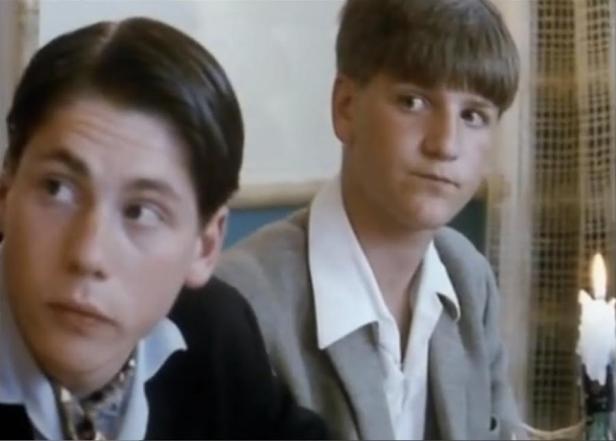
East of Ipswich is currently on BBC iPlayer for several months and the streamer also carries a recent short filmed interview with Michael Palin which is worth watching. This follows several other pairings including Priest (UK 1994) discussed by its writer Jimmy McGovern. Palin reveals that East of Ipswich actually started with a discussion initiated by David Puttnam and a Film 4 series idea about ‘first love’ which did indeed produce films like P’Tang, Yang, Kipperbang (UK 1982) shown at the beginning of Channel 4 broadcasting in November 1982. By 1987 Puttnam had moved on but Palin was now in touch with the producer of Screen Two, Innes Lloyd, who agreed to commission Palin’s idea based on his own holiday as a teenager with his parents to Southwold. Palin suggests that apart from the final scenes the narrative follows his memory of the holiday, on which he met his wife Helen, fairly closely. All this means that the ‘coming of age’ story is set around 1960. I think things changed quite dramatically for young men like Richard (and for young women as well) across the early 1960s so even in 1987 it seems a rather ‘tame’ story for a ‘youth picture’, limiting its audience perhaps. Having said that, I do think it is a beautifully written script and its representation of the British class system and the conventional social mores of the period is very sharp. Richard (Edward Rawle-Hicks as the Palin character) is in that strange limbo land of the aspirant lower middle-class. I should stress that the story is ‘inspired by’ Palin’s memories and not a direct re-telling. The social class differences become apparent in the exchanges between Richard’s parents (played by John Nettleton and Pat Heywood) and the formidable seaside landlady (Joan Sanderson) with her ‘maid’ (Janine Duvitski). When Richard spies Julia (Oona Kirsh), we realise that her father in particular (Alan Cuthbertson) sees himself as superior to Richard’s father, who in turn makes a joke out of his rival’s choice of motor vehicle. But importantly, Richard himself refers to the bikers who cause him problems as ‘thugs’. But this may be simply his public school culture.
I reflected, watching this film, that I have enjoyed Michael Palin’s historical dramas more than most of the Monty Python stuff which seems to have lost its charm over time. Palin was successful as a writer with his series of Ripping Yarns (1976-79), co-written with Terry Jones and in which Palin appeared as the lead character in each 30 minute film (not videotape) production. Palin would later become famous for his TV ‘travel adventures’ which I didn’t watch but which made him something of a ‘national treasure’. In retrospect I don’t think the BBC made the most of his writing talent.
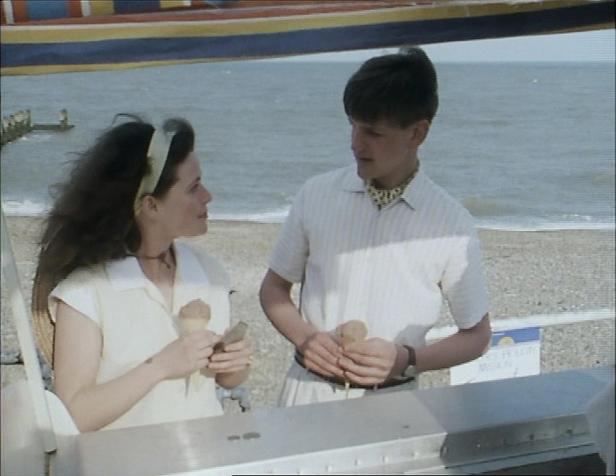
East of Ipswich is generic in terms of British seaside holiday comedies, though by choosing a middle-class resort like Southwold, it misses much of the vitality that comes naturally from Blackpool, Brighton or other major resorts. In fact at one point Julia’s father reacts to bad behaviour by exclaiming this isn’t Blackpool! In most of the filmic narratives of young people on holiday at the seaside it is usually the case that being away from parents is the whole point so poor Richard is constrained in many ways. I don’t want to spoil the narrative so I’ll just say that Richard does meet two other young women, both quite a contrast to Julia. In the end, East of Ipswich was too short to make it viable as a cinema release, but it may still have made it as a television export. There appears to have been a DVD release in 2012. BBC iPlayer has other Screen Two films on offer and some can be found on YouTube and similar streamers. Produced at a time when British cinema was still in decline or only just recovering they constitute a valuable source of writing, performances and production. The performances in East of Ipswich are very good across the board. I think John Nettleton’s infuriating father is imprinted on me now. I was also impressed by George Fenton’s score which has to suggest the popular music scene of the time. The seaside romance-comedy drama generally requires several pop songs on the soundtrack but this is Easton-Southwold and we get a marching band, community singing with a trendy vicar and a local jazz club. The BBC probably couldn’t afford too many well-known pop songs but on the jukebox in the genteel coffee bar we do get, in the background, what appears to be Lonnie Donegan’s 1959 hit, ‘The Battle of New Orleans’. Now I think about it, that skiffle track rather neatly sums up the years before the Beatles took over the jukebox.
 itp Global Film