

An enjoyable, entertaining and informative film, this début feature from writer-director Louise Courvoisier is well worth checking out. It’s also likely to restore your faith in the power of cinema. It’s currently on the subscription offer on BFI Player in the UK and also on streamers like Apple, Amazon and YouTube. A hit in France in 2024 following its prize-winning screening at Cannes in the ‘Un certain regard’ programme, the film has also sold well internationally and was released in UK cinemas in April 2025. Cinema distribution was by the Scottish distributor Conic which seems to specialise in smaller independent and foreign language films. I must look out for more of their titles.
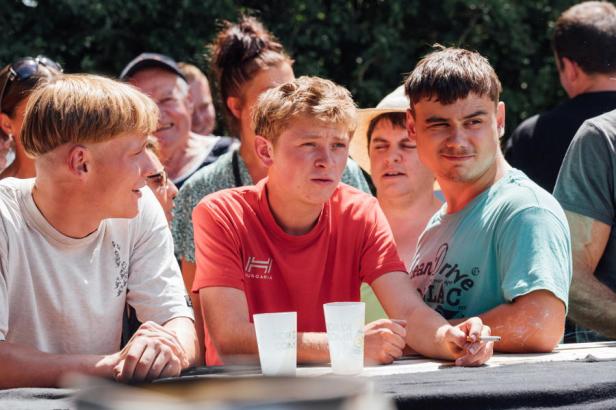
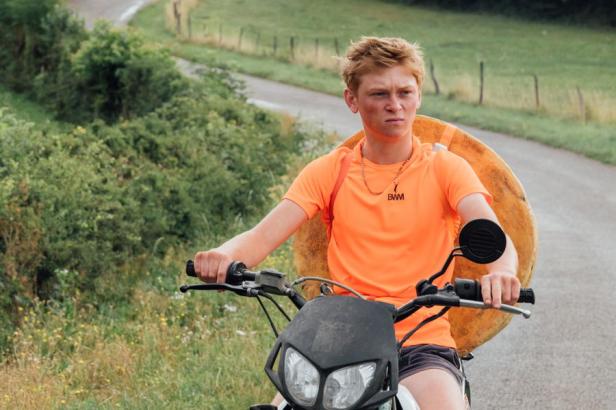
Vingt dieux! (‘Twenty gods!’, a popular local shout) is a rural comedy-drama made with verve and passion in the Jura mountains of Eastern France, in the area renowned for Comté cheese production. The informative function of the film reveals the procedures for making artisan Comté cheese but the main focus is on the lives of a handful of young characters, making the narrative a form of ‘coming-of-age’ adventure. The director grew up in a village in Franche-Comté before studying at film school in Lyon and subsequently returning to her village. The cast are all non-professional actors and the creative team includes four other members of the director’s family. This goes a long way to account for the sense of authenticity and realism in the playing and presentation of the landscape. But the narrative itself also requires something of a sense of disbelief at times. The tension between realism and unlikely events creates a strong and appealing drama.
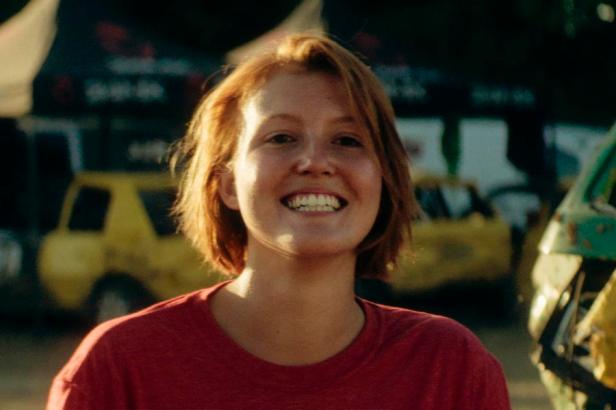
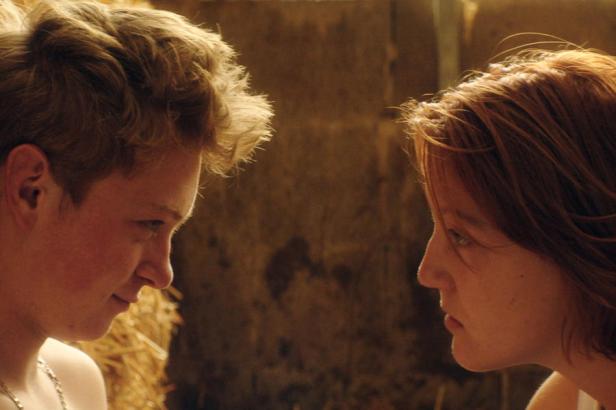

Totone is an 18 year-old young man living on a small farm with his father and seven year-old sister Claire. Father drinks too much and soon departs the narrative. Totone is left with responsibility for Claire and the task of using the assets of the failing farm to make some kind of living. It looks impossible – Totone is not yet ready to work for anyone else and struggles even to get Claire to school and meals on the table. By chance he hears about the competition to produce the best ‘wheel’ of Comté cheese with a first prize of €30,000 and also meets a local young farmer who produces high quality milk with a unique floral flavour. This is Marie-Lise who has inherited a working dairy farm though she is not much older than Totone. From here a double narrative develops with the romance between Totone and Marie-Lise and the attempt to learn how to make a prize-winning cheese. Neither narrative thread seems destined to have a triumphant end but perhaps that is not as important as the emotional growth of Totone with the help of Marie-Lise, Claire and Totone’s two mates.
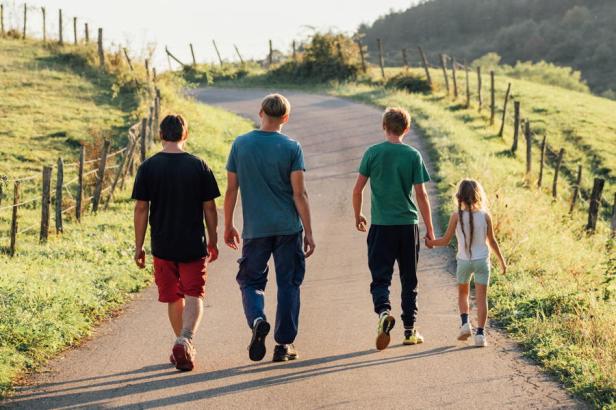
The film succeeds for several reasons, not least the performance of the three central characters. Clément Faveau as Totone was at first reluctant to take time off from his job on a poultry farm but Maïwene Barthelemy as Marie-Lise was the first to be cast when she was still at agricultural college and Luna Garret as Claire is from the director’s own village. The young girl is remarkable in terms of her intelligence and calmness and she would steal the whole film without the other two excellent performances. The backgrounds of these non-professional actors means that scenes like the live birth of a calf could be achieved without any form of fabrication or SFX. Louise Courvoisier also recognises the work of her cinematographer Elio Balezeaux who also comes from a mountain region, in the Alps, (see the very useful interview in the Press Pack). Between them the director and her DoP found ways to capture the landscapes in terms of their beauty but not present them like ‘chocolate box’ images. Courvoisier describes her approach like this:
. . . alternating between very tight shots and very wide shots. I chose to use mostly sequence shots and to stay as close as possible to my character, to use panoramic shots rather than dolly shots, and to aim at a rather stripped-down style. Sequence shots, such as the one in which Totone is chatting with his friend on the roof of a car, also allowed us to play with silences and build rhythm from within the scenes.
The film is presented in ‘Scope and Courvoisier says this was partly related to the feel of the Western with its panoramic shots but not with the use of the obvious generic codes. She also references Les pieds nickelés, a comic strip popular in France throughout most of the 20th century with its three ‘anarchistic’ central characters.

The film’s use of sound and music is also distinctive. As hinted at above, Courvoisier is not afraid to have moments of silence which is refreshing. I listened to a glowing review on YouTube which praised the sound design but then suggested that there is no music to speak of. In fact there is quite a lot of music and it is written and performed by the director’s mother and one of her brothers. She explains that her parents were once professional musicians. One of the other recordings used is the classic Jimmie Rodgers version of ‘Kisses Sweeter Than Wine’ (US 1957) which works surprisingly well for a lengthy sequence (see the trailer below).

I live on the edge of a livestock region in the UK so I am aware of some aspects of rural living and aspects of the local culture in Franche-Comté did seem familiar – the difficulties for local youth in finding entertainment for instance and the necessity of transport – here Totone’s moped and tractor and the fascination with stock-car racing. But this also means drinking at county fairs and the risks of drink driving especially by teens. France is a bigger country with a larger agricultural sector and perhaps that’s why there seem to be more films made in different rural areas across the country than in the UK. I was reminded of any number of recent French films including Junkyard Dog (France 2023), Only the Animals (France-Germany 2019) and The Wind Turns (Switzerland-France 2018). There are UK films with some of the same elements and the one that occurred to me was Ken Loach’s The Angels’ Share (UK-France 2012) because of the attempt by young men to gatecrash a competition in the Highlands.
The more I think about this film, the more impressive it becomes. Do try and catch it. It will certainly figure in my ‘end of the year’ highlights. Here is the trailer and below the director talks about her film.
 itp Global Film
This was a great little film that had a brief showing at HPPH earlier this year (I think). The three disparate characters with the slightly feckless teen having to look after his younger sister while at the same time encountering a more worldly girl held much of interest. French rural life is always watchable in itself and the little girl was utterly charming.
LikeLike
That’s interesting. Good for the Hyde Park, I didn’t notice it showing anywhere else but it might have been on at Hebden Bridge as well.
LikeLike