
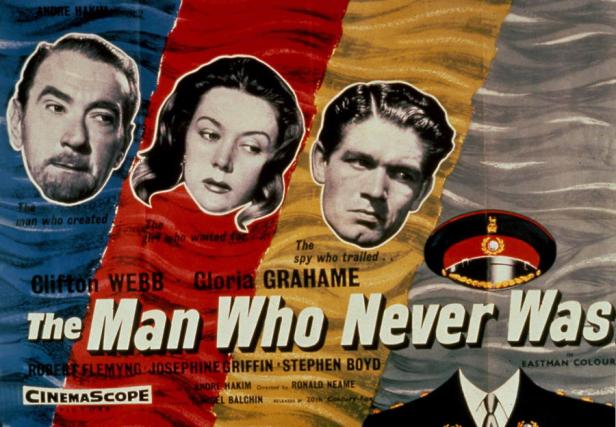
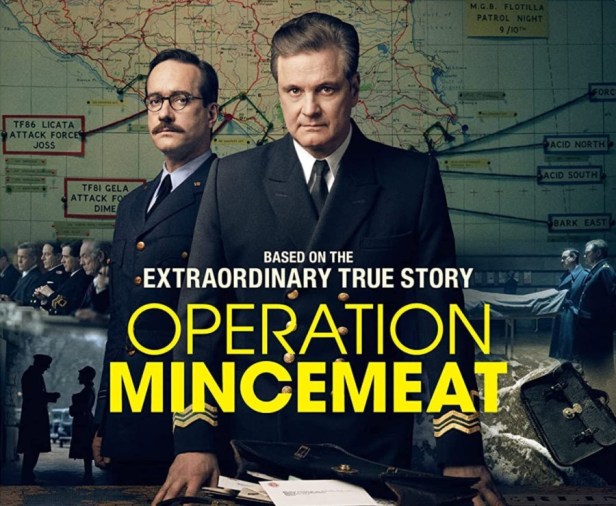
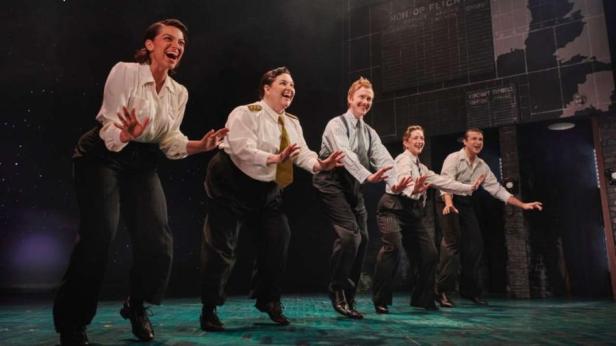
‘Operation Mincemeat’ was a British Intelligence operation designed to fool the Nazi high command into thinking that the Allied invasion of Southern Europe would begin with landings in Greece or Sardinia rather than Sicily in 1943. The main player in the deception was Ewen Montagu, who was an officer in the RNVR posted to Naval Intelligence. He oversaw the development of a plan to create a fictitious character who would be washed up on a Spanish beach carrying secret orders related to the Allied landing. The idea appears to have come from Ian Fleming, the later writer of James Bond stories. It was clearly a plan that when it worked would become catnip to filmmakers. Ewen Montagu wrote up his experiences in a book published in 1953 under the title ‘The Man Who Never Was’ which became one of 20th Century Fox’s British productions during the early days of CinemaScope. The film appears to have been successful and in 2010 a second book presenting the story was published. This was Ben Macintyre’s Operation Mincemeat and this became a Netflix movie released in cinemas in 2021. The book and film then led to a stage adaptation in the form of a musical which succeeded both in the West End and on Broadway and in 2026 is about to undertake a world tour including China and Australasia as well as the UK and US. I note it comes to Bradford in April 2026.
I’ve seen both films and I note that Ben Macintyre has also written about the SAS as ‘Rogue Heroes’ in the Second World War which in turn inspired a TV series created by Stephen Knight, with a third season coming in 2026 from the BBC. My main concern here is to compare and contrast the two films and to try to work out what this tells us about Hollywood and the British film industry. Why have the two films been successful? I think the reason is partly because of the procedural narrative which is presented in detail. Secondly, at least from a British perspective the narrative deals with something that we Brits think we are good at – intelligence operations and what are sometimes known as ‘black operations’, deceptions meant to baffle and confuse the enemy. Intelligence operations began to emerge as interesting narratives only after the war when at least some of the details of operations became known and sometimes decades later when previously classified information became accessible. This last point is partly what makes a difference between the two films since Macintyre’s book could use material that would have been still ‘classified’ in 1955.
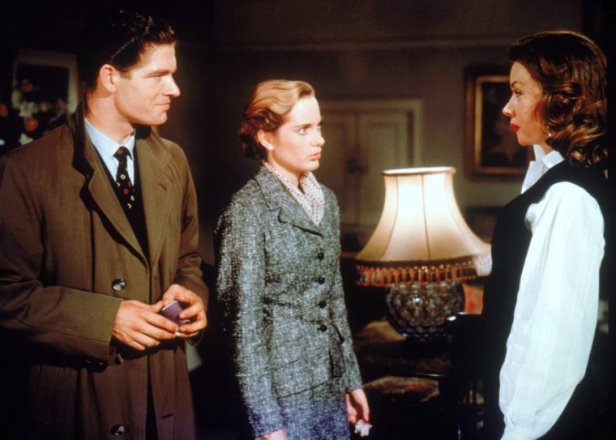
The 1956 film had several advantages nonetheless. Most of the real-life players in the narrative were still alive and many of the wartime locations, aircraft, naval vessels etc. were still in place even if not operational. The casting followed what was common in British cinema at the time with two Hollywood stars, Clifton Webb as Montagu and Gloria Grahame as a young woman who supplies some of the material which makes the fictitious ‘Major Martin’ seem more realistic as a character. In 1955 20th Century Fox was in the throes of trying to promote its CinemaScope productions in their original format of an aspect ratio of 2.55:1 and stereophonic sound. Rank which controlled two of the three national circuits was not willing to accommodate these prints and was itself working with Paramount’s widescreen process VistaVision. Many smaller cinema owners were also wary because they did not have the funds to remodel both the screen width in their auditoria and install a new sound system using a separate magnetic track. As a result, Fox attempted to find cinemas that could show the prints and could join a new Fox circuit which would be a separate fourth national circuit. In the event they had eventually to abandon magnetic sound and go back to an optical track which could play through existing speakers on a reduced aspect ratio of 2.35:1. So far, I have found the 1956 film opening at the Carlton Haymarket in the West End and the Essoldo in Newcastle (Essoldo was a North-East-based independent chain).
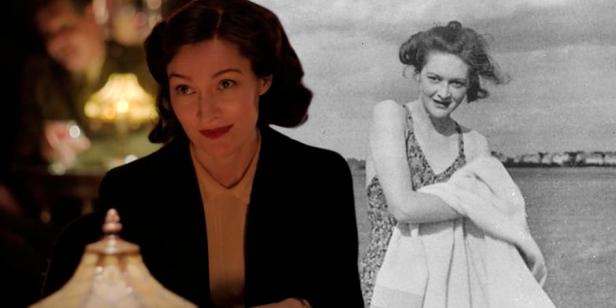
Operation Mincemeat appears to have been a Netflix funded film made by four production companies, two in the UK and two in the US. Netflix distributed the film in the US and Brazil but in Europe and Asia it was distributed by Warner Bros. or a smaller local independent. In the UK it was Warner Bros. which presumably allowed the BBC to screen it through negotiation. I watched it on BBC iPlayer. Apart from the freedom to use more of what actually happened in 1943, and the ditching of a sub-plot added to the 1956 production involving an Irishman (Stephen Boyd) spying for the Nazis and attempting to discover if the body is a genuine British officer, the films are roughly similar. The 2022 film (shot just before COVID struck) uses the later 2.35:1 aspect ratio and it runs to 128 mins rather than the 103 mins of the earlier film. This might be an example of the general ‘bloat’ of modern films and especially those made for streamers. The UK market in 1956 tended to go for shorter films often closer to 90 mins. As a CinemaScope film Fox were no doubt happy to go a little longer.
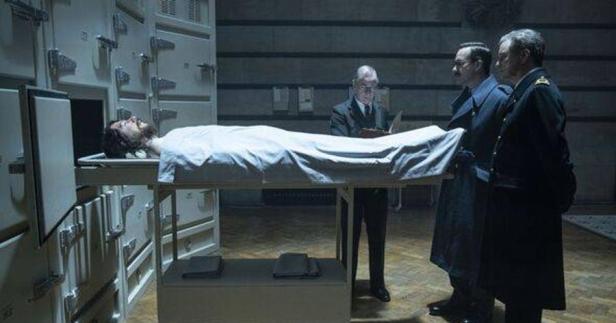
If we consider the casting, there is a similar weight of star names with Clifton Webb and Colin Firth of similar standing and Gloria Grahame being matched by Kelly Macdonald (not the exact same role, but the principal female) role. The later film possibly scores with Matthew Macfadyen as the second intelligence officer but overall the secondary characters are played by actors of similar stature. The scriptwriter of the earlier film was Nigel Balchin, a writer much admired on this blog who won a BAFTA for his adaptation of Ewen Montagu’s book. The script was realised on film by Ronald Neame as director and Ossie Morris was cinematographer. The film was shown in competition at Cannes among a line-up of famous films. I think this gives the earlier film the edge in visual terms. It still looks very good today. The later film was directed by John Madden and photographed by Sebastian Blenkov, both experienced filmmakers, and written by Michelle Ashford whose credits cover a range of work primarily in US ‘quality television’.
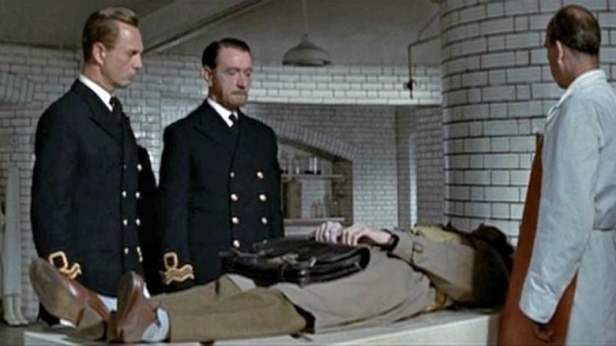
I confess that I avoided the second film at first as I was a little angry that the 1950s film was never mentioned during its promotion, but I did enjoy the later film when I saw it, not least because I really enjoy Kelly Macdonald in anything. I’m assuming that there was some CGI work in the later film and I found the style of the later film simply too ‘modern’. I draw a number of conclusions from watching both films. I’ve already indicated the issue of classified material which affected the first film and I’ve mentioned Nigel Balchin as scriptwriter. I should expand this discussion because I think it adds quite a lot to the feel of ‘authenticity’ to the 1956 film. Balchin was himself a scientist and had been a Senior Scientific Advisor at the War office during the war. I explore this aspect of his career in a post on The Small Back Room (UK 1949). This comes across in the interactions of Montagu and his junior partner (Robert Flemyng an actor with a medical background who had risen to the rank of Colonel in the war) with various senior officers and other leading figures. The clipped accent is still there and the sense of dialogue couched in the language of public schools, the nursery, Oxbridge etc. Today it perhaps sounds stuffy but in 1956 it was still current and the film looks and sounds like it could be set in 1943. The extra plot element that Balchin introduces is Boyd’s Irish spy who is persistent and nearly uncovers the plot. Balchin the screenwriter probably realised that the narrative structure needed the insertion of some excitement in the latter stages as the audience, along with the Montagu’s team, wait to see if the plan works.
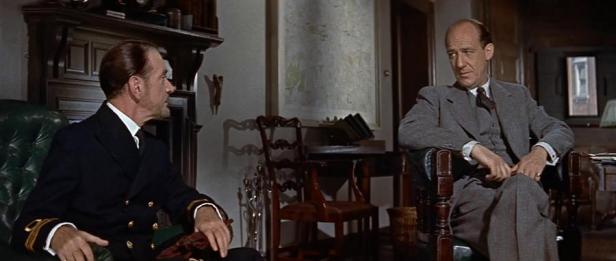
The 2022 film is longer partly because more of Montagu’s personal life is included. The Montagu family came from the historical development of Jewish interests in Britains’ finance industry. Ewen Montagu was married with a young son and he had been a KC (King’s Counsel – a leading barrister and later a judge). The film narrative includes two narrative threads about the family. In the first, Montagu’s wife Iris leaves for Canada with their son Jeremy. Many people who could afford the fare and the cost of accommodation took their children overseas for safekeeping. 1943 seems a bit late for this but it is suggested that the marriage is suffering because of Ewen’s work and that a separation might be helpful. Later there is the suggestion that Ewen is attracted to Jean (Kelly Macdonald), the unit’s secretary who works closely with Montagu and his junior partner (Matthew Macfadyen). There is also a strand introducing Montagu’s younger brother Ivor Montagu (Mark Gatiss). Ivor was a well-know person as a film critic, founder of the London Film Society, writer and producer. He was also at this point a member of the Communist Party. This was a cause of concern for British Intelligence but there is no evidence that he knew about Operation Mincemeat. The Soviet Union was an ally but not trusted by senior British personnel. These three developments serve to put pressure on Ewen Montagu creating a rather different kind of central figure as presented through Colin Firth’s performance than that of Clifton Webb in the first film in which none of these developments occur. In a sense this does make the second film potentially more interesting but perhaps neither strand (i.e. the failing marriage or the suspicion of Soviet spying) is developed sufficiently. Overall. I think that Operation Mincemeat is possibly too ambitious in what it attempts to cover and for me perhaps loses the sense of a drama set in 1943. Still, if you get to see either film it should prove to be entertaining and enjoyable. Here are the two trailers:

