
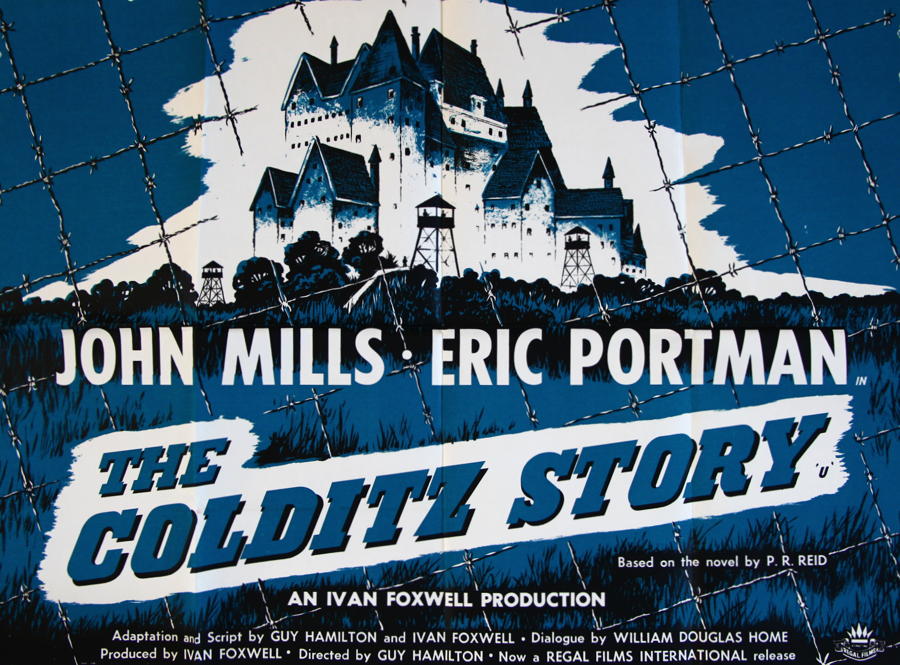
The Colditz Story is currently on offer on All4. I don’t think I’ve seen it before, having somehow missed it over the years. The true story, based on the book by Pat Reid, later formed the basis for one of the most popular drama series ever produced for UK tv (running from 1972 to 1974) and a later ITV tv film (2005). I haven’t seen either of these so here I’m going to comment only on the 1955 film. Because it is a well-known story I’m just going to pick out some of the main points about the production and its impact. If you don’t know the story already I’ll simply say that ‘Oflag IV-C’ was an Offizierslager – a camp for Allied officer PoWs, housed in a medieval castle in Saxony. It aimed to house the persistent ‘escapers’ from other camps in a high security location. Ironically it ended up being the camp that saw more successful escapes than any other. Initially, in 1940 when the narrative begins, there are four groups of prisoners: Polish, French, Dutch and British. Despite the threat that escapees will be shot, relatively few deaths occur, although some prisoners are killed during prison breaks. In case you are wondering, the Geneva convention re PoWs meant that officer prisoners could not be put in labour camps – surprising perhaps given the brutality of the Nazi regime but perhaps the recognition of the convention (which didn’t apply across the board in Germany) was more to do with the traditions of the Wehrmacht and earlier German armies.


The production itself was notable as an independent film from producer Ivan Foxwell working with the the ‘third force’ in the UK film industry, British Lion which at the time of the film’s release in February 1955 was in a state of turmoil, surviving only on public funding from the National Film Finance Corporation. Fortunately, the completed film was ‘picked up’ by the CMA booker responsible for films showing in the two cinema chains owned by Rank. It opened at the Gaumont Haymarket and then went into the two large Rank houses just outside the West End, the Odeon Tottenham Court Road and the Metropole in Victoria before a general release on the Odeon circuit. Kine Weekly recognised that the film was a winner from the off, later recommending to managers of second-run houses that this would help keep their cinemas in business. It ended up the fourth biggest British picture of the year, helped no doubt by local promotions which set up displays of Second World War memorabilia and saw ex-PoWs tell their own stories in cinemas and in local newspapers. The critics were perhaps less enamoured by the film than the general public. It seems that women enjoyed the film despite the complete lack of female roles. One other aspect of the release worth examining is the use of ‘widescreen’. 1955 was the big year for cinema refurbishments with new screens to cater for the various widescreen processes. For a February release it is likely that British Lion would have been obliged to offer both Academy (1.37:1) and the new cropped 1.66:1 ‘widescreen’ ratio prints which could take advantage of the new screens.
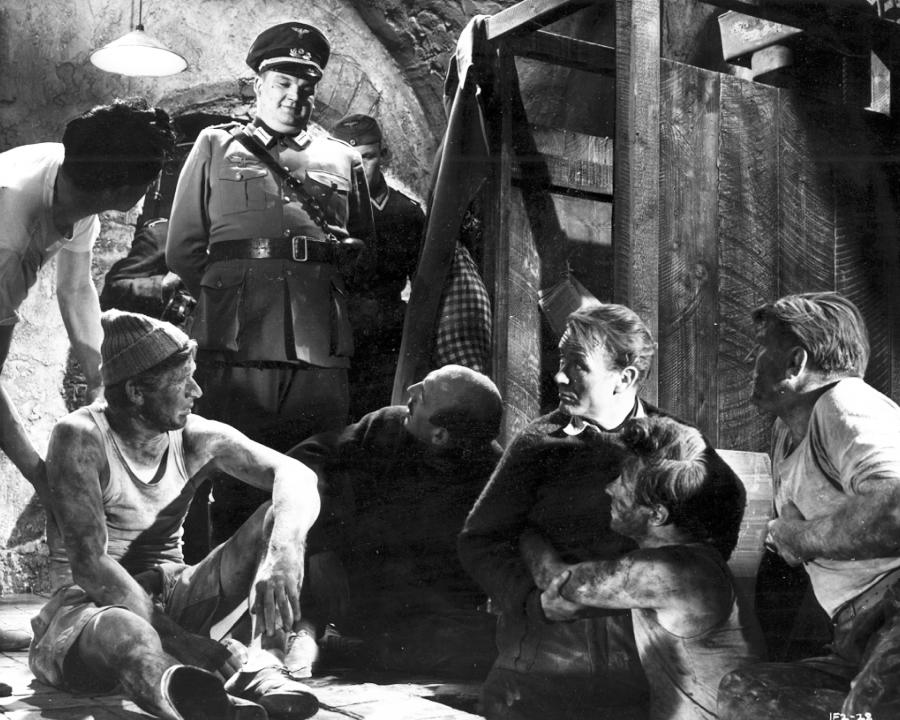
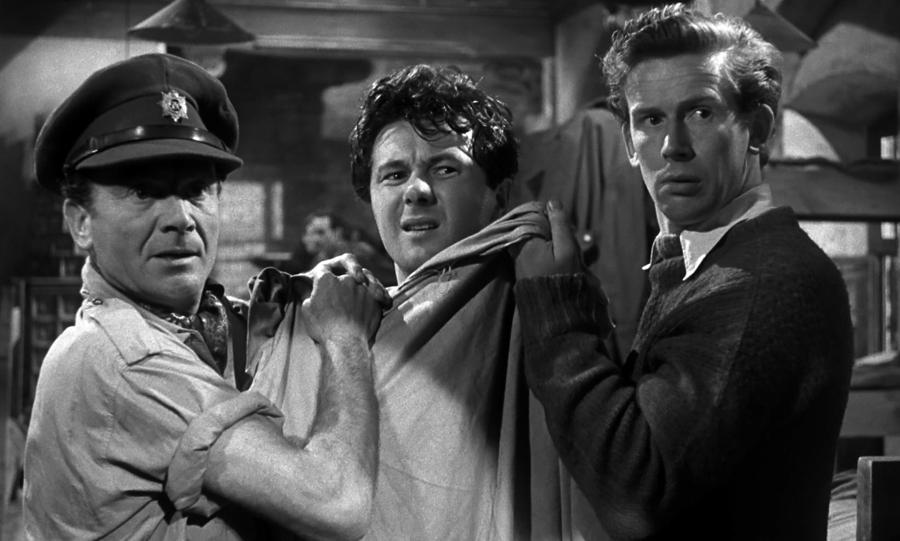
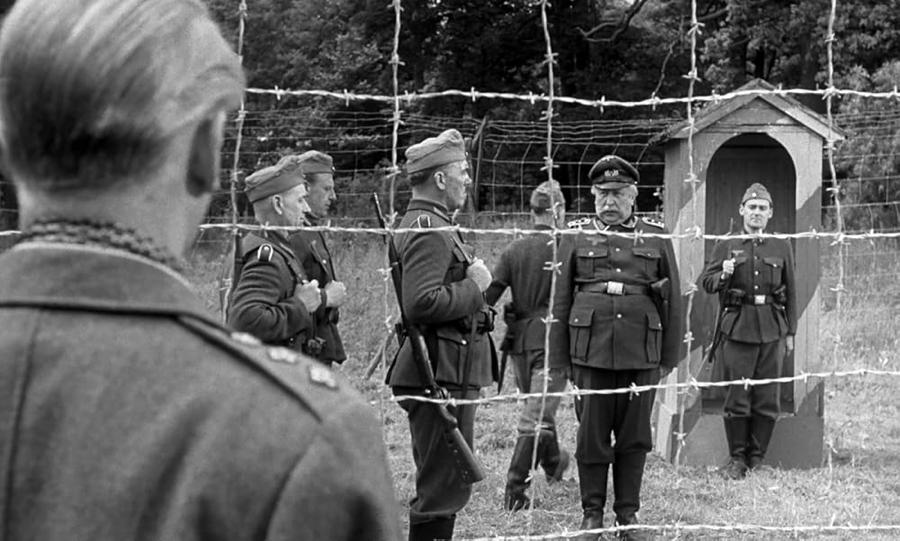
The film looks very good. The black & white photography is by Gordon Dines who did excellent work on a range of Ealing films from 1947 right through to the studio’s last moments with The Siege of Pinchgut in 1949. The real Colditz Castle was used as a location according to IMDb with interiors and other sets at Shepperton, the studio base for British Lion at this time. Director Guy Hamilton also co-wrote the film with Pat Reid and Ivan Foxwell. He had previously directed three films, the last of which was the J. B. Priestley adaptation I saw a few months ago, An Inspector Calls (1954). Before that he made The Intruder (1953), an interesting crime film linked to post-war problems for ex-military men. Later of course he would become known for several James Bond films. I do have to agree with Monthly Film Bulletin (March 1955) on a couple of points in their review of The Colditz Story. First, the sets by Alex Vetchinsky work very well. Second the film does suffer I think from coming across as too comical in its presentation of the prisoners and the events. The casting is very strong with John Mills as the Captain Pat Reid character but some of the other cast members such as Lionel Jefferies, Richard Wattis and Ian Carmichael were in some cases already known for eccentric or comic roles and seeing them together here does suggest comedy. The German rotund guard commander Priem is played by Denis Shaw who switches from almost comic to chilling and one of the escape scenes focuses on another eccentric character, a guard known by the prisoner as ‘Franz Josef’ (after the Austrian Emperor in the 1914-18 war. But all this is countered by the portrayal of the senior British Officer in the camp played by Eric Portman who brings a suitable gravity to proceedings. Ironically Portman had played a Nazi in Powell and Pressburger’s 49th Parallel (1941) as well as many other significant roles, often playing on his no-nonsense and plain-speaking Yorkshireman persona. Bryan Forbes in his early career as an actor is the young handsome character, sometimes a bit too brave and sometimes too silly. The most intriguing character for me was the very tall Scottish officer played by Christopher Rhodes. At first I thought he looked and sounded out of place as an officer prisoner but later I discovered that the actor wasn’t Scottish but had been educated at Eton and Oxford so would have been officer material. I think this was probably his most prominent role in a fairly long career. His height made him useful in another escape plan. The one flaw that I noted was that the music seemed to be overwrought, especially in the opening sequence. Francis Chagrin worked on the two earlier Guy Hamilton films mentioned above and plenty of other features so it seems odd, but I rarely notice music scores the first time round and this struck me as ‘wrong’.
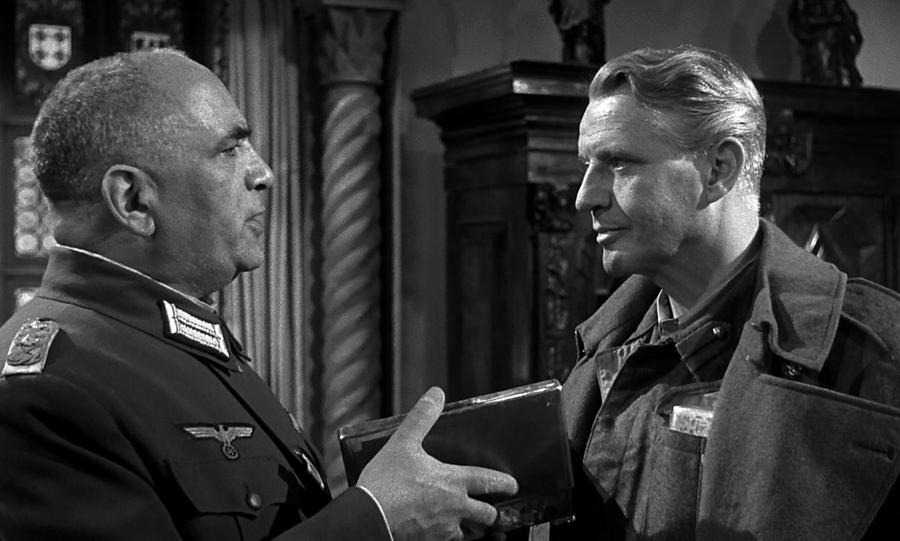

Overall the film is very well made and an enjoyable watch as evidenced by its UK success. There were several similar films based on true stories made in the post-war period and this stands up in comparisons. At times it seems to borrow something of the look of the earlier Jean Renoir classic, La grande illusion (France 1938). I don’t know how it performed in Europe at a time when Rank had good contacts overseas and films like this were regularly exported. The decision to have the Dutch, French and Polish prisoners speak in their own languages was probably appreciated. I do know that the Colditz Story was a perhaps surprising flop in the United States. I came across a couple of reports in Variety exploring this trend. It seems that though British war pictures during the Second World War had performed relatively well in US cinemas, in the post-war period they proved a very hard sell. On the other hand, sold into the US TV market such films did very well. I’m sure someone must have researched this.
Here’s a short clip which shows one of the other comic moments – a joke in French!

