

 Another début feature, this time by Delphine Girard, born in Quebec but brought up in Belgium, this film developed from Girard’s Oscar-nominated short The Sister (2018). Coming to the conclusion that she hadn’t finished with story idea, itself taken from a real life incident, Girard felt that she was still concerned with the characters. At the same time, the subject matter itself seems even more ‘of the moment’ now. The incident at the centre of the story involves a woman, Aly (Selma Alaoui) who is being driven by a guy she met at a party and she isn’t sure where they are going or what will happen. She decides to make a phone call, telling the man driving that it is her sister on the line. But the call is actually taken by Anna (Veerle Baetens) on an emergency helpline. There are a few exchanges between the two women before Anna twigs what is happening and begins to advise Aly about how to handle the situation while arranging to have the call traced and trying to get clues as to what kind of car it is, what colour and which road it is on. It’s a rural highway outside Brussels and this proves tricky. The aim is to have undercover police stop the car before the driver realises what is happening. This gripping 17 minute sequence is a re-working of the 15 minute short and what follows will include flashbacks to what happened earlier and the developments for each of the three characters involved.

It’s a great way to start a story and the journey in the car is compelling but structuring what follows is a challenge I think. We are immediately faced with the question, was Aly assaulted before she got in the car or was a subsequent assault what she feared? Many women either fail to report rape or refuse to testify in court for a variety of reasons. In this case Aly does respond initially to police questioning but then withdraws part way through the process. As a result she learns later that there will be a court hearing but it may be eighteen months or more before it happens. In the meantime she has the support of her sister Lulu (Adèle Wismes). Aly’s young daughter spends time with her mother and separately with her father Pierre (Gringe). The couple have separated but not yet divorced.

Meanwhile, Anna who took the call was clearly affected by what she heard and she tries to keep track of what happens with the police procedures. We get some insight into her background when we share a journey in which she gives her teenage step-son a lift and gently quizzes him about his relationships at school. This is mirrored to some extent by similar scenes involving the man who Aly met at the party and who now faces a court appearance. This is Dary (Guillaume Duhesme) who we learn is a firefighter and concerned about his reputation when his behaviour becomes more widely known. He has his male friends but he’s also close to his mother Laurence (the Québécois actor Anne Dorval). He hasn’t told her everything but she tries to support him.

While the film narrative as a whole is ‘social realist’ in presentation, the flashbacks are brief and often quite literally ‘flashes’ of what happened on the night. Girard excludes the possibility of ‘exploiting’ the sexual violence there might be in these scenes. We learn something of what happened but not everything. In the Press Notes the director makes clear that she was very conscious of the debates about #MeToo when she made The Sister and when she thought about expanding it. She found, however, that there was a gap between the general discussion and what she discovered when she began to talk to all the parties involved in real cases – the lawyers and the police as well as the women themselves. Aly is properly the central character and we get to see more of her life after the night in question. She isn’t the simple ‘victim’ but a complex character. She appears to be a teacher and she is in some ways philosophical in her approach. She knows, for instance, that it won’t necessarily make her feel better if Dary is convicted. She knows to that she was seeking something related to her own desire that night but she is also aware that her experience with Dary has made subsequent encounters with men more difficult. Girard’s overall approach is to observe each of her three central characters (and also Laurence) and explore the nuances of their behaviour.
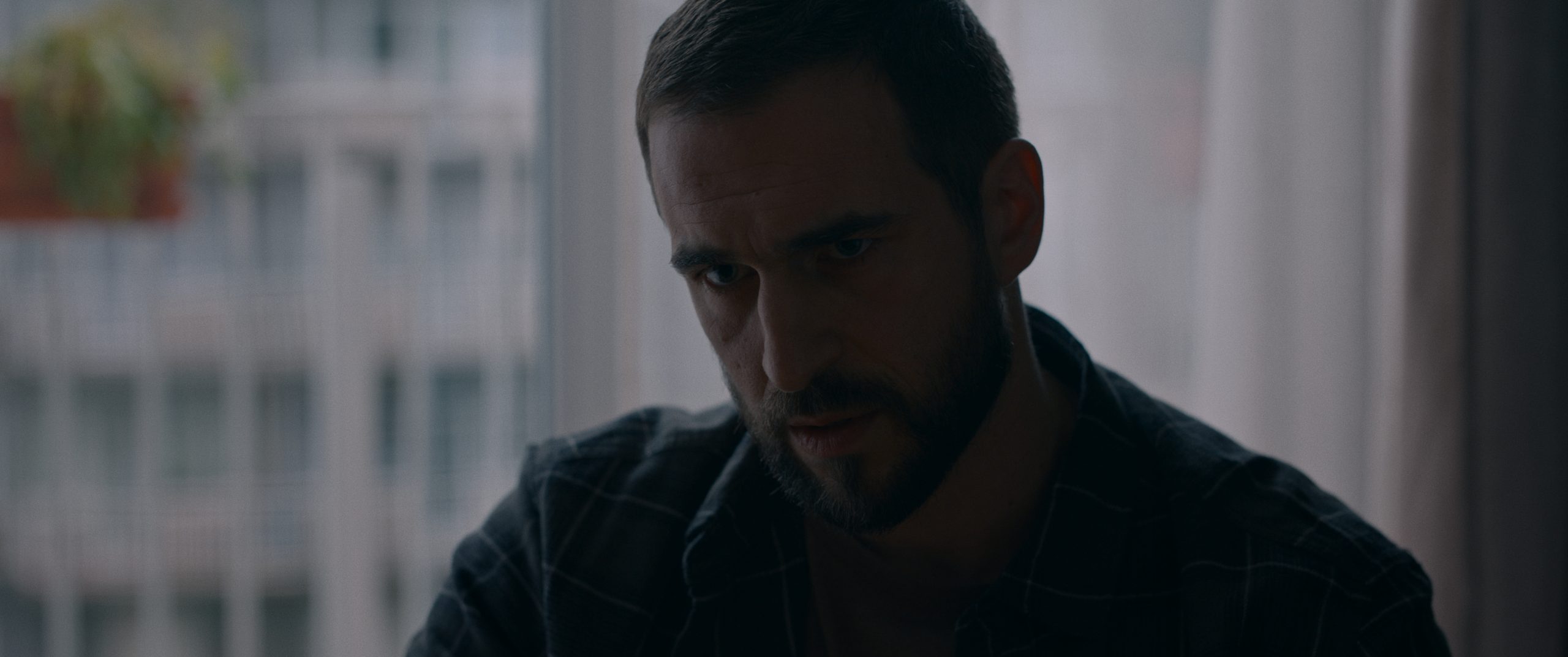
I don’t want to spoil the remainder of the narrative so I haven’t mentioned too much of what else happens. But I will report that Anna decides to visit Aly on the night after the court hearing and to join with her and her sister Lulu and her daughter Sarah. The sorority of the women involved is very important for the director. This no doubt extends to some of the other members of the creative team on the film including the DoP Juliette Van Dormael who also photographed The Sister and an earlier Belgian film discussed on this blog, Working Girls (Belgium-France 2020). I also note that Gilles Marchand was a ‘screenplay consultant’ on the production (alongside Laurette Polmanss). Marchand has worked consistently with the German-French director Dominik Moll and that last collaboration was on the acclaimed film The Night of the 12th (France-Belgium 2022) which has several interesting parallels with Through the Night.
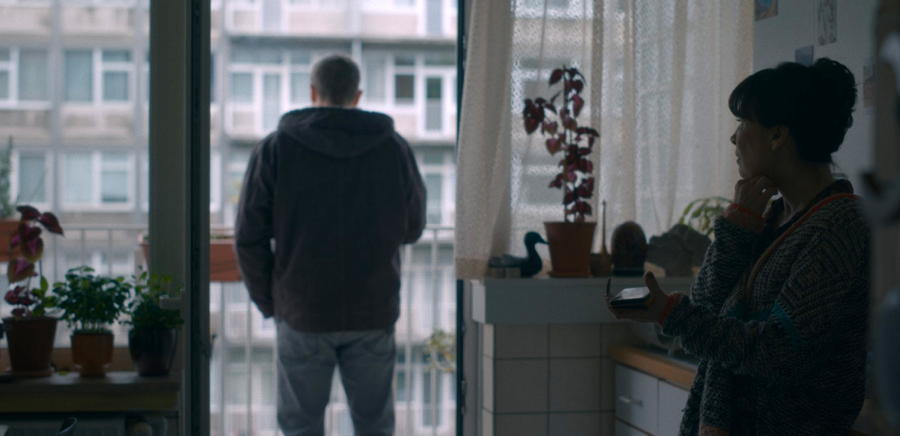
Overall I found this to be an impressive début film which has much to say and goes about its business with commitment and a great deal of careful thought. It isn’t an easy watch but it’s rewarding. The performances are very good and most of the ideas work well. My own problem with the film was that I was so taken by Veerle Baetens as Anna that I wanted to know more about her character and felt slightly frustrated that she didn’t appear more often. I realise also that Baetens is the most experienced film actor of the three leads and the role also gives her a focus that is rather different to the range of emotions displayed by Selma Alaoui’s Aly.

Through the Night has had several international festival screenings and it won the ‘Audience Award’ at Venice in 2023. The minority French interest in the production comes partly from the arthouse distributor-producer Haut et Court which released the film in France in 2024. It has releases in some other European countries and in Quebec but I don’t think it is planned to get a UK cinema release. It does seem to be available to stream/rent from Apple and Amazon in the UK and via the My French Film Festival for the next 10 days.

