
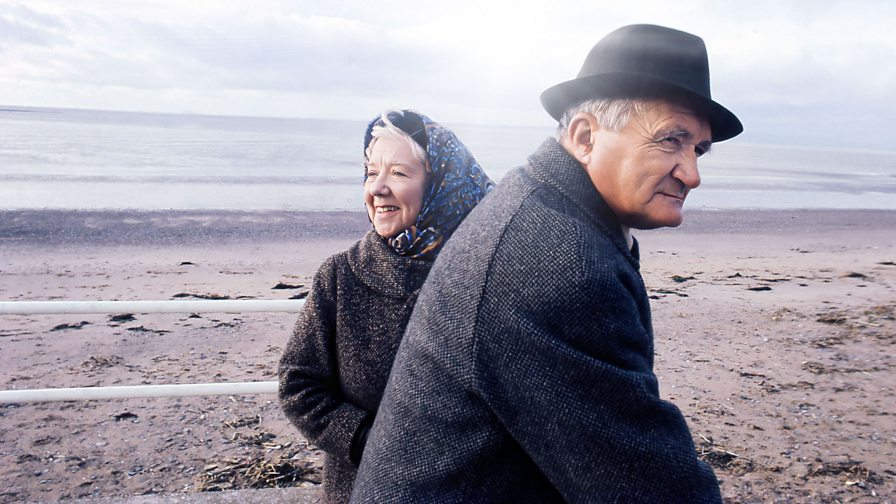
BBC iPlayer has a category ‘From the Archive’ that offers examples of the best of the corporation’s output over many years. Sunset Across the Bay is one of the very best examples of the drama series The Wednesday Play (1970-1984) which succeeded Play for Today (1964-1970) as the BBC’s flagship drama series. Sunset Across the Bay is a 70 minute single drama which serves to point to a major shift in British film and TV. In the early 1970s British cinema was in seemingly terminal decline and its biggest box office hits tended to be TV spin-offs. Meanwhile, following the practice of producer-director teams such as Tony Garnett and Ken Loach in the mid 1960s, many TV plays were beginning to be made on film. Sunset Across the Bay was shot on 16mm colour stock, though I first saw it on a Black and white TV set. It was written by Alan Bennett who was still best known for his stage work though this was his second TV play following A Day Out in 1972. Stephen Frears was the director of A Day Out and Sunset Across the Bay and his career epitomises the shift in the industry. Frears began as an assistant to Karel Reisz and Lindsay Anderson on films in the 1960s and made his film début as director on Gumshoe (UK 1971) for Memorial Enterprises. But after that film Frears turned to television until 1984 when he made The Hit starring Terence Stamp and a young Tim Roth. Ironically it was his next film, My Beautiful Laundrette (1985) which was made for television which then became an international hit in cinemas, helping to launch a long and illustrious career for the director in the UK and Hollywood. The third notable ‘creative’ on Sunset Across the Bay was Brian Tufano who developed a strong reputation for his work first in TV and then on cinema films for directors such as Danny Boyle and many of the younger British directors of the 1990s and 2000s.
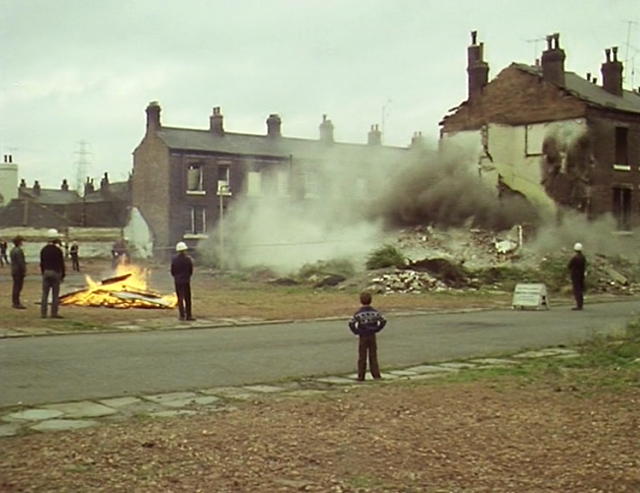
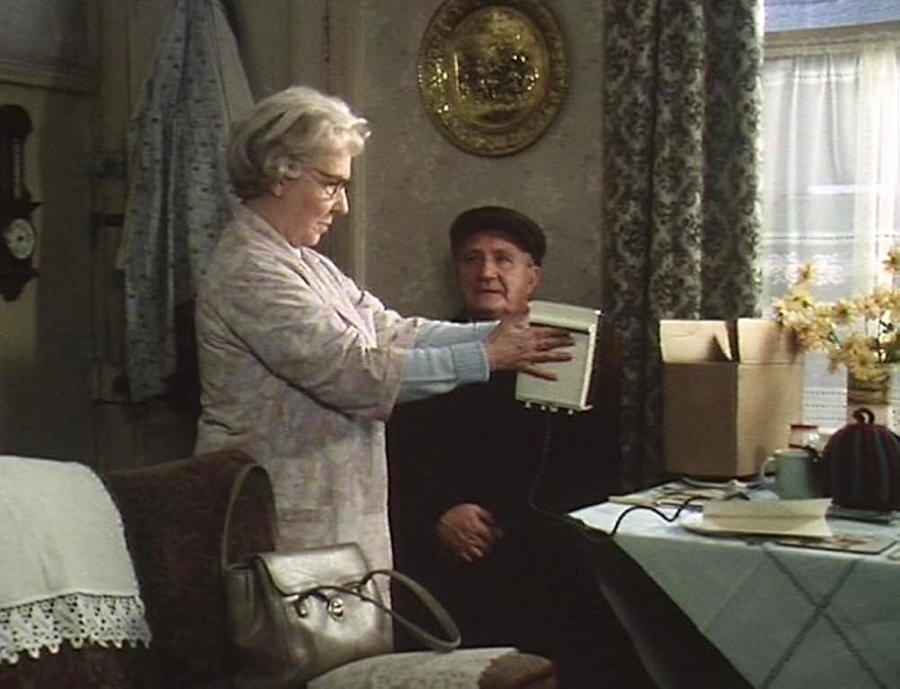
Sunset Across the Bay starts on the last day at work for ‘Dad’ (Harry Markham) retiring as a skilled man at an engineering works in Leeds. In a few days he and ‘Mam’ will leave their house they have lived in for 35 years and move to a flat in Morecambe. Dad will leave a job in which he led six men in a team and his reward for a lifetime of work is an engraved toaster. He’ll also lose his allotment. The scenes of the area he is leaving, where his home is in one of the last streets to be demolished for a new building project, are desperate. The same scenes of renewal/urban vandalism are found in Manchester (Charlie Bubbles, 1967) and Newcastle (Whatever Happened to The Likely Lads?, TV 1973-4). As their Standerwick coach drives out of Leeds, Dad gives a little lecture about how the city was first settled by monks from Fountains Abbey and how it is now changing again. Why do the couple move to Morecambe? Partly it would be because Morecambe was well-known as the seaside town for Leeds with a direct train service. The couple would have visited Morecambe on holiday. The script by Alan Bennett is, we guess, autobiographical and there is a good gag when Dad asks in a Morecambe newsagents “Do you have a Leeds paper?” “No, but we’ve got a Bradford Argus” is the reply. Dad snorts that it won’t do. “Why not, it’s near enough”, the woman at the counter says. Bradford is even more closely identified with Morecambe than Leeds. The two city centres are 9 miles apart but their local papers never mention the rival city.
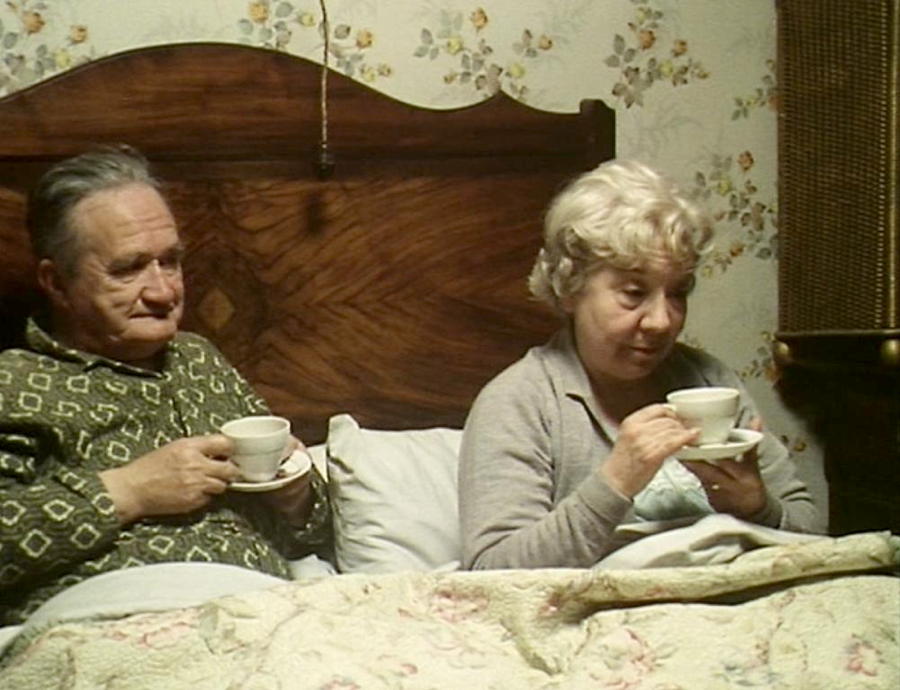
It’s apparent very quickly that the couple have made a mistake in moving to a very different environment. The combination of the move and the new experience of being together all day puts a great strain on the relationship. They have also been unfortunate in timing. They have moved in the autumn and the season is virtually over. Morecambe, like all British seaside resorts is struggling in decline in 1975 and without the summer tourists it is quiet and rather dull even if it is very beautiful – but perhaps only to those who love the coast in the dark months. The arrival of the couple’s son from Australia on a business trip brings some relief and they visit the Midland Hotel on the sea front, one of Morecambe’s art deco gems and with him they drive in his rented car to the Lake District close by. But their other encounters are not so uplifting and the son’s visit only emphasises their loss of a familiar community.

Bennett’s ear for local speech and his memories of his parents enable him to represent how all of this must feel for the couple and his script has been recognised for its qualities. The performances by a host of actors familiar to the TV audiences of the period are very good and well handled by Frears. Brian Tufano’s camera captures the local environment, especially in the long shots of sea and sky. I’m biased of course since in a sense I know both the characters and the landscape so well but I think this 70 minute drama is an extraordinary text for any social historian of the decline of the industrial North of England in the 1970s. It was a decline that was never ‘managed’. The brutal acts of ‘modernisation’ were always going to hit hard and a few years later with the onslaught of Thatcherism they would hit even harder. Leeds actually survived better than most Northern cities, swapping engineering for finance but the seaside towns, the coalfields and the textile towns found decline much more difficult to handle. The story of Mam and Dad is indeed ‘bittersweet’. Bennett and Frears tell it with humour and warmth to counter the sadness of the reality. The couple are not used to being together 24/7 and they miss their friends. Mam has always been a housewife and known the women living around her. We don’t know if she worked in wartime which ironically was a good time for Dad building tanks for the war effort. But now Dad has no male friends although he does have stilted conversations with some of the men he meets. As a couple the woman they meet in a shelter on the promenade is one of the few recurring characters. The shelter itself will become a setting for young lovers for Bennett’s later Lancastrian counterpart, the brilliant Victoria Wood. Sunset Across the Bay is highly recommended, especially if you’ve never seen it before and if you have, it is certainly well worth re-visiting to realise just how good TV films can be. It is available on iPlayer for the next 5 months and also on DVD (in a box set, Alan Bennett at the BBC, 2009). It isn’t officially on other streamers that I know of but you can find it online if you search. Alan Bennett is 90 now and he is still producing good work but it doesn’t have quite the same charge for me as this early stuff.

