
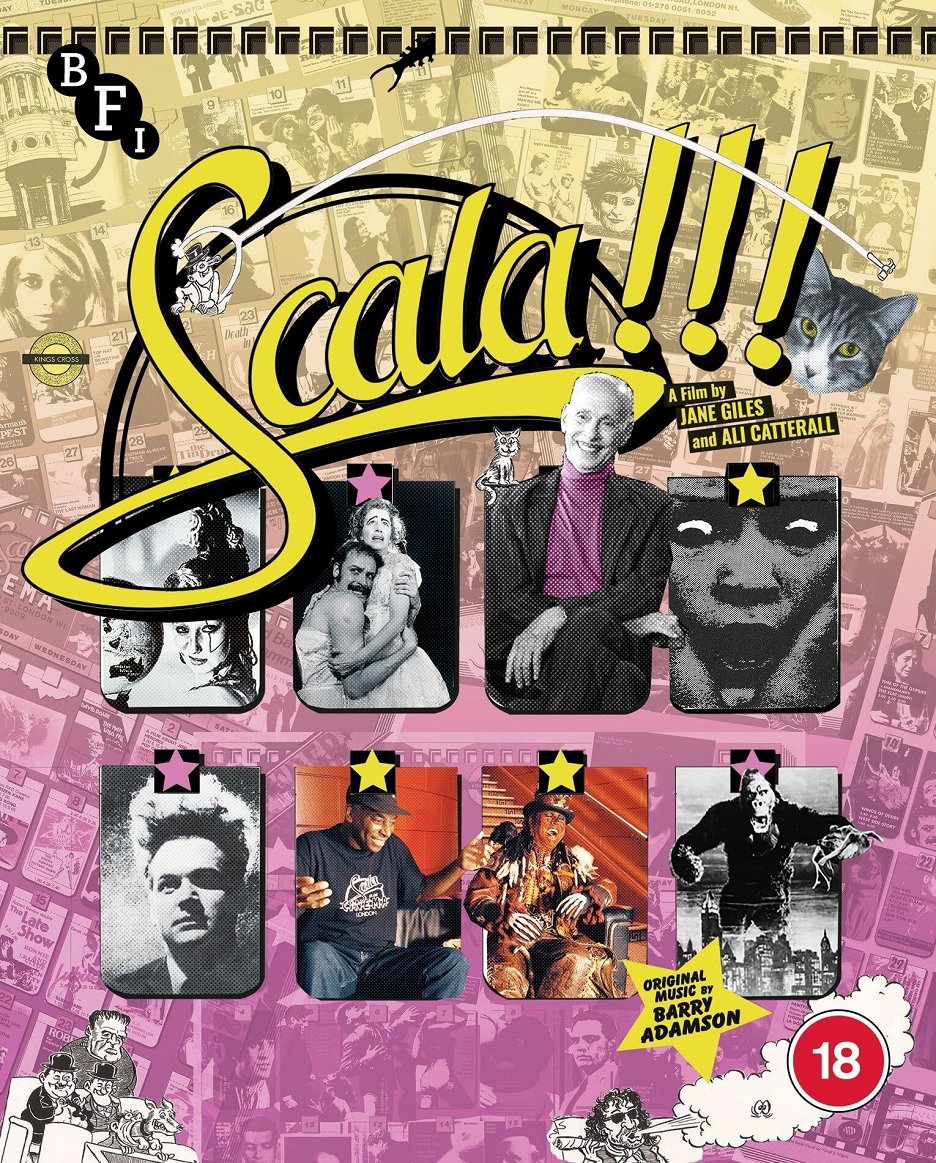
This is clearly a very popular documentary on the Blu-ray rental service I use and I’ve waited quite a while to get my hands on it. It’s a conventional ‘witness’ or ‘talking heads’ doc that details the relatively short history of the Scala repertory cinema in London from 1978 to 1993. But that description doesn’t do justice to the cultural value of the documentary in recording an extraordinary period in London which, as is pointed out in the film, saw the Scala’s programming and its audiences responses counter the cultural, social and economic terror that was Thatcherism as well as inspire many young filmmakers.
The film is divided into three parts. Section 1 deals with the first incarnation of the Scala in Tottenham Street in Fitzrovia. It was opened by Steve Woolley in 1978 in a location that had once housed the old Scala Theatre but was now a rebuild and it attracted an interesting mix of audiences before being forced out of the premises by the launch of Channel 4 which took over the space as its HQ in 1980. The second and longest section deals with the heyday of the ‘new Scala’ housed in what had been the Kings Cross Cinema and the third section takes us through to the decline in the early 1990s which saw the cinema finally defeated by Stanley Kubrick’s determination to punish the programmers in a legal case for showing A Clockwork Orange which he had expressly withdrawn from distribution.

The opening of the film is slightly confusing since the the initial Tottenham Street venue was taken over from ‘The Other Cinema’ which had opened a small new-build cinema in 1976 and which had also once operated the former Kings Cross Cinema, opening The Battle of Algiers for its UK release in March 1971. The Other Cinema, which is certainly a possible subject for a future posting, was an important institution in the history of British cinema in the last quarter of the 20th century. It attempted to become an exhibitor of ‘alternative’ films, primarily politically alternative and on four occasions operated cinemas, but its prime purpose was to distribute its films in both theatrical and non-theatrical presentations. Twice it was succeeded by the Scala when its exhibition attempts ultimately failed. The Scala’s programmers were concerned not so much with ‘political films’ as such but with a wide range of films, many of which challenged social norms. They also wanted to screen films that in their view hadn’t been seen enough. Their programmes changed daily and they included ‘all nighters’. In order to show the widest range possible and to get round censors and local authority licensing requirements they set up a Scala Club which anyone could join for a small fee (25p).
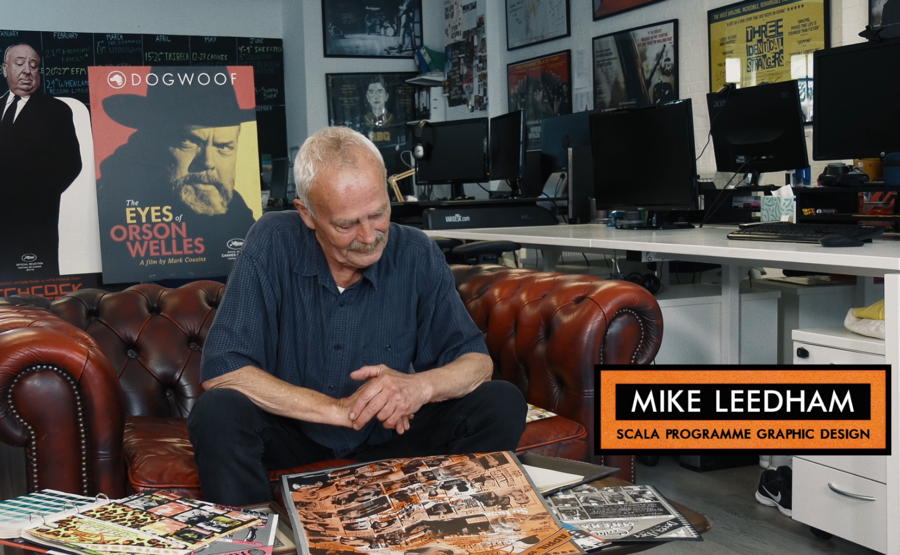
The strength of the film is undoubtedly the range of ‘witnesses’ – i.e. audience members from the 1970s/80s/90s, some seen both in images/clips from the Scala days and now as they remember their experiences. The witnesses fall into three groups (though they may well all have watched films together). There are a few familiar faces of filmmakers who have become well-known such as John Waters and Mary Harron as well as the UK filmmakers Peter Strickland and Beeban Kidron. The Black British pioneers from Black Audio Film Collective, Lina Gopaul, John Akomfrah and David Lawson also appear, as does Isaac Julien from Sankofa. John Akomfrah gives a very entertaining account of going to see Walter Hill’s The Warriors (US 1979) describing the enthusiastic audience participation in the excitement of the screening. As well as the film directors, there are critics like Kim Newman, Nick Kent and writer David McGillivray and many others. The second group comprises the staff of the Scala, for some of whom this was much more than just a job. Steve Woolley who started the venture as an enthusiastic 20-something would soon move on to become a successful as a distributor (of several of the titles screened at the Scala) and then as producer with Palace Pictures which he set up with Nik Powell. Woolley perhaps deserves his own biopic, he was certainly a very influential figure. Scala!!!‘s director is Jane Giles who was the programmer from 1988-92 and it was clearly a labour of love for her and writer Ali Catterall. There is also a book about the Scala from the pair and the Blu-ray for the film includes many extras drawing on the archive of material produced during the cinema’s run such as the distinctive monthly programme sheets. There are other staff featured in the film as well, giving a detailed account of what it was like, especially in the Kings Cross days.

But in many ways it is the third group, the audience of young people, who became the ardent supporters of the Scala who point to its real importance. The cinema introduced its audience to David Lynch, Derek Jarman, kung-fu, William Castle and a host of films like the so-called ‘video nasties’ of the 1980s that couldn’t be seen anywhere else on a big screen. When the Thatcher government introduced the notorious ‘Section 28’ making it illegal to ‘promote homosexuality’ in schools, there was enormous pressure on LGBTQ groups and especially young people open to exploring a queer identity. The Scala became important as a welcoming social institution. The film notes how alliances were made with both the local gay pub and Gay’s the Word bookshop, not far away on Marchmont Street. Part of the cinema’s ‘dangerous’ appeal was also its presence close to the red-light district around Kings Cross station. The area has been gentrified now but it certainly wasn’t in the 1980s.
I enjoyed the film very much and unlike in most docs I recognised a few people I knew. I’m hopeful that we will get back to a time when cinema is ‘dangerous’ and angry again about the terrible injustices in the world as well as simply having fun with the great diversity of ideas about what makes a film worth watching. I did visit the first incarnation of the Scala in Tottenham Street several times but I’m not sure about the Kings Cross Cinema. Surely I must have gone there – I just don’t remember. I suspect I was too old and too straight. But there are lots of small cinema ventures popping up now all over London in the new digital film world. Perhaps one will become as distinctive as the Scala? I should also point out that the ethos of the Scala is also behind ‘Scalarama’, the attempt since 2011 to set up DIY festivals featuring local cinemas around the UK screening films in the spirit of the Scala days. I know that Leeds Scalarama has a 2025 website and plans for September. There may be others too, so check out your local scene. Scala!!!, or, The Incredibly Strange Rise and Fall of the World’s Wildest Cinema and How It Influenced a Mixed-up Generation of Weirdos and Misfits is available on Blu-ray or streaming on BFI, Apple, Amazon or Curzon in the UK.
 itp Global Film