
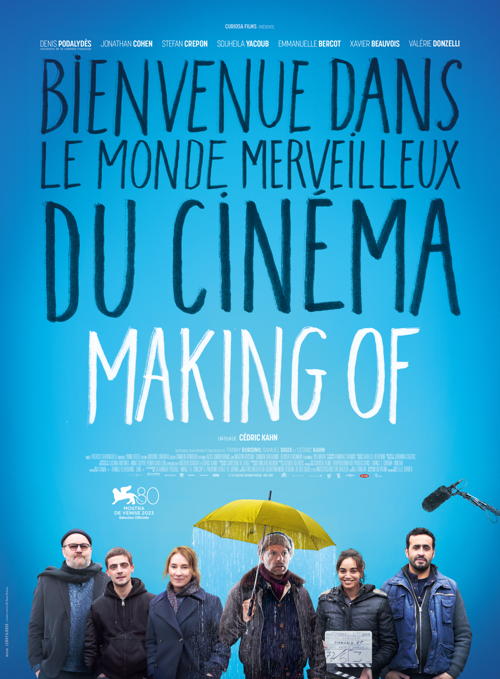
 My first pick of the 2025 My French Film Festival Online turned out to be the second film made in 2023 by Cédric Kahn following the excellent The Goldman Case. Unfortunately, this second film is not quite up to the same mark as the first. Whereas The Goldman Case was a slightly fictionalised account of a ‘real’ politically charged court case, this film is a genuine fiction film about ‘making a film’. One of the most famous films of this type in French cinema was Truffaut’s Day for Night (La nuit américane, France 1972). That film was very successful with audiences but it was a carefully composed evocation of the dying days of the period of studio shooting in and around the old Victorine Studio in Nice. Khan’s film covers much of the same narrative territory but its setting and its tone are different and crucially the ‘film within a film’ is a would be critique of capitalism with its focus on a factory closure and the attempt by workers to fight for their jobs using factory occupation as a bargaining tool.

As one reviewer points out, we almost expect to see Vincent Lindon in the lead in a Stéphane Brizé film like La loi du marché (France 2015). I would suggest perhaps the Laurent Cantet film Ressources humaines (France 1999) but in some ways the film looks back to Marin Karmitz’s Coup pour coup (France 1972) at the height of ‘political’ filmmaking in France. However, these three films are all serious dramas. Kahn claims he is making a ‘comedy-drama’ or, as he describes it, a ‘human comedy’. This does indeed make for an interesting intellectual exercise but I’m not sure it makes for an entertaining and enjoyable film or a strong political argument.
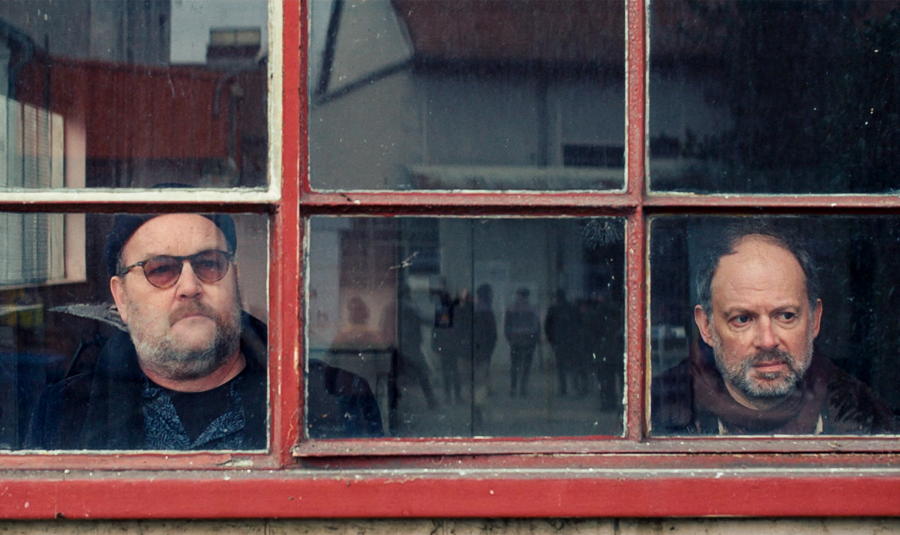
Kahn presents his narrative in three ‘Actes’ and there are three lead characters, all male. There are also three important female roles but the men are the focal point and this seems a weakness to me. The director of the film in the narrative is played by the ever-dependable Denis Podalydès. Simon is a respected auteur who has written the script for his film and his production manager, Viviane (Emmanuelle Bercot) has found him a run-down factory site and a group of locals who comprise most of the workers in the narrative. The funding for the production is being organised by the producer Marquez (Xavier Beauvois). Kahn reminds us that Bercot and Beauvois are both experienced directors as well.

The second principal character is the star of the factory film, Alain, an egocentric leading man played by Jonathan Cohen and the third principal character is Joseph the young local man (Stefan Crepon) who is passionate about filmmaking and has signed up as an extra just to be able to give a copy of the script he has written to Simon. He manages to do this and ends up being given the production role of the ‘making of’ camera person. Kahn builds his narrative around these three central characters but he starts the narrative with two separate but related ‘inciting incidents’. The first, which runs through the opening credits and starts the film proper, features the ‘star’ in effect re-writing the opening to suit his own style of over-the-top performance. The second sees the arrival on set of the two youngish men who are providing most of the budget. Marquez refers to them as ‘Beavis and Butthead’ and they want what they see as a ‘happy ending’ to the narrative. Simon does not realise that they have already seen a revised script which changes his own ‘realist narrative resolution’. He feels betrayed, but by whom? He already has a problem with his lead actor altering the opening. Now he has to decide whether to accept the ending being changed as well. If he sticks to his guns he will no doubt lose the funding.
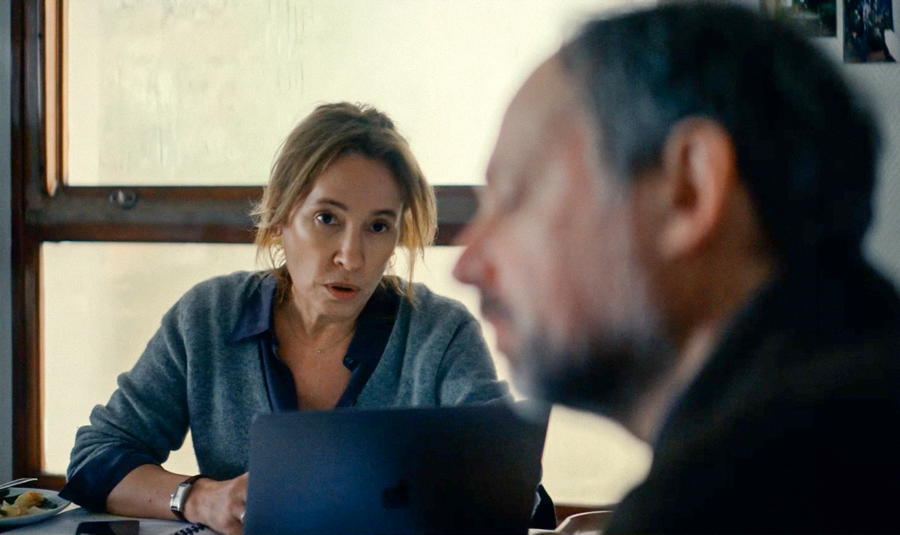
It isn’t difficult to see how the various strands of the narrative will develop. Simon, the director, has all kinds of problems and they are also likely to impact on his marriage. The actual location of the production was not that far North West of Paris close to the Seine but the fictional factory is more remote, so Simon, highly stressed most of the time, talks to his wife Alice (Valérie Donzelli, the third actor/director) mostly online. Alain alienates most of the cast and crew with his attempt to make the film more about him. Alain’s behaviour adds to the sense of unrest between those cast members who are ex-workers and the actors and crew who are used to the ups and downs of the film industry. The narrative dealing with Joseph is slightly different and in his statement Khan suggests that perhaps he was like Joseph as a young man – so concerned about his own ambition that he perhaps doesn’t really understand what is happening on set. In the case of both Simon and Joseph it is their relationship with the women – Alice and Viviane for Simon and Nadia (Souheila Yacoub), the female lead actor in the factory film, for Joseph – which is most telling.
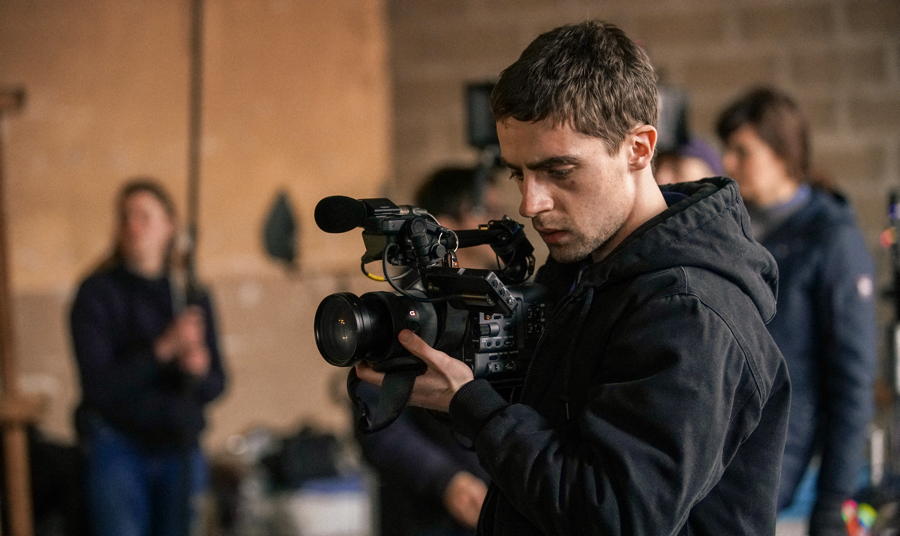
Cédric Kahn is a very experienced director who knows a great deal about filmmaking and how to present its issues. One of his decisions here is to shoot the ‘fictional film’ in ‘Scope and the the narrative of the production in standard widescreen (1.85:1), though I didn’t notice this at first. The cinematography is by Patrick Ghiringhelli whose work I enjoyed on The Goldman Case and on the two films from Dominick Moll, Only the Animals (2019) and The Night of the 12th (2022), featured on this blog. There are many good things about Making Of but I just felt that the comedy didn’t always work and the film as a whole was slightly unbalanced. Making of screened at Venice in September 2023 and was released in France and Belgium a few months later. It hasn’t been released in UK or US cinemas to my knowledge but it is streaming as part of My French Film Festival on Apple and BFI Player in the UK and other streamers worldwide.
 itp Global Film