

Between 1939 and 1946 a series of fourteen films featuring Sherlock Holmes and Dr. Watson were made in Hollywood. Basil Rathbone as Holmes and Nigel Bruce as Watson were cast throughout. However, there was a big change between the first two films in 1939 and the twelve others. The Hound of the Baskervilles and The Adventures of Sherlock Holmes were produced by Twentieth Century Fox but the studio then decided not to retain the rights and Universal stepped in. The Fox productions were designated as ‘A’ pictures, albeit running at only 81 minutes despite a reasonable production budget and strong casting (Richard Greene a star from British cinema appears in The Hound of the Baskervilles and Ida Lupino in The Adventures of Sherlock Holmes). The Universal productions began in 1942 and were more clearly categorised as ‘B’ films, running only 70 minutes or so with lower production values and less well-known supporting casts. They also updated the Conan Doyle stories and crafted new ones, both being set in the contemporary wartime period of the 1940s. Sherlock Holmes in Washington was the third film in the series.

Using an original story written and then scripted by Bertram Millhauser and Lynn Riggs, the film begins at Croydon airport where several men board a Dakota taking them first to Lisbon where four of them change for a flight across the Atlantic in a flying boat, eventually arriving in New York. The four then board a train for Washington. It soon becomes apparent that three of the men are plotting to kidnap the fourth because they believe he is carrying secret documents. The trio are never identified as Nazis or as working for the Germans but they are a threat to the British Empire like all the Holmesian villains. Their victim, Mr Pettibone, a British agent meets around four other people in the bar on the train and he could have passed on the documents to any of them before he is grabbed by the trio and in effect ‘disappears’. Back in London the authorities contact Holmes and ask him to help track down the documents. Holmes deduces that Pettibone would not have carried two sheets of paper but would have found a way of hiding them in a form easy to pass on to an associate or anyone unaware that they were receiving something important. Holmes and Watson then fly to Washington in an RAF bomber hoping to find the documents before they can fall into the ‘wrong’ hands.
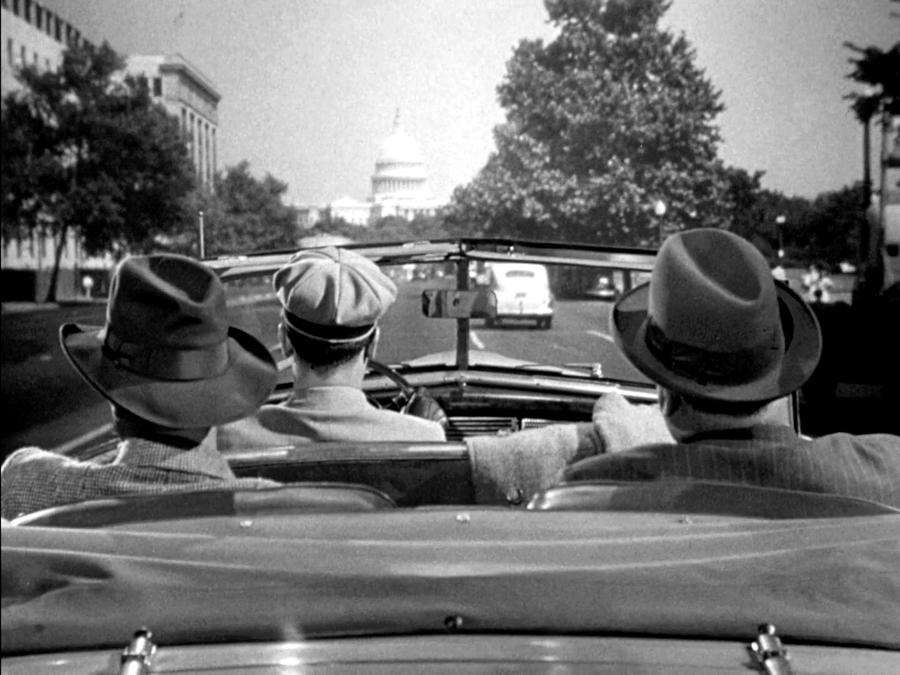
The film is interesting first of all in the attempt to represent both the UK and the US in the same film. The London scenes are fairly unconvincing and the Washington exteriors use back projection. Stock footage of Washington landmarks forms the background as Holmes and Watson begin tracking down the clues to what happened to Pettibone and the documents. The mystery that Holmes solves is quite interesting and it does get more so when we meet the organiser of the spies who is played by George Zucco (who played Moriarty in The Adventures of Sherlock Holmes). His character here is as ‘Richard Stanley’, a respected antiques dealer in Washington. Antiques emporia are perfect settings for spies and enable the filmmakers to create a more exotic backdrop for action scenes with relatively little outlay.
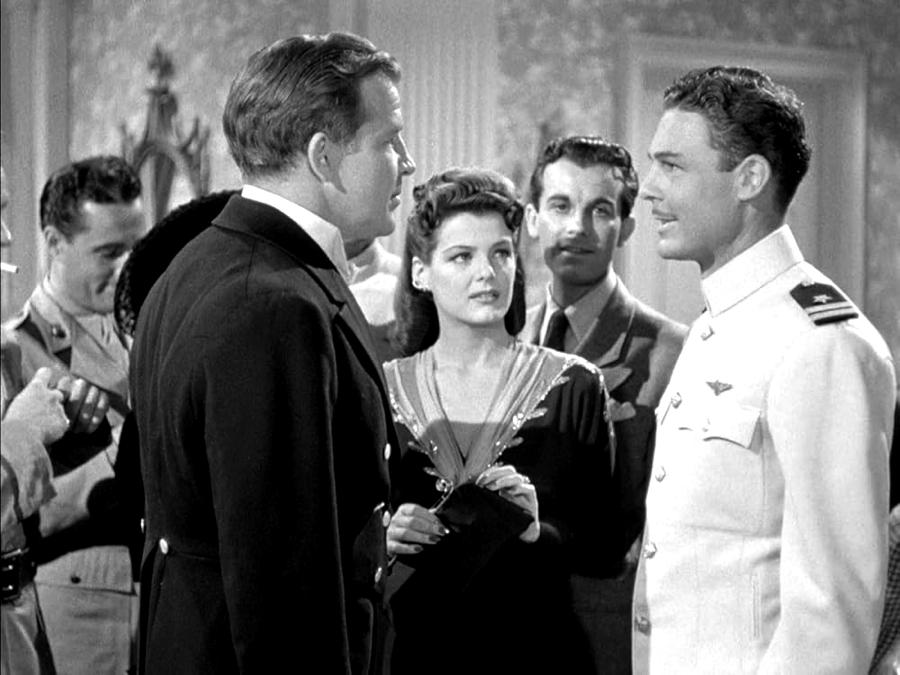

I found this Holmesian episode to be pleasantly diverting as an entertainment but the production values are restrictive. I won’t rush to seek out the other films in the series. Universal ended the series in 1946 believing that the modern settings were not viable any more. Roy William Neill directed all of the Universal Holmes films apart from the first. He died soon after the series ended. Basil Rathbone has a strange hairstyle in this film and his costumes for an American trip are equally odd. In the above scene he is wearing a form of tweed safari suit. I think the film must now be the public domain in the US as there are numerous copies free to watch on YouTube and some colourised. Beware those that are shorter than 71 minutes, I found myself watching one that missed a few minutes from the climax of the action. The film betrays its propagandistic purpose in the last lines delivered by Holmes – a quote from Churchill’s speech in Washington which is meant to cement the ‘special relationship’ between the UK and the US with the promise to preserve democracy. I write this with the US election only days away and the strong possibility of Trump as US president again. Oh, the irony!
 itp Global Film