
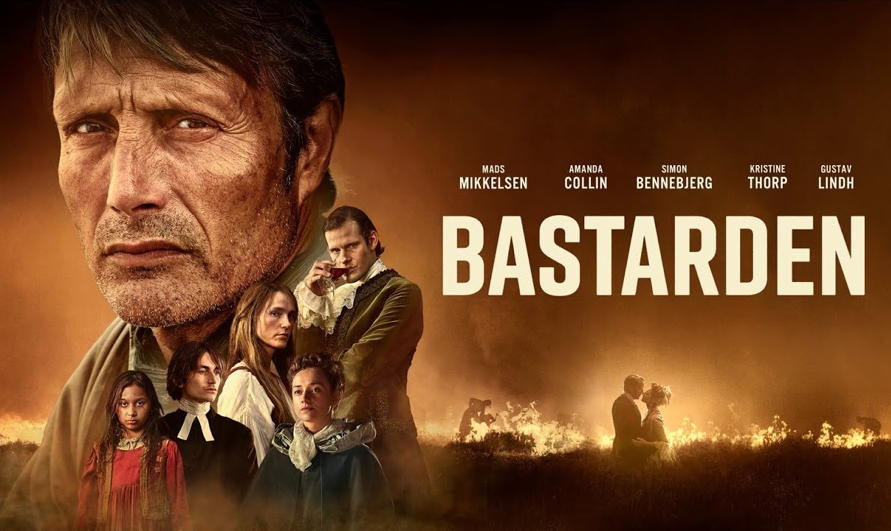
Released in the UK in February this year, this film is a familiar Nordic co-production project with Denmark as the principal partner. It has been seen as a second major Danish historical action drama from director Nikolaj Arcel after A Royal Affair (Denmark 2012) and like that film is based around a historical character. The Promised Land is adapted from a novel by Ida Jessen titled Kaptajnen og Ann Barbara (The Captain and Ann Barbara) by Arcel and Anders Thomas Jensen.
Ludvig Kahlen (Mads Mikkelsen) is a retired captain in the German army (the Prussian army?) in the mid-18th century. His Danish parents had been in service and the captain turns to the Danish court in the hope of gaining a Danish title and ownership of land. He has heard about how difficult it has been to turn the vast heath of Jutland into productive agricultural land. He seeks to build a settlement in Jutland on the King’s land and to receive due reward. He doesn’t realise how difficult this will be and how dangerous it might be in a whole range of different ways. The civil servants at court, led by Chancellor Paulli (Soren Malling) at first intend to just sling him out as a ‘no-hoper’ but then they realise that meeting his request will keep the king happy at the thought that the land will be developed. They expect Kahlen to fail.

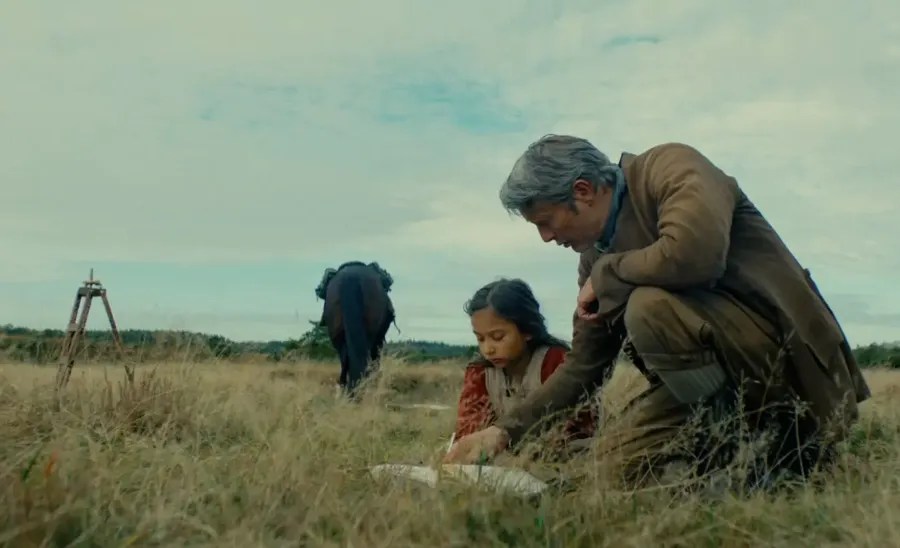
The film benefits from the widescreen photography by Rasmus Videbæk. When we arrive on the heath Videbæk fills the screen with a bleak flat landscape as we watch Kahlen painstakingly extracting soil samples in the hope of finding somewhere to start his planting project. Despite the often appalling weather, Kahlen struggles on. He’s nothing if not determined and eventually he finds something worthwhile. Once he has found soil that could be developed for agriculture, Kahlen sets about finding some helpers/workers and he collects together a young clergyman and a farming couple who have ‘escaped’ from indentured service with a brutal landowner. A little later he ‘acquires’ a young Roma girl. She is from a traveller group known as ‘tatere‘, a dark-skinned Roma group from Sweden/Norway who were originally expelled from England and Scotland 200 years earlier. The girl’s name is Anmai Mus and she will become an important character in the narrative. There are two other important characters introduced at this point. One is the brutal landowner Schinkel (Simon Bennebjerg) who believes the heath belongs to him and, as he is the local magistrate and legal power, it is difficult to act against him. Staying with Schinkel, reluctantly, is Edel (Kristine Kujath Thorp), his cousin from a less wealthy branch of his extended family. Her father wants her to marry Schinkel for financial security but she is not keen on this arrangement. When she meets Kahlen she sees a way out if he can build a settlement.

The film’s Danish title Bastarden is, I think, based on Kahlen’s background – his biological father was the owner of the estate who raped Kahlen’s mother, one of the maids. Kahlen is conscious of his lack of status and class conflict runs through the narrative, not least between Kahlen and Schinkel. All of this means that Kahlen himself is not necessarily a heroic figure – he has flaws, but these make him more human and less mythical, as well as possibly meaning he makes some wrong decisions. The English title The Promised Land has biblical overtones and reminds me of the Zionist mission to create Israel, but also the American concept of Manifest Destiny, both of them rather disturbing concepts in terms of the way they worked out. They both include the need to build ‘settlements’ and in the process to subjugate the people who arrived on the land before them. I’m also conscious that the idea of ‘Royal settlements’ was also applied by the English monarchy in Northern Ireland in the 17th century, attracting Protestants to emigrate from Scotland and England and settle on Irish Catholic land in ‘plantations’. That didn’t turn out well either.
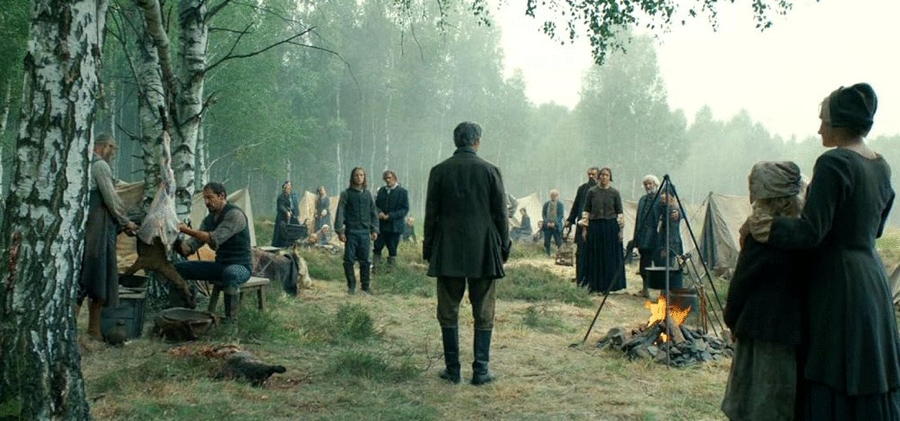
Kahlen has organised a shipment from Germany that will make his venture on the heath viable. He keeps the content of his shipment secret but it isn’t too much of a spoiler to reveal that these are seed potatoes. Apart from pests and diseases and frost when young shoots first appear above ground, potatoes will grow in most soils. Kahlen hires a tatere gang to burn the heather off the heath and the settlement develops. This has two consequences. The civil servants send a group of German settlers to expand the settlement. Schinkel responds by using force to expel them just as he forced the tatere to move on.

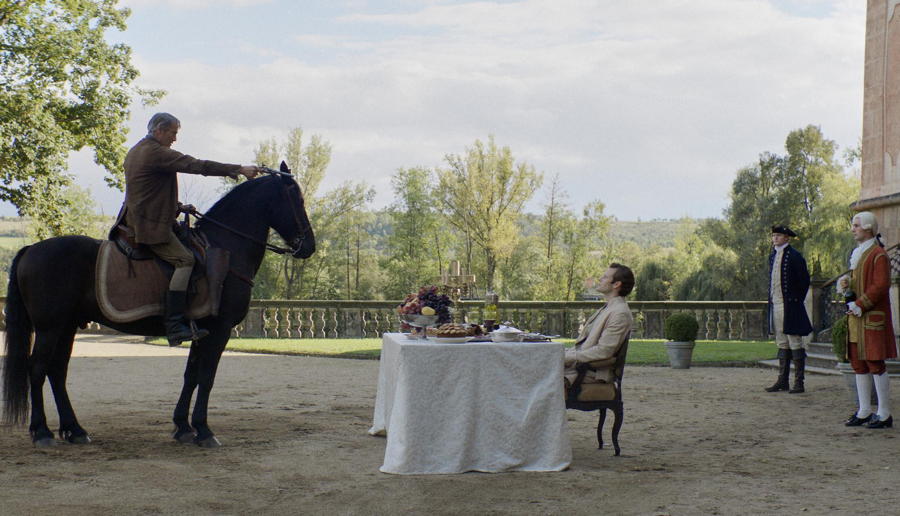
The narrative develops over several years but the film offers only limited indications of the exact time passing. All of this also encompasses a second narrative ‘thread’. The Danish title of the film includes the reference to ‘Ann Barbara’. She is the wife of Johannes, the tenant farmer first recruited by Kahlen when the couple escaped from servitude to Schinkel. As played by Amanda Collin, she is a strong character and circumstances force her into a close relationship with Kahlen. She will eventually become central to his survival even though, as with Anmai Mus, Kahlen perhaps doesn’t treat her well. Both women do, however, recognise that he is redeemable. The last third of the film will include the climax of the final battle between Schinkel and Kahlen. Schinkel is as much requiring of status as Khalen. He even insists that he be addressed as ‘De Schinkel’ to emphasise his aristocratic status, but this doesn’t wash with the other landowners in Jutland who despise him and eventually withdraw their support. The narrative at this stage seems to have forgotten Schinkel’s cousin Edel but she will also have a role to play helping Kahlen.
The Promised Land is an epic narrative. It is a very handsome film and a credit to all concerned. The ending is perhaps not what is expected but makes sense. What is most striking, apart from the performances of Mads Mikkelsen and Amanda Collin is the way it exposes the history of migrations and the conflict between communities based around ethnicity, religion and social class. It’s an exciting and illuminating narrative, especially if you have followed previous Danish film and TV narratives such as 1864 (Denmark 2014). There are also parallels with many American Westerns. The Promised Land is now available on iPlayer in the UK for the next year. The print on the BBC runs 120 mins which seems a little short given it is listed as 127 mins on various databases. Surely iPlayer doesn’t suffer ‘PAL speed-up’? But even then it shouldn’t lose 7 minutes. The BBFC suggests that the UK DVD print is 122 minutes which sounds about right for a speed-up. I think iPlayer simply chops the credits. If so that is a terrible thing to do for any film. Nevertheless I still recommend this film highly. Danish cinema (and TV) does this kind of thing very well.
Here is the American trailer for the film:
 itp Global Film
managed to see this on a brief release at the Light in Bradford, which I think was the only local cinema. Kahlen was a grim man which matched the harsh times he was living in and the people he had to deal with. Couldn’t help but get a bit of a lump in the throat when he eventually rescued little ragamuffin Anmai Mus from her life of servitude and explain why he had to give her up.
LikeLike
This must have looked good on a screen bigger than my TV.
LikeLike