
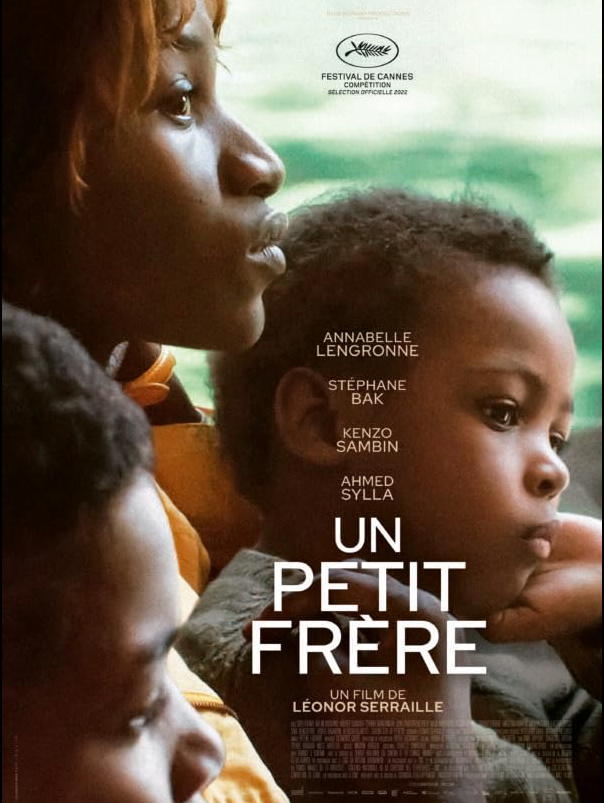
By chance, after watching The Farewell (US-China 2019), I found myself watching another diaspora film. The Farewell was very enjoyable but Mother and Son is something else. I think it is one of the best films I’ve seen this year and perhaps it isn’t a coincidence that it is photographed by Hélène Louvart, who also shot my other favourite of this year, Alice Rohrwacher’s La chimera (Italy-Switzerland-France-Turkey 2023) – in fact all of Rohrwacher’s features plus many others by women, several of which are discussed on this blog. The writer-director of Mother and Son is Léonor Serraille. This is her second feature and the first was Jeune femme (France-Belgium 2017), a film I initially struggled with but then took to strongly. Her second feature was screened at Cannes in competition in 2022 but not released outside festivals until 2023. Ms Serraille studied literature and then trained at La fémis as a screenwriter. Her careful approach to narrative structure perhaps makes this film unconventional and I think that it has so far been under-appreciated by audiences, though not by most critics.
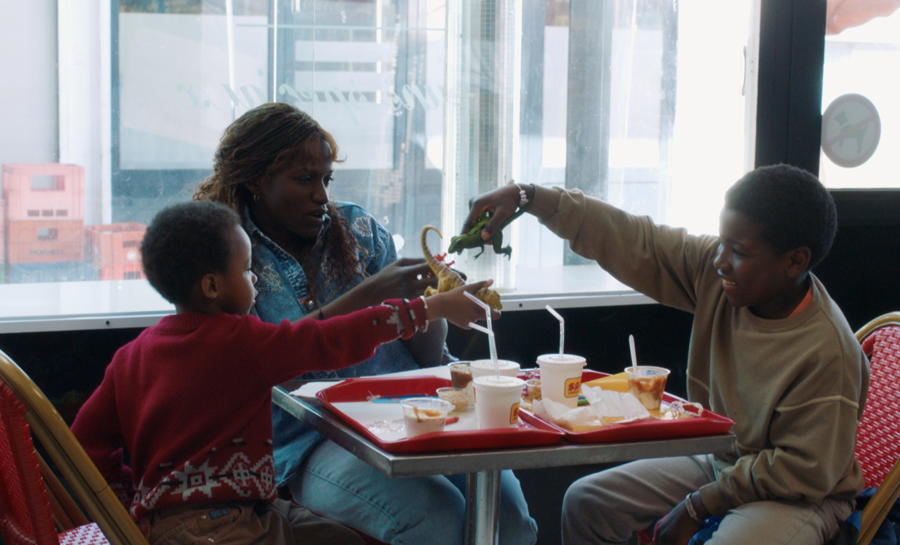
Once again, this is a film which has a different title in English. And once again, the French title (translated as ‘A little brother’) seems to make more sense. Having said that, it is quite difficult to think of a catchy title that properly represents this story. Rose (Annabelle Lengronne) arrives in Paris in the late 1980s from Côte d’Ivoire. She has two sons with her, Jean who is 10 and Ernest who is 5. We learn that she has two other, presumably older, sons who have stayed in Abidjan. Rose is able to stay with relatives and she gets a job as a cleaner in a Paris hotel while her sons go to school. Jean appears to be a bright child and Rose has high hopes for his education. The narrative is structured as three separate sections. The first section has Rose as the central character, the second has Jean aged 18-19 at its centre and the third section tells Ernest’s story over two periods when he is around 13 and finally as an adult. Rose appears in each of the three sections but not as the main character in the sections led by her sons. The other change across the timeline is that Rose and her sons move to Rouen, though she returns to Paris to work at various times. This is a form of family saga and ends in the 2010s with a meeting between Rose and a grown-up Ernest.

Several reviewers refer to this as an immigrant narrative but there are few of the usual elements of the immigrant story. I lazily assumed from the brief blurb I read before the screening that the overlaying aesthetic would be a form of social realism and a sense of life in les banlieues. Certainly the flat that the family initially shares with the extended family is in a tower block but the camera frames the action with contrasting close and wide framings/long shots. Rose appears to take her work breaks on the roof of her hotel with views across the city so we are not out in the ring of housing estates outside the city. She deliberately tells her children to ‘cry inside’ and not to show any disappointment in the world around them. She is also determined not to be the ‘victim’ of an exploited immigrant worker narrative. It isn’t difficult to avoid the victim tag when Rose is such a beautiful and vibrant human being with a healthy sexual appetite and a sense of fun and adventure. After I watched the film I realised that I had seen the remarkable Annabelle Lengronne in Working Girls (France-Belgium 2018). She takes opportunities to go dancing but her more conservative relatives don’t approve and press her to take on the seemingly steady shopkeeper Jules César as a boyfriend but she sees the need to move on, eventually hooking up with Thierry, a married white man who lives in Rouen but visits Paris. He takes her and the boys to the coast for a day out and then finds them somewhere to live in Rouen at his expense. This will take us into the second section labelled ‘Jean’. The diaspora story questions begin to emerge as Rose shows herself interested with what France has to offer, but also not forgetting where she comes from and who she is. For the boys (and her relatives) life is different. The boys, embedded in the education system will struggle more over identity. Rose will return to Paris to work and Jean will look after his younger brother. The two boys will not have the same experiences. Ernest will learn through Jean’s adventures. The ambition of the storytelling means that Lengronne has to age twenty years which she does marvellously. Jean is played by two actors and Ernest by three. The casting works very well.


There are some moments of what seem like symbolic imagery. As the story moves from Rose to Jean, the camera tilts up from the hotel rooftop in Paris and frames a vapour trail in the sky, cutting then to the Normandy beach. Rose has ambitions and she takes opportunities. Later, in Ernest’s story we see him in a middle-class house with several young teenagers and he looks through the bookshelves, finding a Flaubert book from which he reads. I assume this is Madame Bovary and the passage he reads is about ‘freedom’. Could he see himself as the student Léon Dupuis in the novel who studies in Paris and returns to Rouen? It’s a long time since I read the book so I’m not sure. In this part of the narrative there is no back-story explanation of how Ernest finds himself in this house and exactly who the woman of the house (played by Laetitia Dosch, the lead from Jeune femme) might be. My guess is that she and the other adults at what appears to be a summer party at a country house are the parents of some of Ernest’s schoolfriends.
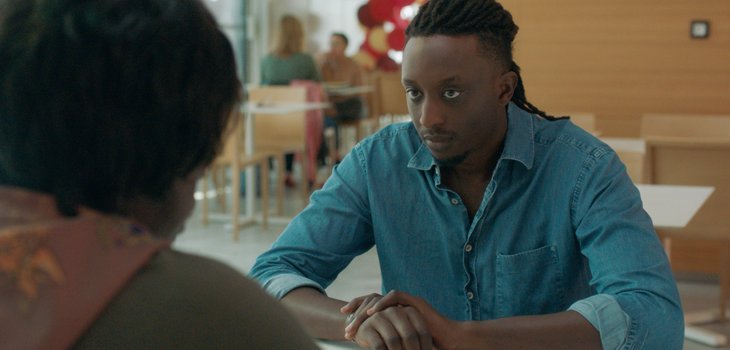
This is quite a long film at 117 minutes and Rose’s story lasts just over forty minutes leaving slightly less time for the stories of Jean and then Ernest. The stories are rather different in tone and actions – and some reviewers find the structure ‘uneven’. But this is the nature of the family saga. Jean has the most difficult story because he is more on his own in the sense of the pressure to succeed with his education and his stumbling attempts to become part of French society, not least in terms of his relationships with young women. Ernest can learn from this but in a small incident towards the end of the narrative he is confronted with the ongoing issue of identity. He looks surprised but also as if he is able to deal with it. The real question about the film is how does a white woman write and direct a film about the experience of West Africans in France? The answer is that she has two children with a partner from Africa and the story draws on his family members’ experiences. I won’t spoil the final resolution of the narrative, I’ll only note that it is powerful and emotional. This is a wonderful film.
 itp Global Film
I’ve heard almost nothing about this, but your persuasive review suggests I should seek it out. Films like this don’t seem to get the art house run they used to. It’s now streaming on Apple, Amazon and Curzon (so it was probably in Curzon cinemas as well).
LikeLiked by 1 person
It was released in the UK last summer through Picturehouses. I sometimes get the impression their films don’t go far beyond their own cinemas. I would be surprised though if it didn’t show at Glasgow Film Theatre.
LikeLike