
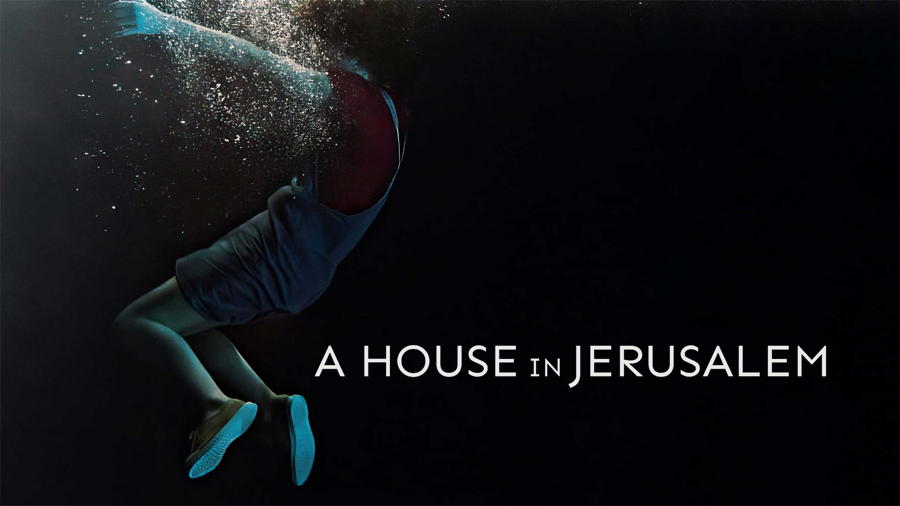
This film was completed before the current horrendous violence in Israel and Gaza (and the West Bank). However the conflict between the State of Israel and the Palestinian people goes back to 1948 and earlier in terms of new Jewish settlements in British Mandate Palestine. A House in Jerusalem does not focus on violent conflict as such but it can’t avoid references to that history – and why should it? The film offers a child’s perspective on the consequences of the Nakba in 1948 and makes several subtle statements about the current situation. Like all films by Palestinian filmmakers, the production required external support (in this case European funding bodies and production companies). The film is directed by Muayad Alayan and written by the director and his brother, Rami Musa Alayan. This is the third feature by the brothers and, along with Keith, I was very impressed with the second feature The Reports on Sarah and Saleem (Palestine 2018), which played at the Leeds Film Festival. This new film has similarities of approach related to the earlier films but also seems more ambitious in terms of genre exploration.

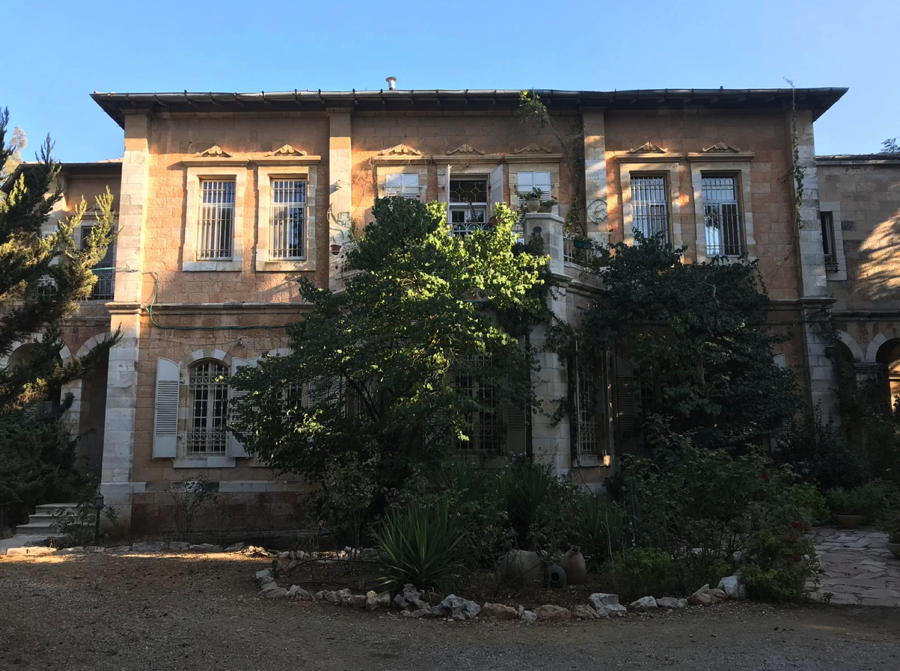
The central character is a 12-13 year-old British Jewish girl, Rebecca (Miley Locke), who arrives in Jerusalem with her father Michael (Johnny Harris). They move into the house that belonged to Michael’s father in what appears to be East Jerusalem. The reason for the move is soon revealed to be Rebecca’s trauma about the death of her mother. Rebecca survived the car crash which killed her mother and she has been receiving therapy which her father hopes to continue in Jerusalem. However, it soon becomes apparent that the old family house carries many memories which Rebecca senses much more acutely than her father. This is an intriguing story that I don’t wish to spoil, so I’ll focus mainly on the presentation and the issues that it raises. Rebecca is an intelligent child/young woman who is on the one hand not convinced about her father’s decision about moving to Jerusalem, but also curious about the house. She is also determined and resourceful and is not prepared to accept the measures her father and the local agencies set out for her welfare. Her problem is partly concerned with the lack of a proper explanation by her father as to why she has to stay within certain boundaries. I’m no expert on what 13 year-olds know about Israel-Palestine but Rebecca doesn’t really understand why her father tells her that virtually everything she wants to do is “too dangerous” and why she is soon being ‘rescued’ by over zealous police officers who also take an unhealthy interest in her attempts at research online.
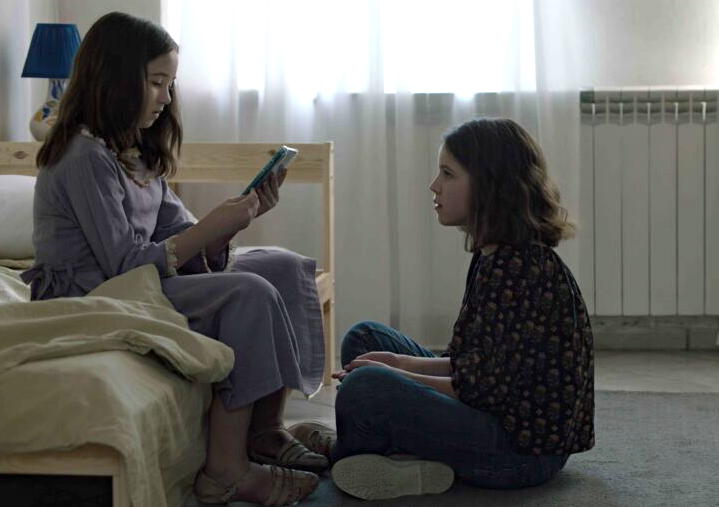
The narrative hinges on two separate developments that both have an impact on Rebecca. One is her father’s attempt to deal with her grief through taking her to a therapist and trying to divert away from reliving the horror of her mother’s death by attending a summer school group where she might begin/improve her Hebrew language skills. These seem reasonable actions but Michael doesn’t really listen to his daughter and she rejects his actions. Michael is also human and makes contact with his old family friends and some younger adults. Rebecca becomes aware of this and she is sensitive to what she perhaps sees as her father’s betrayal of her mother’s memory. This narrative strand has led some reviewers to see this as a coming-of-age narrative. I’m not sure about this categorisation of narratives which seems to be very broad but I guess this is meant to refer to the fact that Rebecca has to come to terms with what has happened and to accept that Michael (who seems to be some form of planner/surveyor/designer) has to ‘move on’ and make new relationships.
The second narrative strand takes us into the generic territory of the ghost story or its psychological mirror, the story of dreams, nightmares and hallucinations produced by a disturbed mind. The focus of the narrative is the house and, in its large garden, an abandoned covered well. (Some reviews refer to the house being located in the ‘Valley of Ghosts’. I missed this reference but it makes sense.) What Rebecca finds in the well is real but it also leads to the appearance of a young Palestinian girl a couple of years younger than Rebecca, who calls herself Rasha. She is only visible to Rebecca who is at first frightened by the vision but then becomes determined to find out what this means. Her quest will eventually take her to a refugee camp in Bethlehem. She gets there in one of those film journeys in which an unaccompanied child calmly gets on a bus out of Jerusalem and joins a Christian tour party on an evening walk, unnoticed. What she discovers makes sense eventually and leads to the narrative climax.

So what is this really about? You have probably become aware that 2023, when this film was first screened at the Rotterdam Film Festival, was the 75th anniversary of al-Nakba – the ‘catastrophe’ or ‘disaster’ as Palestinians term the expulsion of thousands of Palestinian families from their homes at the end of the war between the new State of Israel and the Arab armies of Jordan and Egypt. The house that Rebecca has been told belonged to her grandfather actually belonged to a Palestinian family like many in Jerusalem (or Haifa or Jaffa) who fled the fighting and the house was seized by the new Israeli state. Rebecca discovers this simply through her investigation into who Rasha might be.
I think all of this is done in an understated and subtle way. These are Palestinian filmmakers who ‘tell it like it is’ without emphasising particular points. The heavy-handed and frankly disturbing image of the local police force is presented almost matter-of-factly, couched within that sense that any Palestinian presence is ‘dangerous’ for Rebecca. Bethlehem and Jerusalem are not far apart but to travel between the two for Palestinians is very difficult with several roadblocks/checkpoints that Jewish Israelis can pass through easily but which are often very difficult if not impossible for Palestinians without permission. The journey is a familiar one from many Palestinian films, both fictional and documentary. This is partly because of the symbolic entry to Jerusalem for Palestinians, while Israelis refuse to accept that East Jerusalem is one of the three ‘Palestian Territories’. There is an increasing spread of illegal settlements in East Jerusalem, often in the form of harassment and the buying out of Arab families. Alayan and his cinematographer Sebastian Bock demonstrate this by showing Michael driving through the checkpoints built rather like toll booths with impunity while in accompanying longshot we see the monstrous partition wall which keeps out Palestinians. For Palestinians to travel to other West Bank cities such as Ramallah requires long diversions since it is difficult to pass through Jerusalem.

But in some ways the real point of the film is just to remember the Nakba and to acknowledge the sense of grievance at being driven from your home without compensation and to live for 50 years in refugee camps/communities in both Palestine and other Arab states. I understand that many Jewish people feel that they have a right to Judea and Samaria (roughly the extent of the West Bank) as a homeland. This claim could be and has been negotiated through International Agencies but the current Israeli policy of encouraging settlements and enforcing ethnic cleansing is a serious breach of International Law. Rebecca begins to learn about this dispute at the level of the personal and I felt this was effective and moving.
I was disappointed by some of the reviews I read. I can see the criticism that the film is quite plainly presented and that the generic elements are perhaps too low key and subtle but for me the triumph of the film is the presentation of the consequences of the partition of Palestinian territory and the confiscation of homes and the need to keep educating young people and outsiders about al-Nakba. Although it is a Palestinian ‘property’ from the Alayan brothers, the cast is largely British and I think they all do well. Johnny Harris is perhaps the best known actor and he presents the difficult character of the father who loves his daughter but is perhaps too impulsive in trying to protect her. The film was acquired by Peccadillo Pictures for UK distribution and opened on May 31st 2024 in the UK on just 15 screens in London and major cities through individual screens belonging to Vue, Picturehouses and Curzon as well as major independents like Glasgow Film Theatre, Broadway in Nottingham and HOME in Manchester. By Week Two the number of sites had fallen to six. I guess now the best way to find it is streaming on streamers like Apple or Amazon. I watched it on BFI Player. Probably I am biased because I have a strong interest in the history of Palestine, but I urge you to watch the film because it makes a clear statement about the history of one of the longest-running tragedies in the world, but it does so in such a calm and helpful way. If you would like to see a film about the Jewish struggle for an Israeli state during the British Mandate period, I recommend Shoshana (UK-Italy 2023) by Michael Winterbottom.
 itp Global Film
Thank you Roy. Do you know if it is anywhere in West Yorkshire?
I still live in hope of seeing new features at a cinema
LikeLike
It was down to 3 screens in Week 3 and has now disappeared from the bfi box office chart so I don’t think there will be more bookings. As with Shoshana, you might ask HPPH why they didn’t book it. I don’t think it has been seen in Yorkshire except perhaps in a Curzon cinema?
LikeLike
I followed up Roy’s suggestion and received a fairly full response from Wendy Cook who leads the team at the Hyde Park Picture House. She advised that “it’s not possible for us to accommodate all the smaller (and some of the mid-scale) new titles which
we know will require more marketing work from our side to try and build an audience for them.”
She commented on ‘A House in Jerusalem’ that “it wasn’t as strong a title as I hoped…”, a view she felt was shared by the organizers of the Leeds Palestinian Film Festival. A view that unfortunately makes it an unlikely inclusion for the Festival
later this year.
I also enquired about another film that i missed but Roy reviewed; ‘Shoshana’. None of the team seem to have
viewed it but she noted that in it’s run at Leeds Vue it only took £157. She did add that both titles were streaming. It should be noted that the Picture House has screened other Palestinian titles and also titles from Africa and India.
I understood her comments but found them small comfort. I do view titles on terrestrial television; occasionally from streaming: and more frequently from Blu-rays. But when we are considering films of serious quality, both in content and technique, then i think they really do deserve cinematic screenings.
Welcome to the world that David Bordwell described in ‘Pandora’s Box’.
LikeLike
I’m sure Wendy has a difficult job trying to satisfy the different criteria for bookings and to meet the demands of a diverse set of audiences. Like Keith I understand why she hasn’t booked these two titles. Having said that I’m surprised that the Leeds Palestinian Film Festival wouldn’t consider screening accessible films that do lead into a discussion of the history of Palestinian communities. Also I don’t think a Vue screening (with very little publicity) is a good guide to what might be possible for a film by one of the UK’s leading filmmakers of the last thirty years. There is a story about the film’s distribution somewhere I think. Why did none of the big distributors want to take it?
LikeLike