

Since 1992 Ozu Yasujiro’s Tokyo Story from 1953 has established a presence on various lists of the ‘Top 20 best films’. Its highest position in UK lists was the 3rd place achieved in the Sight and Sound poll published by the British Film Institute in both 1992 and 2012. In 2022 in the ‘revisionist’ poll which placed Chantal Akerman’s Jeanne Dielman at No 1., the three top titles from 2012 took up the next three positions so Tokyo Story slipped to fourth. It was still the top Asian film, though In the Mood For Love was at No. 5 and Seven Samurai rounded out the Top 20. As regular readers know I don’t take too much notice of these polls (in which international film critics, academics, distributors, writers, curators, archivists and programmers are invited to vote). I do recognise, however, that winning a position on this chart guarantees continued interest in successful titles. I should also add that in the separate poll for international directors, Tokyo Story was No 1 in 2012, but had dropped to 4= in 2022.
A capsule review
An older couple live in Onomichi, a small coastal town in Hiroshima prefecture. They decide to visit their two eldest children who live in Tokyo, a long train journey away. They discover that their married children (a doctor and a beauty shop owner) work hard and have little time to entertain their parents. The parents are packed off to a spa town but they cannot cope with living in hotel accommodation. Eventually they visit Noriko, the young widow of their middle son, killed during the war. She is lonely and agrees to show them Tokyo. When the older woman feels unwell, the couple return home. The youngest son who works in Osaka is away on business but the younger daughter is still at home, working as a teacher. When their mother dies the Tokyo son and daughter come to Onomichi as does Noriko a little later. The major issue in the story is the distance that grows between the generations in the family. This is a feature of post-war Japan as the move towards American forms of business and working life gradually destroys traditional Japanese family life. The main audience engagement is focused on the behaviour of Noriko and how she takes time to look after her in-laws and the contrasting behaviour of the oldest children. In the last part of the film Noriko speaks to the young school teacher Kyôko and tries to explain to her that all the family members have their own lives with difficult decisions to make and different needs to fulfil. It is the changing circumstances and the impact of change in the society rather than a lack of compassion that drive her older siblings to appear to be so self-centred. Tokyo Story is a subtly played low-key melodrama, but that’s a mode of presentation that has often been misunderstood.

Many of the responses to the film refer to the visual style adopted by Ozu and his cinematographer Atsuta Yûharu, which was so distinctively ‘other’ compared to conventional western films of the period with its lowered (static) camera positioning and refusal to follow Hollywood’s continuity rules. The rhythm of the cutting and the relatively slow pacing of the scenes added to this sense of a different cinema, one in which serious issues within families could be explored. The score by Saitô Takanobu and the sound editing in the film also adds a great deal. If I was writing an analysis of Tokyo Story now I would also explore the the importance of Ryû Chishû as an actor who appeared in nearly every Ozu film and also of Hara Setsuko who appeared in the unofficial trilogy of ‘Noriko’ films: Late Spring (1949) and Early Summer (1951) as well as Tokyo Story, focused on the star as a character in a family situation in which Ryû Chishû is the father or brother. (See my paragraph on Hara in this review of a book on stars.)

Why this blog post now?
I’m querying what all this means now because I’ve been asked to write a review of Alastair Phillips’ BFI’s Film Classic book on Tokyo Story (which was actually published in 2022). The review is for a media education journal and I will attempt to explore what the booklet (108 pages) might offer to teachers and students. Here, however, I’ll focus on what the film’s status might mean for more general audiences. The first myth to explore concerns the status of the film within Japanese culture generally and then what happens when it travels abroad. The film was made in 1953, just after the end of the Allied (i.e. American) Occupation of Japan and the lifting of restrictions on scripts as demanded by the Occupation authorities up until April 1952. This meant a ‘re-birth’ for Japanese culture in the post-war reconstruction of the country. The particular myth is that Ozu’s films were considered to be the ‘most Japanese’ of the films of the so-called ‘masters’ of 1950s Japanese cinema. This judgement had consequences and was matched by its binary opposite, the claim that Kurosawa Akira was the ‘most American’ or ‘most Western’ of Japanese directors. The idea that certain memes circulate to great effect is certainly widely understood in contemporary culture but how it developed in relation to international film exchanges back in the 1950s is less clear, as is the source of the description. The Japanese film journal Kinema Jumpo publishes an annual list of its Top Ten films of each year, the Top Film being the ‘Best’ of the year. Ozu’s films won that award six times in all, but not for 1953 when the award went to Kurosawa’s Ikuru. Ironically, Kurosawa did not win for Seven Samurai in 1954 but he did win on three other occasions. Against this binary positioning we can also recognise some important practical considerations. Ozu spent much of his career at Shochiku, one of the established major studios. But the first studio to attempt to sell Japanese films on the post-war international market, or more precisely to America and Europe, was a relative new comer, Daiei.
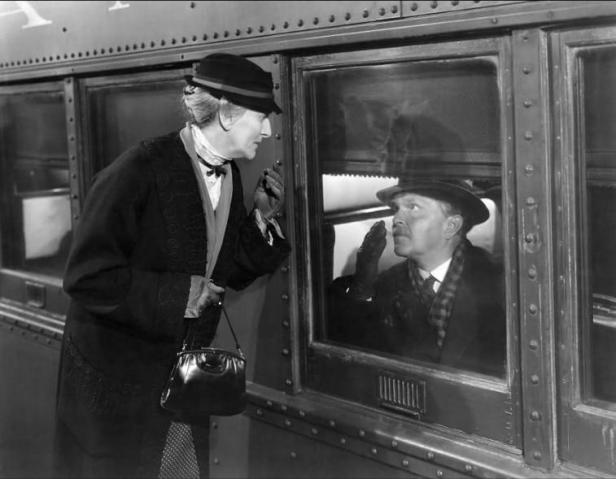
Daiei had actually been a subsidiary of Shochiku in the 1930s but the forced re-organisation of the Japanese industry in wartime saw Daiei emerge as a smaller independent post-war studio and the company decided to send its production of Kurosawa’s Rashomon to the Venice Film Festival in 1951 where it won first prize. Similar success came to the studio with further Venice awards for Mizoguchi Kenji and Kurosawa. In addition, another Daiei film, Gate of Hell (1953), Japan’s first colour film, won an Oscar and the Palme d’Or at Cannes in 1954. The irony was that Ozu was himself very interested in Hollywood and it appears that it was the plot of Leo McCarey’s Make Way for Tomorrow (US 1937) that was the starting point for Ozu and his writing colleague Noda Kōgo when they began to work on Tokyo Story. Noda had seen the American film but not Ozu at this time.The Japanese film does change the narrative idea, however, splitting up the parents who must each stay with a different son or daughter. The American film is set during the Depression whereas the Japanese film is set during the period of ‘economic recovery’. The success for Daiei films in the west was achieved with jidai-geki (‘period films’). Ozu’s films were gendai-geki (films about contemporary life). Most of them, like Tokyo Story, were shomin-geki – ‘home dramas’ or films about ‘ordinary’ people (sometimes described as ‘lower middle-class’ stories). Both Kurosawa and Mizoguchi, by contrast, made both period and contemporary films. The branding of Kurosawa as ‘most western’ was equally ironic as some of his best-known films were based on research into Japanese history and culture and others were inspired initially by non-Japanese narratives but realised in a Japanese cultural context.

When I first started to watch Japanese films in London cinemas in the early 1970s, it was the films of Kurosawa and Mizoguchi from the 1950s that I came across in repertory houses such as the Everyman in Hampstead alongside more recent films from Ichikawa Kon and Oshima Nagisa, screened at the National Film Theatre during the London Film Festival. Most of the films I saw were jidai-geki films apart from Oshima’s films. I was quite surprised to discover that, according to my records, I watched Tokyo Story on BBC2 in September of 1974. I don’t remember that particular screening at all and it wasn’t really until the 1990s that I began to watch Ozu’s films in a systematic way. In fact I came to the conclusion that Ozu’s films were simply not distributed in the West. It was only later that I realised this was not the case. I trawled through the British Newspaper Archives online and discovered that Ozu won the first Sutherland Prize in 1958 after Tokyo Story had been screened at the National Film Theatre. The film then started to appear on odd occasions from 1965 onwards in both cinemas and film society screenings. I also checked the classification records of what was then the British Film Board of Film Censors which certificated Tokyo Story in February 1965 for Contemporary Films. The BBFC website also confirms that An Autumn Afternoon was certificated in October 1963 for the British Film Institute. The BNA online covers only a selection of newspaper titles across the UK and Ireland, so the fact that there are only 13 mentions of ‘Ozo Tokyo Story’ in the 1960s and 17 in the 1970s probably under-represents the range of screenings but overall it is clear that it isn’t until the 1980s and more so in the 1990s that screenings increase significantly. I wonder if there was both a 35mm and a 16mm print available? Some film societies used 35 mm, I think.

Next I went back to BFI Distribution Catalogues. I didn’t find Tokyo Story but I found Early Spring (1956) in both 16mm and 35mm and I Was Born, But . . . (1932) on 16mm in the 1978 Catalogue. There was nothing in the BFI Archive ‘viewing print listings’ for 1985. But the archive did list several Kurosawa prints and one by Mizoguchi. Curiously, in the Distribution Catalogue, Kurosawa and Mizoguchi were only represented by extracts, not full features. It did mean though that there were now four Ozu prints that had been released in the UK and Tokyo Story had been broadcast on TV. By 1982 Tokyo Story had reached the lower reaches of the Sight and Sound list while Seven Samurai was at 3=. Mizoguchi and Kurosawa had been in both the 1962 and 1972 lists. I looked at the list of critics who voted in 1982 and there do appear to be several Japanese critics and some UK/US critics who had a good knowledge of Japanese cinema. It’s good to discover that Derek Malcolm of the Guardian voted for An Autumn Afternoon and Ugetsu Monogatari (Mizoguchi). By 1992 Tokyo Story is at Number 3 and Ozu ranks 8th in the Critics’ list of Top Ten directors. However in the Directors’ List of Top Directors, Kurosawa is 3rd and Ozu doesn’t make the Top Ten. The clearest takeaway here is that the greater availability of Ozu’s films on video from the 1980s onwards and the extension of the voting franchise to more critics and directors from Asia has a significant impact. The lists from 1992 onwards display more appreciation of East Asian cinema (but still ignore South Asian cinema). The conundrum is how to explain the relative drop in importance for Mizoguchi and the rise of Ozu above Kurosawa – though in the latter case there is a greater number of titles from Kurosawa that are known more widely to audiences and he had entries in the chart for Rashomon, Ikiru and Seven Samurai from 1962 onwards.

Ozu was known in both the US and France but it seemed that critics and scholars in the 1950s and 1960s tended to validate either Kurosawa or Mizoguchi rather than Ozu. See, for example, Jean-Luc Godard writing about Mizoguchi in 1958 (Godard on Godard, translation Tom Milne, 1972). It’s worth emphasising this history because it forces us to consider the importance of distributors, festivals and programmers at a time before the advent of videotapes, discs and eventually streaming. Knowledge about films from different cultures depended initially on reports from film festivals and then on specific distributors deciding to gamble on picking up distribution rights and being able to convince exhibitors to rent prints. What encourages film buyers in film markets to acquire the rights to specific films? The film industry generally likes to know that there is an audience of some kind for every film. Taking a wild gamble is unusual. But how to read audience tastes for particular films? As well as festival reports and media stories about specific films and directors it is worth noting that since the 1970s, film studies has developed in schools, colleges and universities. More audience members are now aware of different ways of creating film narratives. We might also argue that many more people now travel for both business and pleasure so aspects of contemporary life in other cultures is less unfamiliar than it once was. Finally, although it is film professionals who vote for titles and directors on these lists, they are also aware of the profiles created by fans and commentators in the media and ‘users’ on internet sites. Ozu is now well-known, even though he died more than sixty years ago. Partly that is also because contemporary auteurs like Kore-eda and Hou Hsiao-hsien are recognised as influenced by him and other directors such as Claire Denis, Aki Kaurismäki and Wim Wenders have acknowledged him in interviews and videos available on YouTube. Unfortunately this has coincided with a lowering of the profile of Mizoguchi Kenji. Personally, I think the idea of the ’10 Best Films’ is a silly concept but I guess it sells magazines and works to promote the films at the top of the list. I like everything I’ve seen by Ozu, Mizoguchi, Kurosawa, Naruse, Ichikawa and many other Japanese directors of the studio period. Late Spring (1949) is my favourite Ozu film at the moment but that might change when I see another title. In the final analysis all that is important is that more people watch more films from outside their own cultures.
 itp Global Film