

The 42nd Silent Film Festival will take place in Pordenone from Saturday October 7th till Saturday October 14th. The detailed programme is now available on the Festival Web Pages. Just under a third of the screenings will be from 35mm prints; the rest will be some sort of digital facsimile. Happily some of the key titles will be on 35mm.
On the opening Saturday there is the start of a programme dedicated to the films of the great Western star, Harry Carey. Carey is a fascinating figure: often a road agent, i.e. bandit: but also a man who believes in righting wrongs. And for much of his career an important character alongside Carey is his horse. On the Shave three titles in the programme, including The Heart of a Bandit (195) and Man to Man (1922).

Sunday opens with the first part of a French serial, Le P’tit Parigot (1926), running to six episodes which open the daily programme up until and including Friday., all in 35mm prints This is a little known cine-novel, run in conjunction with a newspaper series at the time, on the French Rugby Union team. This is the first sporting serial I have come across; an intriguing prospect. The opening episode runs over an hour; subsequent episodes are around 30 minutes.
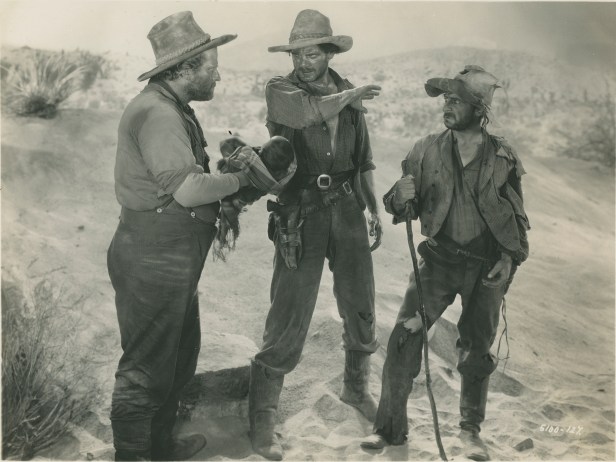
Sunday evening sees a screening of Hell’s Heroes (1929) on a 35mm print. This is a classic western directed by William Wyler, with a tale that featured in other versions, including one by John Ford; this is the definitive version. It was screened at an earlier Giornate in the original Verdi cinema. This was the most memorable film event that I have enjoyed at the Festival. It will be interesting to see and hear how it is presented this year; with John Sweeney providing the music.
.On the Wednesday evening there is a screening of Hindle Wakes (1927) on a 35mm print. Directed by Maurice Elvey this is one of the finest silent productions in Britain in the 1920s: it is also the best film version of a classic play of which two other film versions survive. The score to accompany the film has been composed by Maud Nelissen who also conducts a small orchestra. It seems that Maud researched the ambience of the film in Britain, including visiting Blackpool which features in a very fine sequence in the film. This is the approach that characterises much of the music composed and arranged to accompany the films.
On Saturday afternoon there is one of the titles in a programme dedicated to the German film-maker and actor, Harry Piel. This is Sein Grösster Bluff / His Greatest Bluff (1927), screening from a 35mm print. In the film, which Piel directed together with Henrik Galeen, presents Piel playing opposite Marlene Dietrich. Other Piel features also screen during the week.
The Festival also includes programmes of silent short films, mostly using a combination of 35mm prints and digital facsimiles. There is more of the film work of Harold Carey: silent slapstick: and more sporting films. There are a number of key films also transferred for digital screenings.
The opening night presents restoration by Lobster Films of La Divine Croisière (1929), a late silent directed by Julien Duvivier and now back in its original form. This screening has a specially composed score by Antonio Coppola and performed by the Octuor de France. The closing night features comedy again with Charlie Chaplin’s The Pilgrim (1923) and Buster Keaton’s Sherlock Jr. The Chaplin will have his original score arranged by Timothy Brock and performed by Orchestra da Camera di Pordenone, conducted by Ben Palmer: whilst the Keaton will have a new score composed by Daan van den Hurk and performed by the same orchestra.

This is a week of classic silent films and all accompanied by live music. Nelissen and Hurk are just two of the talented team of musicians who add an extra dimension to the film works’ all the screenings feature live music. There is another strand of Ruritanian romances: extra events with discussion and music classes: and the Fair in the which there are books, videos and memorabilia. The bulk of the programme is presented in the new Verdi Theatre; whilst on the Saturday morning screenings are in the nearby Cinema Zero as the orchestra rehearse for the evening performance.
Quite a few of us have missed several Festivals due to the pandemic and the lockdowns. It will be great to be back in Pordenone, enjoying the programme and meeting the other film enthusiasts who turn up every year for this treat.
 itp Global Film