

This ‘Super Western’ is from the late 1950s when Westerns were still produced in significant numbers for the cinema but TV had reached a peak production period threatening the future of the Western on the big screen. It’s ‘super’ in terms of the technology – Technirama, one of the later widescreen processes (developed by Technicolor Inc.) that followed VistaVision in running the film horizontally through the camera. This allowed a much bigger negative, but unlike VistaVision it was also squeezed by an anamorphic lens. The resulting image gave the same aspect ratio as ‘Scope, but higher definition and less grain. However, on this film, sound remained Mono. The Big Country – the title is important – was deemed to require a long running time which in cinemas came in at 166 minutes. The length and technical standards of the film suggest a ‘Roadshow’ release (though the lack of stereo sound perhaps negates this?). I’m not sure if it was shown in this way in North America but in the UK it got a 1959 release in the slightly less prestigious ‘National’ circuit of Odeons and Gaumonts in 1959. Even so it was in the Top 12 box office films of the year in the UK (source: Allen Eyles, Odeon Cinemas, Vol 2.).

I’ve always known about the film but I’d never actually watched it all the way through before I accessed it on BBC iPlayer in the UK, where it is available for another couple of weeks. It certainly looks spectacular and its music score by Jerome Moross is one of the most familiar and well loved of all Western themes. It must have been a thrilling experience in cinema screenings in 1958 and if you have a very large screen TV, the impact must be quite something. But does it stand up as a successful Western? I’m not sure, but it’s definitely worth exploring.

The origins of the film appear to be in the friendship between director William Wyler and the star actor Gregory Peck. Much of my history of the production is taken from the review on the blog, ‘Jeff Arnold’s West’. Peck read the original novel by Donald Hamilton. He was the writer of the ‘Matt Helm’ series of books that in turn were turned into four feature films and a TV series. Helm was a ‘government counter-agent’ who investigated and ‘took out’ foreign agents. Peck liked the novel and took it to Wyler who agreed it would work as a feature. I hadn’t realised that Peck owned a ‘spread’ and knew something about cattle and horses. Peck had a deal with United Artists for part-funding and distribution and with Wyler on board and a script that would offer substantial supporting roles for other stars, the studio was eager to participate.

Wyler had begun his career making two-reeler Westerns in the 1920s and progressed to a full feature with Hell’s Heroes in 1929, which starred Charles Bickford, the villain of The Big Country. In between he had worked with Gary Cooper on The Westerner in 1940. Despite his late 1950s standing as a director of Oscar-laden dramas and melodramas, he knew Westerns. Arnold argues that Peck and Wyler saw the project as purely commercial rather than geared to Oscar night but they seemed to have stumbled at the first hurdle by recruiting a growing team of writers to adapt and then develop the novel’s story, losing some of the coherence of the narrative – or, at least that is my assumption. They did, however, attract a strong cast. Peck himself plays Jim McKay, a wealthy ship’s captain (who may actually own his own company – I think this is mentioned but then forgotten). On the East Coast he has met Patricia Terrill (Carroll Baker) the daughter of wealthy rancher Major Henry Terrill (Charles Bickford) and the couple have planned to marry. As the film narrative begins he is about to arrive in Texas and Pat is visiting her friend Julie Maragon (Jean Simmons) in the local town where the stagecoach will arrive. The other part of the welcoming committee is the Terrill’s chief hand Steve Leech (Charlton Heston). The other major player does not appear in the opening section. This is Rufus Hannassey (Burl Ives). But his son Buck (Chuck Connors) does appear, drunk with his brothers and ready to make trouble for the Terrills.

The Big Country is a ‘ranch Western’ set in the 1880s in Texas (though filmed in Arizona) and the narrative follows the long-running feud between the Terrills and the Hannasseys. Its main focus is the disputed access to the water in the ‘Big Muddy’ River that runs between the two ranches. The water rights are owned by Julie Maragon, but Terrill will do anything to prevent the Hannasseys getting access. McKay’s arrival at first seems to strengthen Terrill’s position but events quickly reveal that McKay does not think like a cattle baron and his refusal to follow the macho behaviour of all the other leading male characters confuses and offends them. McKay is the fabled ‘man from the East’ who appears in the West with a different set of values. Jimmy Stewart in Ford’s The Man Who Shot Liberty Vallance (1962) would be another example. His behaviour and the reactions it generates are all part of the genre elements of the Western. Everybody, except Julie and the Terrill’s aged Mexican livery stable man, thinks he is a coward who won’t fight. But, unlike Ford’s character, he is also wealthy and a touch superior. There are a couple of rather tedious jokes about his behaviour. One hinges on the way nearly everyone says it is a ‘big country’ and they bet he hasn’t seen anything bigger – but of course he has crossed at least one or possibly two oceans, as he points out. In the same way, everyone tells him he will get lost if he rides off on his own. The locals appear to have no understanding of a compass and navigation by the stars.

The film was shot by Frank Planer, another émigré from the German film industry in the late 1930s. He’d worked with Peck and Wyler on Roman Holiday in 1953 and with Jean Simmons on A Bullet is Waiting (1954), a form of contemporary Western. But he wasn’t that familiar with classic Westerns as far as I can see. Nevertheless, he was a good professional and the look of the film is certainly one of the positives. The music is another and the performances a third. When Burl Ives appears on the scene he steals the show, partly because his character, although ruthless, at least operates within a code of honourable behaviour, sadly lacking in Terrill and, for much of the time, Steve Leech. I feel a little sorry for Carroll Baker up against Jean Simmons. We wonder from fairly early on if McKay will change his mind and court Simmons’ Julie instead. Simmons started her career so early in the 1940s, becoming a star at 17. I think she went to Hollywood too early and I liked her British films. She’s ravishingly beautiful in The Big Country, especially in the second half. Charlton Heston is also very good in an untypical role. He’d been Moses in The Ten Commandments (1956) and would be Ben-Hur in 1959. I do wonder if he was determined to show Wyler what he could do as an actor. Arnold suggests that many of the actors were unhappy with Wyler for different reasons. I didn’t know that, but it’s surprising given his long and illustrious career. But then we are hearing much more now about the struggles on the sets of powerful male directors and their treatment of female players in particular.

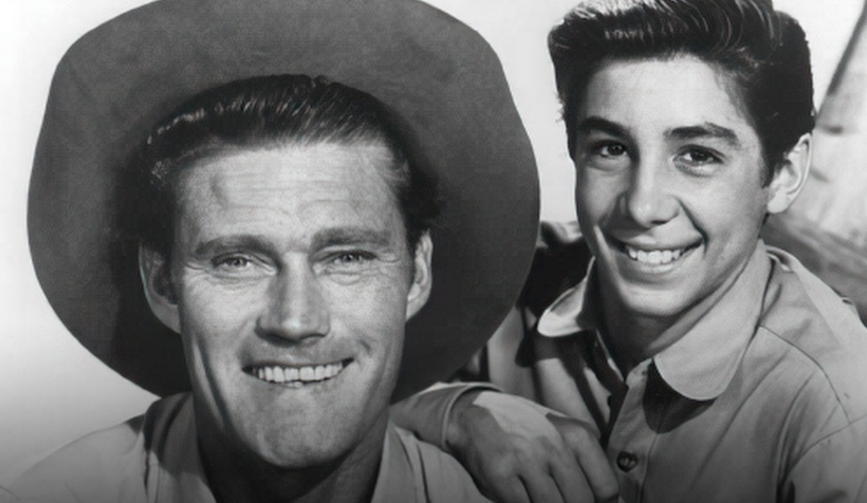
I think my overall take on the film is that it is too long given the script. A 90 minute Western could cover all the ground just as effectively and there isn’t really enough meat on the bones to justify the running time and the budget overspend. The obverse of this is that the stars have more time in the series of stand-offs that allow them to present their acting skills. The film proved popular with audiences, although its length would have been a problem for exhibitors. Burl Ives won the Best Supporting Male Actor award in the 1959 Oscars. His is certainly a solid performance which overshadows that of Heston, perhaps in a more difficult role. The popularity ironically meant that the film attracted more viewers (and report viewings) when it was broadcast several times on network TV in the US – ironic because most of these would have been ‘panned and scanned’, losing much of the splendour of Planer’s cinematography. For me, one of the most interesting aspects of the film is the casting of Chuck Connors. In 1958 Connors starred in a new TV Western series, The Rifleman (1958-63). This b+w 30 minute show was very different to The Big Country in that the character played by Connors is a widower with a young son and the show, partly created by Sam Peckinpah who wrote and directed early episodes, strives for realism.
As the leading player, some critics have found Gregory Peck’s performance to be one of the problems in the film. I’m not sure I agree. Peck was in his prime at this time and he was regularly cast in both Westerns and other action picture roles. Alsa in 1958, he appeared in The Bravados as a Westerner seeking revenge on the four men he thinks were responsible for his wife’s death. My main problem was trying to forget about his Captain Ahab role in Moby Dick when he is first announced as a sailor. (Trivia note, the only other ‘sailor in a Western’ I can think of is Sterling Hayden as a harpooner on a whaler who ends up on land in Terror in a Texas Town (Joseph H. Lewis, US 1958). Peck is seen in rather formal ‘Eastern’ costumes for most of the film, but his star status still shines through.

The Big Country is not a great Western, but it is a well-made and entertaining film. If you have the time for its 160 mins on TV, it’s well worth watching on iPlayer or other streamers.
 itp Global Film
I have not re-watched this film on TV or a stream: I saw it at the cinema in 1958 or 1959: I cannot imagine how reduced it is on a smaller screen. As for the film’s success, I think a major factor was the musical score by Jerome Moross. This received an Academy nomination. My memory is that the music was constantly played on the radio because of its popularity. There is a whole area of cinema where films owe much of their success to the music: another example would be ‘Breakfast at Tiffany’s’, 1961.
LikeLike