

The new Ken Loach film The Old Oak is out in a few weeks and once again there are indications it may be his last. I hope not, but Ken is now into his late 80s. On the other hand Roman Polanski is reported to have a film showing at Venice and he’s 90. Anyway, it seemed a good idea to mark the new film’s arrival with a post about Loach’s first cinema feature, Poor Cow which went out on a circuit release in the UK in 1968.
What follows is a revised set of notes on Poor Cow written as part of a teaching pack on ‘Swingin’ Sixties Films’ that first appeared in 2000. The concept of ‘Swingin’ Sixties Films’ is contentious. British films have, across 120 years of production, been dominated by narratives set in London. During the so-called ‘British New Wave’ period of filmmaking in the late 1950s and early 1960s there was a brief outburst of films made in the North of England, often literary adaptations of novels about aspirant Northern working-class young men. The final sequence of Billy Liar (1963) is often taken to be the last film of this short period with attention shifting from the young man who decides to stay in Bradford to the young woman who takes the train to London. London was yet to be designated ‘Swingin’ London’ by Time magazine in 1966, but film critics tended to focus on the move towards films that featured young women (some of whom had ‘come down’ from the North) revelling in a sense of freedom in the big city which was at the same time both ‘real’ and ‘illusory’. A number of such films became quite successful in the mid sixties. Examples include The Knack . . . and How to Get It (1965), Georgy Girl (1966) and Smashing Time (1967). These three films featured Rita Tushingham and Lynn Redgrave, separately in the first two titles and together in the third. Poor Cow was very much a contrast to these films and this brief period of young female-led films was deemed to be over by the early 1970s. No doubt it would be difficult to release a film with this title now.
The ‘poor cow’ of the title of Ken Loach’s film is Joy (Carol White) a working-class young woman from South London married to Tom (John Bindon), a violent criminal. When Tom receives a prison sentence, Joy has to fend for herself after a brief affair with Dave (Terence Stamp). There isn’t a strong narrative line to the film. Loach himself calls it ‘impressionistic’ but we do get a real sense of life in London in 1967 from the perspective of a young working-class woman. Loach worked on the script with the author of the original (and popular) short book by Nell Dunn.
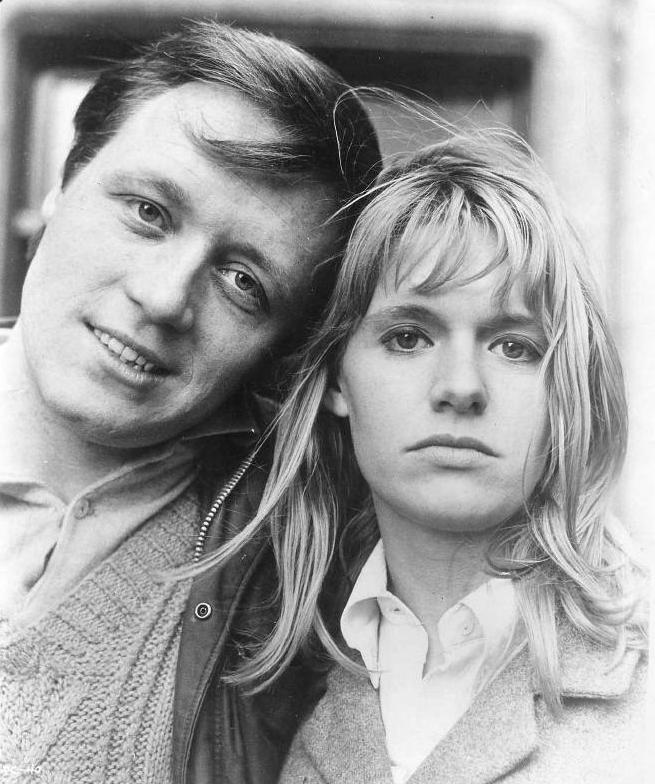
For a modern audience, Poor Cow offers a number of puzzles and delights. Anyone used to the coherent and distinctive style of Ken Loach’s work since the 1990s is likely to be surprised by what Loach himself has described as the ‘modishness’ of his first feature film following his early television work on ‘filmed dramas’ (i.e. TV studio productions which began to include more and more location shooting on 16mm film – all these TV productions being in black and white). By ‘modish’ Loach means that he attempted to use ‘fashionable’ ideas, mostly derived from the French New Wave. In fact, many of the devices which now seem unusual (the voiceover, the intertitles, the occasional sequences of almost ‘pure’ documentary) were carried over from Loach and Tony Garnett’s 1960s television work on the Wednesday Play and to some extent the film simply benefits from the extended time and use of colour. More noticeable is the inclusion of the ‘interviews’ in which Joy talks about her life and her hopes, seemingly ‘outside’ the fictional world of the film. Overall, the mixture of ‘distanced observation’ and what Robert Murphy (in Sixties British Cinema, 1992) has described as ‘populist neo-realism’ distinguishes the film from both the early 1960s British New Wave films set in Northern cities and the determinedly ‘Swinging London’ films. Perhaps because of this unique representation, Steven Soderbergh had little difficulty inserting footage from Poor Cow into his 1999 feature The Limey, in order to provide the Terence Stamp character with a history.

If Loach now feels that Poor Cow was an ‘immature film’, he may be influenced by the experience of having what was essentially a project for the television crew and creative team ‘taken over’ by commercial producer Joseph Janni (producer of A Kind of Loving, Billy Liar, Darling etc.). Is this in any way related to Loach’s use of the more formal ‘Kenneth’, only later to become the more demotic ‘Ken’? The clash of two cultures (i.e. ‘commercial film’ and ‘public service television’) resulted in a strained shoot and some unsatisfactory post-synch dubbing that took something away from the performance of John Bindon (a genuine ‘colourful character’). But the money that Janni brought to the project allowed shooting in colour (which is well handled and certainly adds to the ‘realism’ of the locations). Janni’s presence probably also explains the use of Donovan’s music (Donovan was a significant figure in British pop music at the time with four ‘Top Ten’ hits to his credit and a slightly unfortunate tag as a ‘British Bob Dylan’). There are several other pop songs of the period used in the film as background (i.e. being played on the radio, jukeboxes etc.) and together they mark the film as more concerned with everyday London than some of the more obvious ‘Swinging London’ films. (Loach had previously used pop songs in his TV play Up The Junction, which coincidentally became a commercial feature directed by Peter Collinson in 1968, based on the same Nell Dunn collection of short stories about young women living and working around Clapham Junction.)

Joseph Janni was an astute producer and what might be termed the ‘earthy sexuality’ of the material (as well as the crime element) must have caught his attention. Again, it wasn’t unusual to find what for the 1960s was quite strong sexual content in Loach and Garnett’s television work. The important point is that the sexual activity that Joy engages in is relatively innocent and ‘ordinary’ by the standards of Swinging London. She and her friends need sex for love and friendship and occasionally they need to use sex to get money, but compared to the middle-class girls like Diana Scott (played by Julie Christie) in Darling, they don’t usually harm anyone else in the process.
It would be wrong to think of Poor Cow as purely a ‘Ken Loach’ film. Nell Dunn is equally important as an author/creator of the characters and the sense of place in the original book. It was her previous work that had informed Up The Junction for Loach and Garnett on television. (Her partner Jeremy Sandford had also written Cathy Come Home for them). Dunn, a middle-class ‘observer’, creates the ‘pre-feminist’ working-class women who may be faced with a poor standard of living and less than satisfying relationships but who have all got an irrepressible vitality, symbolised in the naming of the Carol White character as ‘Joy’. (The only other Loach film scripted by a woman is Ladybird, Ladybird.) Dunn’s third contribution to Sixties literature was a collection of interviews, Talking to Women (1965). For many critics Dunn was the first writer to represent the authentic voices of contemporary women in the 1960s and particularly those of young, working class Londoners. To this extent she is a key figure in any study of ‘Swinging London’.
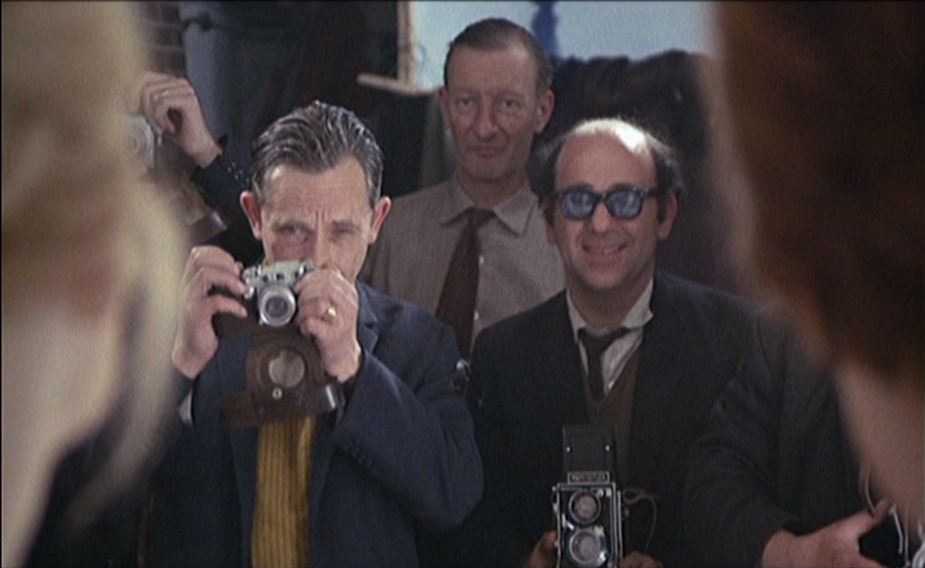
Carol White had appeared for Loach as the star of Cathy Come Home and as the leading figure in Up The Junction. She had been a child star and she was about to take a disastrous step into Hollywood productions. (Loach suggests that she was a vulnerable actor who was exploited by Hollywood). Many commentators have seen her as the working class response to Julie Christie, a view strengthened by the title sequence in which her walk with her new baby along a London high street recalls the (younger and more carefree) Christie character in Billy Liar. In Poor Cow, and in Cathy Come Home, Carol White’s performance is the undoubted central feature. “In the best moments Carol could melt you . . . people responded to her and remembered her.” (Ken Loach quoted in Fuller 1998: 36) Loach also remembers that Carol White was shooting a film for Michael Winner around the same time as the Poor Cow shoot. She would show up for the Poor Cow shoot with vestiges of the glamorous image she portrayed for Winner (like an expensive hairstyle) and Loach was conscious that despite the fact that she could present her working-class credentials, she really wanted to try to be the glamorous film star.
For a less charitable view of Joy as a character, it is possible to turn to Alexander Walker (Loach’s political opponent at all times):
Carol White . . . grafted her own warmth on to a determinedly downbeat picture of someone who was feckless, disloyal, mendacious and downright shrewish. In keeping with Loach’s political bias, she wasn’t blamed for what she was: it was her inability (some said ‘unwillingness’) to escape from a society she had had no part in creating which had doomed her. (Walker 1986, p378)
This is a typical right-wing response to a representation of working class life and it shows up the ways in which Poor Cow acts as a corrective to the mood of upwardly-mobile, ‘modern’ young women moving ‘up West’ in the Swinging London films. The young women in those films were invariably associated with the media – models, actresses etc.
Poor Cow is a true ‘London’ film. The closing section appears to be set in Battersea/Clapham. Earlier, when they have money, Joy and Tom live out in Ruislip in the suburbs of West London. Joy tells us that she was born in Fulham and the market scenes are supposed to be Shepherd’s Bush (known to television viewers at the time as the home of Steptoe and Son). This places the action just beyond the ‘Swinging World’ of Chelsea and points towards the contrast. As Joy moves from one shabby room to another the locations take in the distinctive courtyards and balconies of the Peabody Trust and Guinness Trust buildings still to be found in Southwark, Hammersmith and other inner London boroughs (one shot evokes the famous 1930s documentary Housing Problems) and the run down terraces of once grand ‘town houses’ (now mainly ‘gentrified’).
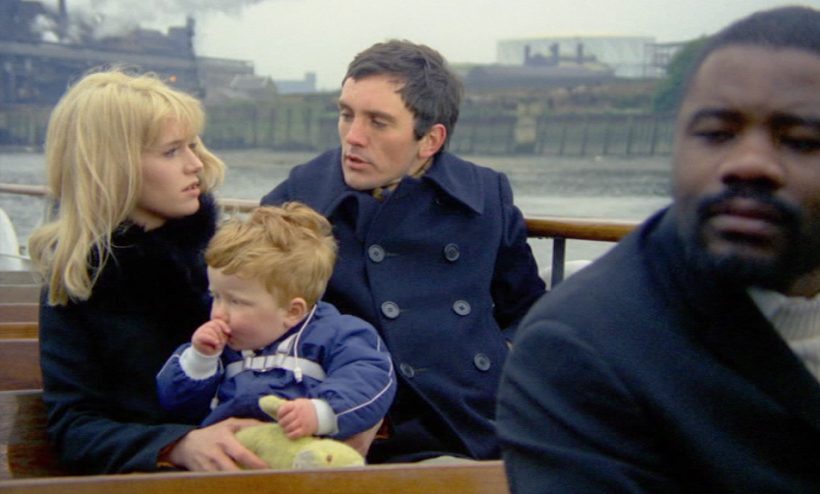
The trip along the river with the working docks in the background marks the period as the final fling of traditional London and overall Poor Cow presents a compelling picture of a changing Britain in the 1960s. Loach’s observational camera (under the control of Brian Probyn who had previously worked with Loach on a Wednesday Play), especially in the brilliantly staged botched robbery, presents a London that is much more familiar to those who lived there than the travelogue shots of some of the ‘swinging films’.

For Loach’s supporters the sense of place and of characters who genuinely ‘fit in’ with the fictional world is one of the strengths of his approach. Julie Christie’s Diana in Darling was undoubtedly a representation of a ‘new’ type of young woman in the 1960s. Carol White was the barmaid in the pub down the road and her experience was just as valuable in representing the 1960s.
The last word should go to Nell Dunn’s Joy, who, at the end of the book, says:
To think when I was a kid I planned to conquer the world and if anyone saw me now they’d say, “She’s had a rough night, poor cow.”
The overall experience of making Poor Cow was not positive for Loach. He felt that he had been naive about the British film industry. Joseph Janni had come in with £270,000 to make the film – quite a healthy sum at the time. He had also brought in film industry personnel, who clashed with Loach’s TV team and there was no room for Tony Garnett as producer. Garnett, ironically, had film industry experience as an actor, appearing in The Boys (UK 1962), the Sidney J. Furie picture about a group of young men on trial for a robbery in which a nightwatchman has been killed. (Furie was an important figure at this time, a Canadian director whose 1964 feature The Leather Boys was an example of a working-class realist film about bikers in London featuring Rita Tushingham, Colin Campbell and Dudley Sutton.) Tony Garnett had also appeared in a couple of ‘B’ crime films and several TV dramas. His presence would have helped Loach on the shoot of Poor Cow and later when Loach returned to his TV work he and Garnett decided to set up their own film production company. This would be Kestrel films, named after its first production Kes in 1969 which offered a very different experience for Loach. It’s worth remembering that in 1967 both Loach and Garnett were both only 30-31, despite several years of experience in the TV industry and in Garnett’s case, the film industry.
Despite Loach’s misgivings, Poor Cow was given a ‘wide release’ and remained in British cinemas for the first six months of 1968. It is likely to have been a commercial success.
The following interview with Ken Loach focuses on Poor Cow. I think it must come from the Blu-ray as it is credited to StudioCanal:
References
Graham Fuller (1998) Loach on Loach, Faber and Faber
Robert Murphy (1992) Sixties British Cinema, BFI
Alexander Walker (1974) Hollywood, England, London:Harrap
Up The Junction, written by Nell Dunn in 1963 was first a television play, directed by Ken Loach in 1965 and later a feature film directed by Peter Collinson in 1967.
 itp Global Film