

This Italian film from Nanni Moretti is an adaptation of stories by the Israeli novelist Eshkol Nevo with a screenplay by Moretti himself and Federica Pontremoli. The film was in competition for the Palme d’Or at Cannes in 2021 but it was met with considerable hostility. Moretti himself was back in competition in 2023 and he has a history of critically acclaimed titles, winning at Cannes with The Son’s Room in 2001. In this context it’s sensible to ask why the critics were so down on this 2021 film while audiences appear to have been entertained (though they were only half the size of audiences for Moretti’s more successful films).
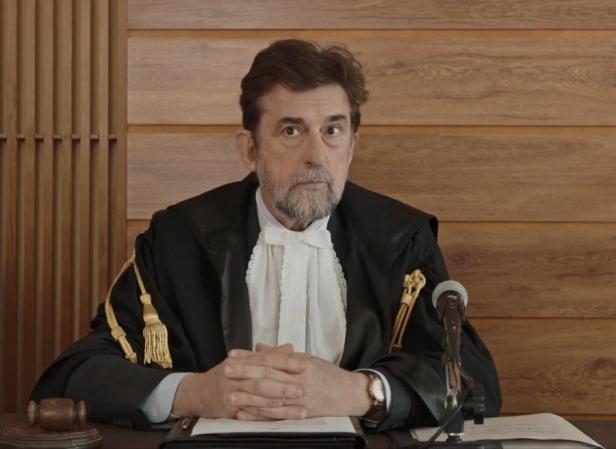
My first thought was that this film seemed similar to The Dinner (Italy 2014) which was adapted from a Dutch novel. Both films feature a story with a moral question underpinning the narrative and a carefully written melodrama script in which everything fits together. Three Floors, however, has three interlinked stories all set in a comfortable apartment building in a Rome suburb. The title is slightly misleading in that there are actually four families living in the apartment building with two of them central to the same story and the other two each having their own story.
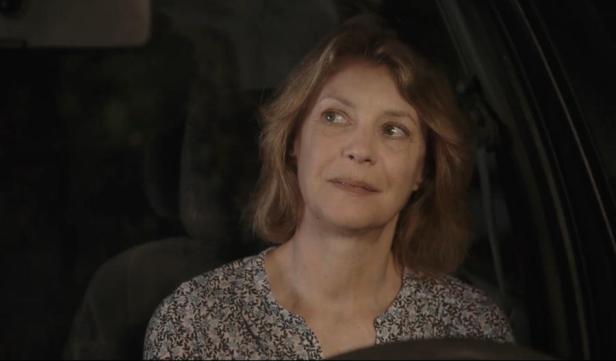
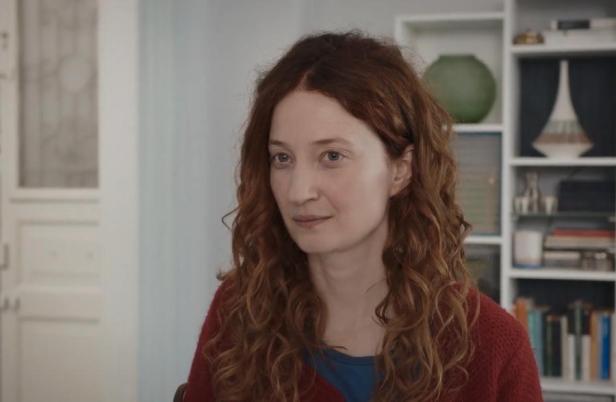
The narrative opens in a dramatic fashion suggesting the melodrama to come. Heavily pregnant Monica (Alba Rohrwacher) leaves the house at night, phoning for a taxi to take her to the labour ward of the hospital as her time has come. But at that moment a car hurtles round the corner of the block, seemingly out of control and then hits a woman crossing the road. The car then drives into the front of the apartment house, smashing through a floor-length window and into the office of Lucio (Riccardo Scamarcio). The driver of the car is the son of Vittorio (Nanni Moretti) and Dora (Margherita Buy) who also live in the apartment house. This opening introduces two of the narrative threads and the third will develop later and will involve Lucio with the fourth family in the building.
The case against the film is that it is a conventional family melodrama and that its presentation is no ‘better’ than something that might be produced for TV. This is, I think, a familiar and rather silly argument in the modern context when we are getting used to TV narratives with high production values and big name casts. For me the bigger issue is that a couple of the stories seem curiously out of date, re-hashing ideologies from earlier periods. In particular representations of gender difference see a professional woman as submissive to her husband in terms of how she dresses and, in a different story, a man accused of the sexual abuse of a much younger woman. As might be expected of a melodrama, the female leads of two stories are as important as the male lead of the third. I should point out, however, that the three stories that do develop are viewed over a ten year period. There are two occasions when an onscreen title informs us that we have moved on five years. The stories begin in 2010, move on to 2015 and then to 2020. As a consequence, some older characters die and a generation of children and young people grow up.
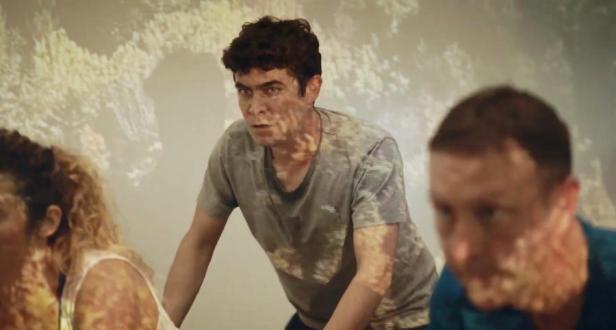
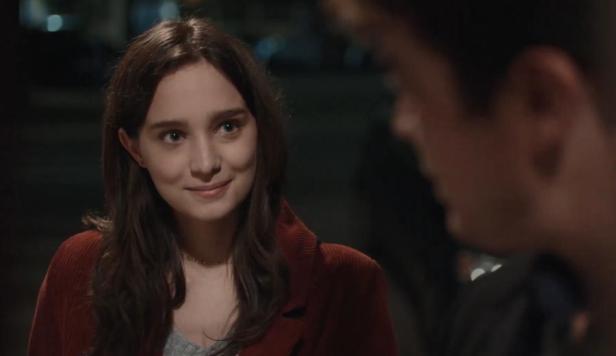
The film has a strong cast and I was attracted by the presence of Alba Rohrwacher and Margherita Buy (who was magnificent in Moretti’s 2015 film Mia Madre). Both are excellent here. I hadn’t come across Riccardo Scamarcio before and he seems to be a major star and top-billed here. He has an interesting face, handsome when he smiles but dangerous-looking when he scowls. Overall, I think the film is very well produced. The cinematography by Michele D’Attanasio presents the interactions between characters clearly without any stylistic flourishes. One of the characters does, however, have what appear to be hallucinations and at the end of the film there is a kind of magic realist moment which I found delightful.

Peter Bradshaw in the Guardian accuses the film of a “lack of profundity”. I wondered about this and searched for the film’s Press Pack in which I found Nanni Moretti’s statement about his film, including this paragraph:
At a time when we talk a lot about what we will leave to our children in ecological terms, we talk little about what we will leave them in ethical and moral terms. Every action we make, even in the privacy of our homes, has consequences that will affect future generations. Each of us must be aware and responsible for this: our actions are what we leave as a legacy to those who come after us.
I’m not sure why a film has to be profound, but I did feel that there were questions of morality here. Moretti also points out that:
The depth of the themes covered by the book suggested that I adopt a simple and unadorned style, which does not allow distractions or digressions.
You can make your own mind up whether this simplicity enables or prevents ‘profundity’. I found it to be a well-made narrative that entertained me and did cause me to think about the characters. Deborah Young writing in The Hollywood Reporter follows the majority critical line but she does astutely identify how the film might attract audiences.
One last point re the ‘TV feel’ of the film. I note that RAI, the Italian PSB is a co-producer and I also note that Italian cinema admissions are now lagging way behind those in France and the UK. Perhaps film and TV are coming closer together in Italy? Three Floors is currently streaming on BFI player (rental) and on most of the other main streamers.
 itp Global Film