
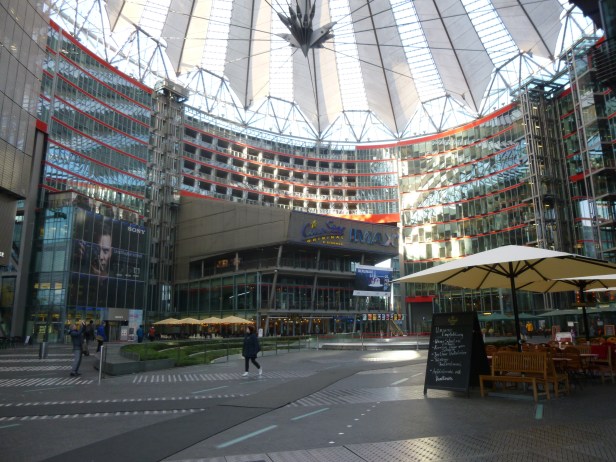
Today I visited the CineStar multiplex in the Sony Centre. The arcade towers over one like some set from Metropolis. CineStar has a host of screens and also offers IMAX: however, no-one could tell me if they used 70mm or Digital. The auditorium for the standard DCP we viewed was large, well appointed with a good size screen with drapes and masking.
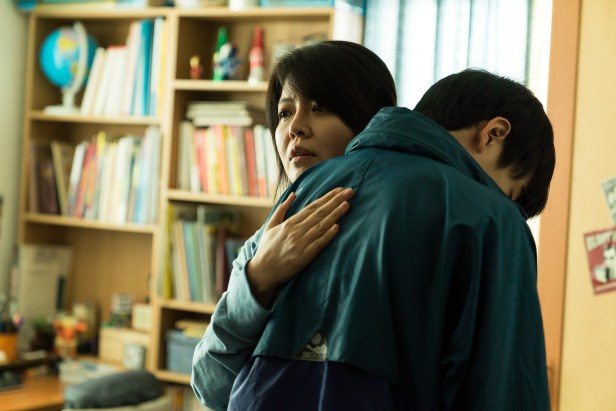
Last Child was Korean drama in colour and widescreen. It dealt with a couple who had lost their son in a school accident. A few months earlier he died rescuing a fellow student in a river. It seems in Korea there is a state system to honour such deeds. So, the dead student is honoured as a hero, with a ceremony, commemorative plaque and a payment to the grieving parents. The father donates the payment to the school for Memorial for his son.
He and his wife cannot leave their lost son behind though friends advise them to ‘let go and move on to life’. Then the father meets the young man who was rescued. He has dropped out of school and seems to have fallen out with his group of student friends. So the father, an interior decorator with his own business, takes the boy on as an apprentice. The father is a perfectionist whilst the boy is, at first, disinterested. But he gradually involves in the work and becomes a promising trainee, passing the National Skills Certificate. The wife, at first suspicious of the lad, also warms to him.
But the blossoming relationships are disrupted as a version of events different from the official record emerges. There is increasing conflict at work, in the neighbourhood and with the school. The film proceeds to a powerful and disquieting climax. The resolution does not offer peace though the characters are likely wiser but sadder.
The film is effective and well produced. The cast are convincing and the slow pace at which the past emerges from an official history contributes to the power of the film.
So, back to Weimar. In most festivals there comes a day, somewhere in the middle, where strains and stresses catch up with one. This was the day. So, I struggled with the screenings and I am not sure I do the titles full justice.
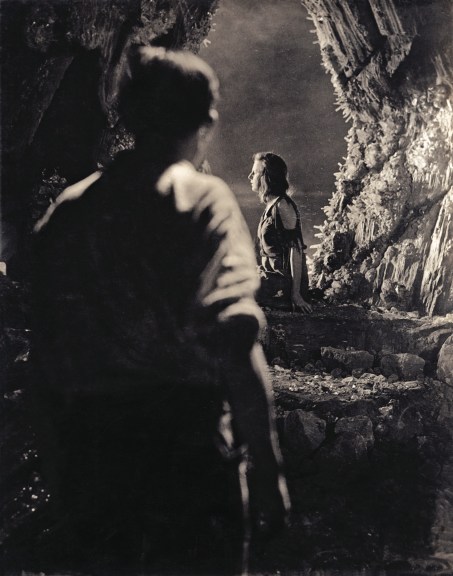
The Blue Light, A Mountain Legend from the Dolomites (Das Blaue Licht, Eine Beglregende aus den Dolmiten,1932) was one of the most well-known titles in the retrospective. Leni Riefenstahl, having established her cinema presence acting in mountain films, now took on the mantle of director as well as star. In an introduction we were told that the film had been edited at different times. In the later 1930s the screenwriter, Béla Balázs, who was a known Marxist, lost his screen credit. However, the version screened now was from the personal collection left by Riefenstahl and this had provided the basis for a restoration presenting the film as originally released in 1932.
The film has a very simple plot but is blessed with some very fine mountain cinematography. Two climbers arrive in a mountain village to attempt the local massif. A picture catches their attention and they are told the legend of Junta. Decades earlier the young woman, an outsider in the village, is viewed with suspicion. The situation is exacerbated by a ‘blue light’ which has appeared half-way up the mountain pinnacle that overlooks the village. The light appeared after a massive avalanche and is visible at the time of a full moon. Several men from the village have died attempting to climb up to the light when it appears at night.
However, Junta climbs up a down with immunity and regards the light as personal treasure. A painter befriends her. And one night he and Junta set out for the source of the light. They are followed by a villager intent on also reaching the light. These are impressive mountaineering sequences. There is predictably a fall. But there is also a hidden grotto on the massif. It is here that there is an explanation of the magical light. But in solving this mystery the way is open for the villagers to exploit the mountain, leading inexorable to a tragedy which is the reason why Junta is still remembered.
Riefenstahl plays Junta as a type of ‘earth spirit’: in some ways the character is reminiscent of the parts she played in the films of Arnold Frank, a key exponent of the ‘mountain film ‘.
‘Short Films 1: Quotidian’ (‘Kurzfilme I: altag’) was one of two programme. The five films shared some of the themes and approaches of ‘New Objectivity’.
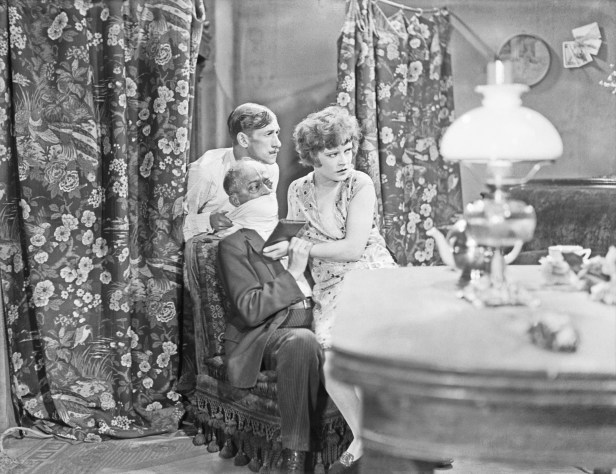
Police Report of Mugging (Polizeibericht überFall ,1929) made by Ernö Metzner was a film running for 21 minutes. The short drama offered a critical, equivocal and ironic comment on urban life. The prop which provides the focus for a series on interlocking scenes is a one-Mark coin. This is initially dropped and then picked up by a passing man. However, he becomes the focus first of a potential ‘mugger and then of a prostitute and her pimp. Wherever he goes or even runs an obstacle appears. The irony is that the coin is a dud.(
“ The censor’s office regarded this social satire, shot in avant-garde style, as nothing more than a “crime film” that “due to its accumulated brutality and harsh acts was likely to have a lowering and deadening effect”. It banned the film. “
Open-air market in Berlin (Markt in Berlin, 1929), was made by Wilfried Basse and ran 18 minutes. “The weekly market at Wittenbergplatz, from the vendor set-up in the early morning hours to the clean-up in the afternoon, provides an opportunity for sympathetic observation of the customers.”
Where the Old People Live (Wo Wohnen alte leute, 1932).
“Artist Ella Bergmann-Michel presents an old-age home in Frankfurt’s Westend neighbourhood as a “functioning living organism”. While the elderly in the dark, inner city building descend into isolation and loneliness, the modern architecture of the newer building, with its light-flooded spaces, promotes socialising. “
Fishfang in der Rhön (An der Sinn) Fishing in the Rhön Mountains, 1932), also by Ella Bergmann-Michel.
who arranges collages of fish pictures for natural history books, films her husband angling in a crystal-clear river.”
The idyll is slightly disrupted by a cat stalking prey. For a contemporary audience this offers a premonitory warning. As the Brochure notes the film was made in the ‘final summer of the Weimar republic’. Ella was an abstract artist, influenced by Constructivism: both abhorred by the Nazi regime.
During the Nazi era, the Michels survived by fishing and farming.”
Alexanderplatz Unawares Alexanderplatz Überrunpelt, 1932 – 34) was a series of fragments from an unfinished film. Unfinished because
the film was never completed because the director [Peter Pewas] was arrested by the Gestapo and the footage seized.”
The charge was treason, though I have not found the details. Pewas returned to film-making but had more problems in the 1940s. After World War II he had an extended film career. In the remains of this film we see the great department stores but also the contrasting pictures of urban rubble where children play. And there is a torchlight procession of Nazi Storm Troopers.
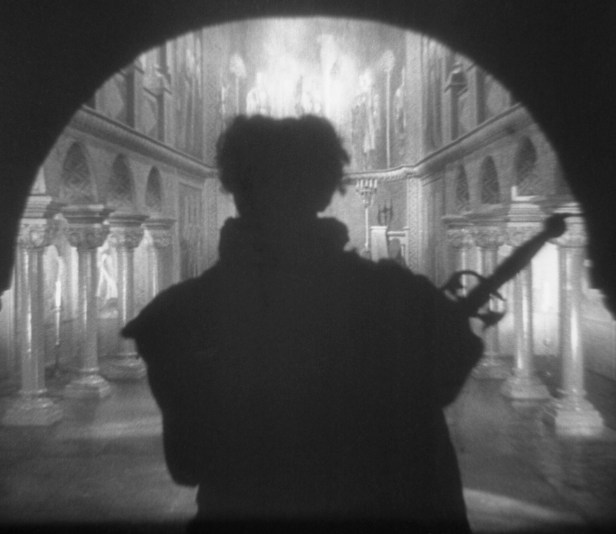
The next feature was Ludwig II of BavariaLudwig der Zweite, König von Bayern, 1932) a sound portrait of this frequently-filmed C19th monarch. The film was subtitled ‘Destiny of an unfortunate man’ (‘Schicksal eines Unglücklichen menschen’). The film treats of the last decade of Ludwig’s life, when his obsession with building castles took full flight. So the only nod to Wagner is a portrait and a telegram announcing his death,
As the Brochure notes Ludwig is surrounded by ‘fawning courtiers and officials.’ The political class attempt to occupy him by indulging his castle mania. But as his breakdown proceeds he is placed under the care of a psychiatrist. The ‘unfortunate’ king descends into paranoia and finally death.
The film was directed by William Dieterle who also plays Ludwig. His performance is impressive but the film struck me as repetitious. I cannot remember a film with so many dissolves: more than half the scene changes use this device. Many of the sets are impressive and Charles Sturmar’s cinematography is well done. But other characters remain ciphers. I think if I had not seen later versions by directed by Helmut Käutner (1955) and Luchino Visconti (1973) I would have found some of the narrative puzzling.
The Brochure notes that the film which,
did not hide Ludwig’s fascination with the naked male body drew intense criticisms from Bavaria. When the Bavarian censorship board refused to intervene, Munich’s police commissioner imposed a ban on showing it on the grounds that it was ‘a danger to public order’.
Ludwig has clearly exercised a fascination for film-makers as there is also an earlier title from 1922.
We had a short film projected silently; otherwise all the titles were films with soundtracks. The German film industry pioneered sound-on-film as it did with other technical developments and stylistic techniques. The Tri-Ergon system was, for many years, the dominant sound system in Europe. Whilst early sound lacked the quality developed later these prints and DCPs were perfectly adequate for dialogue, noise and music.
Quotations from Weimarer Kino neu gesehen brochure.
 itp Global Film