
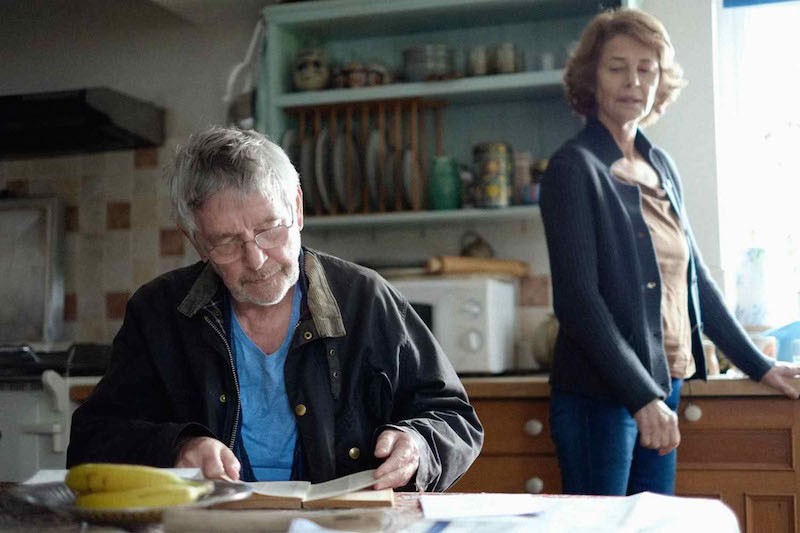
Eagerly anticipated, Andrew Haigh’s Berlin prizewinner had a very good opening weekend in the UK at No 10 in the chart with the highest screen average of £4,871 (apart from Secret Cinema’s Star Wars Event). It opened on only 68 cinema screens but also on Curzon online. This weekend it is more widely available, I think, and I’m intrigued to see what happens next. The critical coverage was also very positive and my friend asked “Will this be another King’s Speech?” I understood the question and I think that the reviews may have encouraged older audiences who have enjoyed mainstream comedies such as the Best Exotic Marigold Hotel films or Quartet (which also featured Tom Courtenay). If this happens, I think some audiences will be disappointed. They might be surprised in a good way but some of the negative reviews on IMDB suggest that they might struggle. 45 Years is a traditional arthouse film which will feature on Film 4/Channel 4 at some point (Film 4 is involved in the funding). One of the ironies of British cultural life is that the theatre audience which might look down on cinema – and British Cinema in particular – would probably enjoy 45 Years.
Andrew Haigh (best known for Weekend 2011) adapted 45 Years from a short story by David Constantine (see this Telegraph feature). ‘In Another Country’, written some 15 years ago, was inspired by a news story about an 80 year-old man who had been asked to identify the body of his father that had been preserved in a glacier in the French Alps for 70 years. The father was a guide who had been lost in the mountains. In Haigh’s adaptation, Tom Courtenay is Geoff Mercer, a man in his 70s who learns that his girlfriend Katya, who fell into a crevasse fifty-three years earlier in 1962, has been spotted in a glacier after a recent snow melt in Switzerland. This revelation occurs five days before Geoff is due to celebrate the 45th Anniversary of his marriage to Kate (Charlotte Rampling). The short story (I think of only 12 pages?) has become a 95 minute feature. Haigh carefully depicts the impact of the news from Switzerland on Geoff and Kate and traces what happens in their relationship during the build-up to the anniversary party. The crucial change he appears to have made is to focus on Kate and to see the events from her perspective.
45 Years uses a highly intelligent script. Haigh’s mise en scène is rich in symbolic meaning. The two central performances are extraordinary and deserving of the prizes they have won. These three features of the film make it a ‘must see’ and the reception of the film by many audiences demonstrates how much they have enjoyed the experience. I enjoyed the film as well but I think there are issues and questions – partly related to the switch of focus. In an interview with Nick James in Sight and Sound (September 2015), Haigh suggests that he made the switch because there are relatively few ‘later age female existential crisis’ films. He preferred to see Geoff recover from the impact of the news and to see Kate repress her emotions and face a later crisis. He confirmed that as a gay man, he did perhaps favour the wife as an underdog. All this is fine and makes a lot of sense but for me it causes difficulties because of the aesthetic decisions taken by the director.
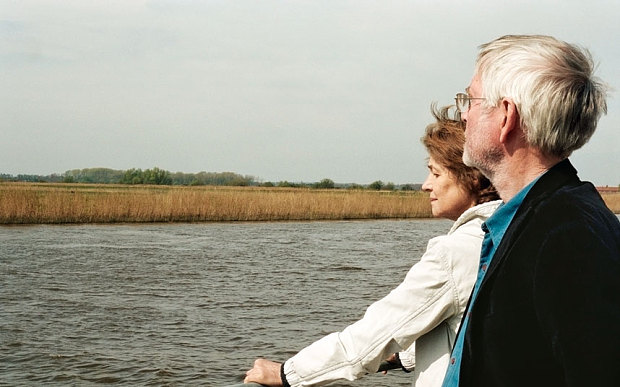
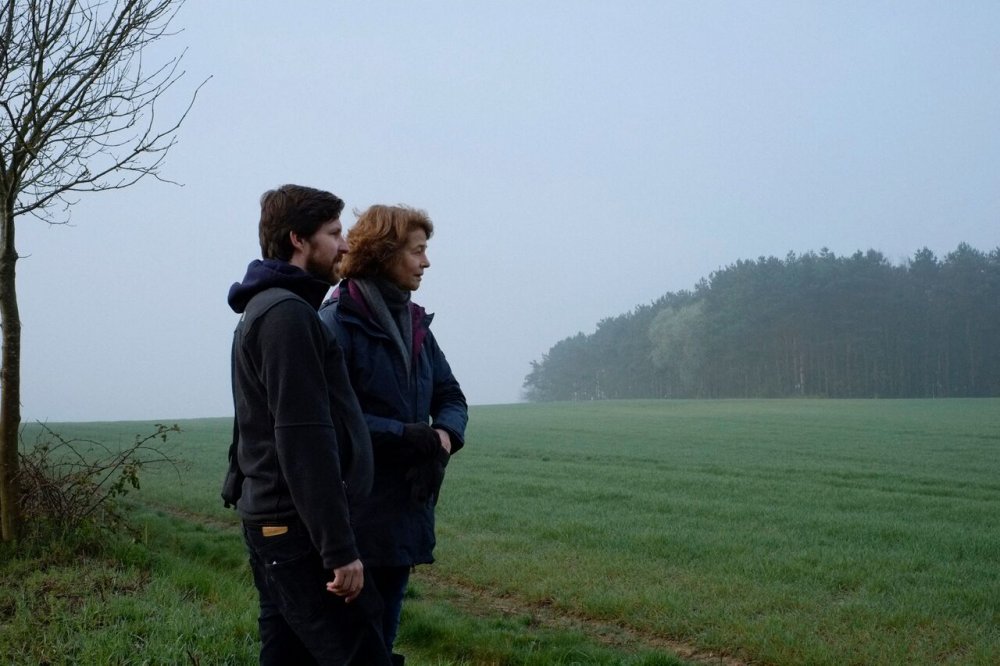
Haigh uses the house and the local environment (close to the Norfolk Broads – a flat landscape with the tourist boats on the Broads, even in winter) almost as characters in the film. The house in particular actually looks and feels like a house an older couple may have inhabited for many years – rather than a ‘dressed set’. ( The nearest city is Norwich but there are no references to where this actually is in terms of dialogue, on-screen credits etc.) In one sense this could be anywhere. What we do get in the dialogue are little nuggets such as a reference to the Battle of Trafalgar and the hall where the wedding anniversary will take place (Nelson was a Norfolk man and his fleet was sometimes berthed at Great Yarmouth). I’ve seen one reviewer suggest that Haigh is a ‘realist filmmaker’ but this seems to me to be misleading. True, several shots by Lol Crawley as DoP use long takes and a long lens to show Kate as a tiny figure in the landscape in deep focus. But at other times she is shown in shallow focus, isolated in the centre of Norwich with the busy world around her – all out of focus in a fuzzy blur. Haigh himself describes his style as naturalism, arguing for single take two-shots for many internal scenes (i.e. avoiding the shot/reverse shot convention).
Who is Kate? We learn next to nothing about her except that she was once a teacher in the locality (she chides the postman who calls her ‘Mrs Mercer’). What did she teach? What is she interested in? (She plays the piano.) Does she have siblings? Did she have any relationships before she met Geoff, was there a ‘serious’ one? Mostly we learn about Geoff because the central plot incident concerns him. But his background is equally mysterious. What did he do in the plant that he visits for a reunion? Haigh and James seem to suggest that he was a ‘trade unionist’. But most people in large organisations were trade unionists in the 1970s. What skills/knowledge did Geoff have? Was he graduate or a trained engineer? How did he get to have a German girlfriend and to spend several weeks with her in the mountains? Perhaps it’s just me, but without knowing any of this I’m struggling to understand how Kate and Geoff have developed a relationship over 45 years. How did this leftist couple survive in rural Norfolk for so long? Did they travel a lot? Do they have other friends beyond the rather narrow group shown here?
I’m not suggesting that a romance drama needs tons of sociological detail but I do expect a few simple assumptions to make sense. I think I ought to be able to recognise the nuances of social class in a British drama. Perhaps after all it is the marriage of the colonel’s daughter to the working-class lad from Hull which offers the intrigue? That lad is still there in Courtenay’s performance which resonates with those of his 1960s prime in British Cinema. Charlotte Rampling was a heartless upper middle-class trollop in Georgy Girl (1966) but much of her subsequent success has been in European art cinema. In an interview Courtenay (in praising Rampling) suggests that she is much more attuned to the process of filmmaking (whereas he is more attuned to theatre). That might explain some of the tension in the intimate scenes, but it may also be nonsense on Courtenay’s part. I can’t imagine you can make 50 films without getting used to the process. Some commentators have suggested that 45 Years is more like a ‘theatrical play’, a ‘two-hander’. But it is also intensely ‘filmic’. The opening credits are white on a black background accompanied by the sound of an old-fashioned slide projector clicking through a carousel of slides. I tried to work out if the click was edited in time to the changing titles. Later the slide projector will become crucial to the narrative. Associated with this is a scene in which Kate returns to the house to find Geoff with a cut finger and tenderly dresses the wound for him. He says he’s been trying to fix the ball-cock on the toilet cistern. Again, later we wonder if he was actually doing something else. This is one of those moments when it would be good to know more about Geoff. Is he supposed to be good with his hands? 45 Years is a film with star actors – actors with star personae. Geoff and Kate are also Tom and Charlotte. Their star images are composites of the roles they have played and their appearances in secondary circulation. At the end of the film, Rampling as Kate conducts herself in the final scenes with the presence of an Ingrid Bergman. I’m trying now to imagine her as a younger star playing a local school teacher in Norfolk and it’s difficult. I’m going to have to watch the film again but my first viewing is still reverberating. I’m wondering about whether to see it as a melodrama – there are several songs as well as symbolic use of mise en scène. I’m intrigued as to what younger audiences (under 60!) make of the film – please let us know.
The use of Long Shots and the ‘lived in’ house are evident in this UK trailer:
 itp Global Film
Good review. I can understand some of Roy’s reservations. However, I have seen the film twice now, and it seemed richer and more complex second time round.
The non-simultaneous sound of the opening titles is an example. But the German Shepherd Max, the Norfolk Broads, the Liszt piano piece and the contrast between home, town and factory all offer increasing resonance.
Moreover, I felt that the visual and aural style was very precise. Haigh and the cinematographer chose carefully between close-ups, long shots, two-shots and [impressively] slow tracks. Equally there is distinction between diegetic and non-diegetic sounds.
Certainly the focus is on Rampling, maybe this is an intelligent decision by Haigh in line with their particular performance skills?
As for the use of shallow focus, the film does employ this at times. However, for the viewer I think this is accentuated by the digital format. I noted the shallow focus at the first screening: and at times it seemed inappropriate. This was mostly in the early stages, but I think we tend to adjust as a film progresses. However, the second viewing was on a larger screen, though still I think in 2K, and I watched the imagery carefully. It seemed to me that the choice of depth of field was just right in each scene. And I was pretty sure that some shots had greater definition than at the first viewing.
Clearly it will divide audiences. A the Hyde Park Picture House I heard the end of a discussion among four women:
“I’ve been to see a wonderful film with a bunch of cynics”.
LikeLike
what is that Liszt piece???
LikeLike
I really agree with Keith. I think the use of sound is very precise, like the visuals, and underscores symbolic meanings. The chill wind that blows through at significant times might seem heavy-handed if the performances (Rampling’s in particular, as you’ve already both commented) weren’t so nuanced and restrained. These elements provide a general, emotional ‘colour’ – and create a satisfying sense of the joining of place – from the Norfolk Broads to an alpine glacier where news from the past is disturbing the present. I think Haigh’s handling of these formal elements to underline narrative were strong. I really liked the way in which we knew nothing about these two people; what we knew indicated the kind of people they were (in the past) at the same time as the people they have become. Rampling’s performance of the caring, practical, unfussy retired teacher is brilliant. However, Courtenay’s performance is the less obvious but the foil to hers. What attracted her to Courtenay’s Geoff is all there in those echoes of the rabble-rouser and political activist who had a fiery passion in his youth. Everything that happens – wordlessly – in the final scene has been established carefully (as Keith says through attention to cinematic detail) so that a small gesture can be devastating. In that, I would say it shares much with Petzold’s Phoenix (another modern filmmaker who controls shot and sound to imply emotion, without ‘overdressing’ it). Petzold’s is my film of the year, but Haigh is the same kind of thoughtful filmmaker. Keith’s word – precise – applies to both.
LikeLike
I agree with all these comments about Haigh’s use of sound and cinematography and how the performances work. But neither of you address the other questions I raise. Rona writes: “I really liked the way in which we knew nothing about these two people; what we knew indicated the kind of people they were (in the past) at the same time as the people they have become”. I’m not sure I understand totally what this means but I think I disagree with it! I don’t know what kind of people they were and I only know so much about who they have become. That’s fine in certain kinds of drama, but the script teases us with little snippets about Geoff’s past and the narrative utilises an element of mystery/suspense suggesting that Kate didn’t know everything about Geoff’s relationship with Katya.
Given that earlier this year we spent time discussing acting/stardom etc. (something to which I must return) I’m surprised that you don’t comment on this. Haigh tells us that he specifically chose not to go to the obvious choices in casting Kate and we must assume that he had deliberate ideas behind the decision to cast Charlotte Rampling. It occurs to me now that perhaps he thought that as a leading French art cinema actor she could play this kind of character who isn’t given much background and must build a performance on the interaction of script, direction and the performances around her. She does this very well. What does this imply about Courtenay’s performance? I’m not sure but I do think these questions are worth asking. I agree with Keith that the film offers a rich and complex text – and I think it deserves an equally rich and complex analysis. We only seem to have scratched the surface so far.
LikeLike
I think we learn more about the characters than is credited above: though I have seen the film twice. For example, we learn about Geoff’s trade union politics when he angrily comments about an ex-official who has made money and retired to Spain. And in a really important scene Kate goes and digs piano music out of the store and plays Liszt.
And there are other aspects that crop up in the conversations.
Regarding the events from the past, Geoff tells Kate that he told her, ‘remember’. It is clear that Kate is unsure about this. This is one of the ways that the film explores two of its key aspects, memories and the past.
Another key aspect is cinema itself. At one point, Kate like the audience for the film, sits down and watches a crucial part of the past events in a slide show. It did seem like a deliberate reference/homage to Antonioni’s wonderful Blow-up (1966),
I think the casting reflects the filmmakers interests in developing and presenting the characters and the story in a certain way. The film is deliberately ambiguous. However, my response was to puzzle over the characters and their behaviour: it seemed to me as I did this that greater illumination came. But it is an uncertain illumination, mirroring the situation of the characters themselves.
LikeLike
Do you know what Liszt tune Rampling’s playing? tks
LikeLike
pls tell what is that!!! im looking. for that for so long! please!!
LikeLike
please tell what is that by Liszt
LikeLike
IMDB gives the Liszt piece as
“Comment Disaient-ils, Written by Franz Liszt
Performed by Emma Morwood and Jonathan Fisher”
LikeLike
yeah,but that is not it
LikeLike
Sorry. If you know Liszt and IMDB is wrong then I can’t help you with my limited musical knowledge!
LikeLike
I have been searching for this piece for ages also! Did you find out what it is?
LikeLike
Hello Roy,
In response to your questions about lack of back story, I agree with Keith about the scant information being linked to the theme of memory. It could also relate to Kate and Geoff’s discussion about their lack of photos, Kate would criticise people for constantly taking photographs, rather than ‘living in the moment’ (or something to that effect) which has a pay off when they encounter the board of old photos at the anniversary dinner, and Geoff starts to excitedly reminisce (Kate is less enthusiastic).
Another way the lack of back story may affect the plot is by highlighting the difference Geoff and Kate’s ages. The actors themselves have an almost 10 year age gap, and there was a scene in bed where they briefly discuss dates, and they are working out how old Kate was when Katya died. Kate was very young when she met Geoff (barely 20? I’m only guessing here) so not hearing about her life before Geoff almost highlights that age gap, that he, in a sense, lived a life before he met Kate. When Geoff finds out about the body being discovered, we witness him facing his mortality (especially the dance in the living room, and the love making scene), Kate seems much younger in those scenes.
I was also drawn to the brief scene where Kate is on the barge, and the tourist information is intoning on the loudspeaker about the history of the area. On the barge you are invited to look at a landscape and imagine how it got to this point, much like in the film; you look at an elderly couple and imagine how they got to where they are.
p.s. I am 30 (31 in October) and I enjoyed 45 Years immensely.
LikeLike
Its a good point about the photographs and the tour on the Broads. At one point Geoff goes to the library and gets book on ecology and global warming. He tells Kate that the water is draining off the glaciers and undermining the sub-strata – this crosses over with the commentary providing the history of the Broads.
I think Geoff was 25 years in 1962 and he seems to meet Kate around 1967 or even later and then she is under 20. So there is a notable age gap – emphasised by Geoff’s failing health.
LikeLike
I think Jake makes some good points and I can follow the logic of his analysis. For me, his revelations make Kate even more mysterious. Keith suggests that Kate’s piano playing tells us something about who she is, but it’s not that much, is it? Perhaps it all means that this is a relationship in which Kate’s past is not discussed? A female character suggests that Geoff will predictably weep and will then recover – an assumption which irritated me a little as if men are usually sentimental and shallow. If I watch the film again I’ll be thinking about the mystery of Kate!
LikeLike
I saw this film again in Sheffield, in a double bill w/ Horse Money, no less (fun comparing two films about two ailing men who are haunted by their past.)
Keith is definitely right about the broads tour illustrating Changing landscapes. You get a sense that Kate can’t escape the Alps, as much as Geoff can’t (Swiss watches!) Another thing I noticed about that tour boat scene, was that Kate looks to be volunteering, serving tea to the elderly passengers. That strengthens the image of her as a carer.
LikeLike