
Opening film of the 25th Leeds International Film Festival.
UK 2011. In colour and 1.37:1. 128 minutes. UK certificate 15.
Producer, and founder of Ecosse Films, Douglas Rae, came along to talk to the Press after the morning screening of this new film. When asked about the production he said film production was always difficult, but this more than most. He praised his director, Andrea Arnold as uncompromising but incredible.
Ecosse films was set up in 1988. It started out making documentaries and arts programme. The company commenced feature film production in 1997 with Mrs Brown. Since then its features have included Charlotte Gray (2002), Becoming Jane (2007), Brideshead Revisited (2008) and Nowhere Boy (2010). Rae remarked that their output is divided evenly between original scripts and literary adaptations. But the above titles also suggest another thread, a distinctly English (within the larger British culture) sensibility. It also has a feel of the Public Broadcast ethos: one of the features for Television was Thomas Hardy’s Under the Greenwood Tree (2005). This is also a part of the strand of the heritage area, though with a modern irreverence visible at times. One can see the appeal of the Emily Brontë classic. Whilst there have been a number of earlier film and television versions, it retains an enduring appeal. And the themes of the outsider, of regional distinctness, and of class conflict, suggest the possibilities of a very modern reading.
It seems that several different directors were considered over the pre-production period, though I thought none of the names mentioned seemed as suitable as the final choice. Arnold has made her name with two gritty, realistic contemporary urban features. However, they also show an interest in landscape and in nature. Moreover, both films are concerned with the traumas of love and sexuality, with the violence that passion can arouse, and with people’s responses to personal conflicts. These are also at the heart of Brontë’s masterpiece, with the most passionate story in English literature, but one which also features a high degree of violence. What makes this film distinctive in Arnold’s output, less that it is a period story than that the primary focus is on the male protagonist, Heathcliff. That he is black is in fact truer to the novel than most people remember. (See also Whitewashing Heights by Paterson Joseph in The Guardian November 12th).
The production has also been well served by a number of Arnold’s regular collaborators. The cinematographer Robbie Ryan also worked on the earlier Red Road (2007) and Fishtank (2009). His efforts on this film won him the coveted award at the Venice Film Festival. The film is shot almost in the Dogme style using a handheld camera and prodigious close-ups. The exteriors uniformly rely on natural lighting, whilst the interiors use very low levels, almost imperceptible. Both the Editor Nicolas Chaudeurge and the Production Designer Helen Scot worked on the earlier features. And the Sound Designer Nicolas Becker and the Sound Recordist Rashad Omar have worked previously with Arnold. The sound track is another fine feature of the film, with predominately location sound filling in with the noises of the countryside and nature. Even the majority of the music is diegetic.
The screen story is by Olivia Hetreed, who also worked on Girl with a Pearl Earring. Arnold’s entry into the production meant entirely reworking the screenplay. And the plot leaves out much of the action in the original novel (unlike the 1992 version, which follows the complete novel, more or less). Essentially the story is told from the point of view of Heathcliff: so when he is off the page the film offers an ellipsis. (Essential action is retold in the dialogue). I thought this worked well, though a friend felt that this left out Cathy’s motivation, an important aspect in the novel. This is an aspect which presumably will disappoint some fans of the book, but I do feel that it captures the poetic aspect of the novel.
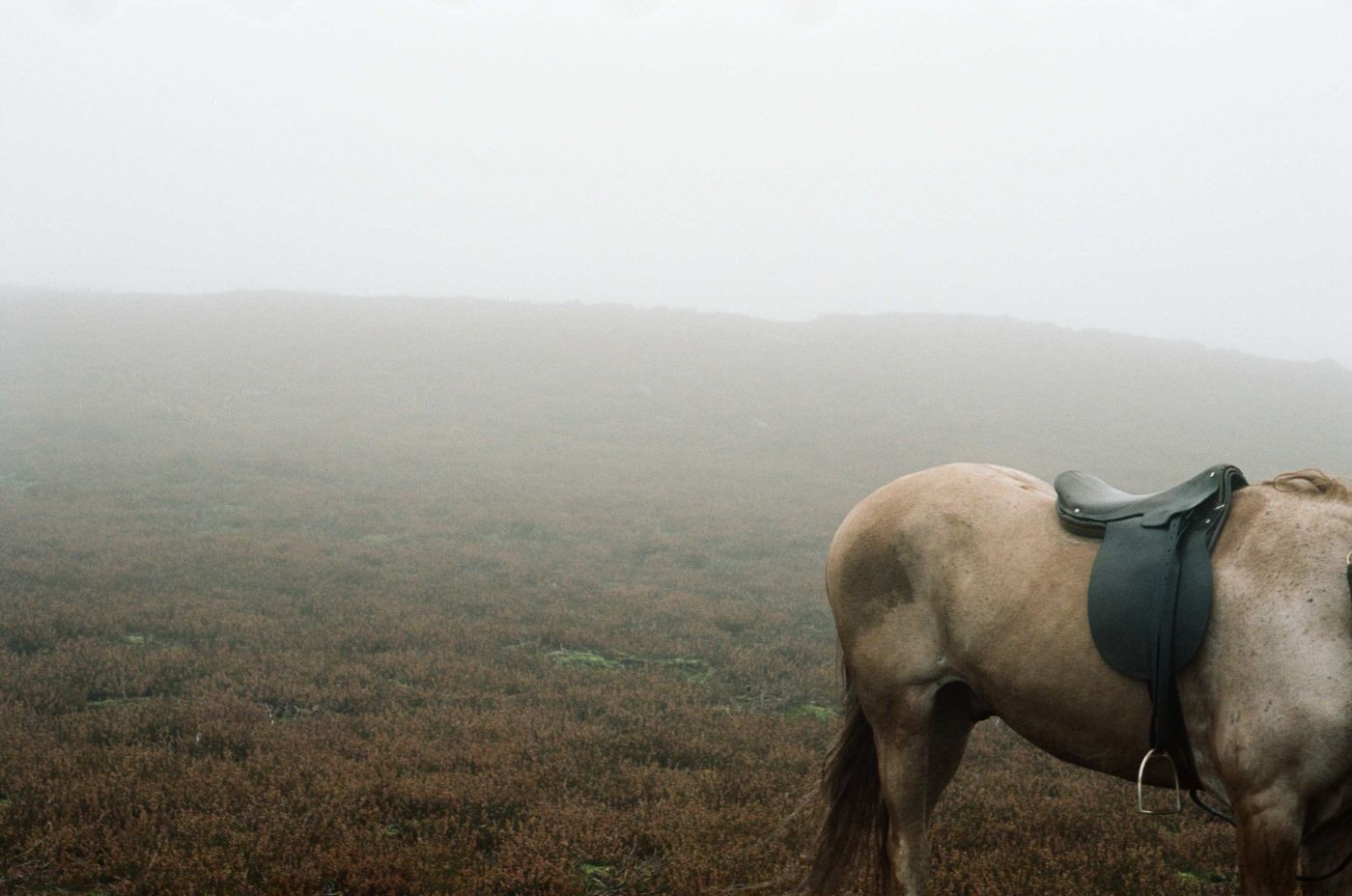
Happily the film relies on Yorkshire locations. Rae said that Arnold spent six months scouting locations. The Heights and much of its surrounds were filmed in Western Swaledale. In summer this is great walking country, with splendid views, winding but interesting paths, and some excellent hostelries for mealtimes. In winter the countryside is grimmer: rain, wind and mist can surround one and the terrain is rich in tufts and frequently very muddy. The film certainly realises the Yorkshire sense of ‘wuthering’. And the Heights is a working farm, candlelit, rough-hewn and prey to the elements. Rae’s fellow producer Kevin Loader commented: “It’s the hardest shoot I’ve ever been part of; there was a constant awareness of wind and water, the darkness and the harshness of the elements. But it brings home that kind of isolation and closeness to the natural world.”
The early part of the book, the developing relationship between young Cathy and Heathcliff, takes up about 70 minutes of the film. Then we have a break when Heathcliff leaves angry and frustrated. The second part of the film treats the events after Cathy’s marriage but does not carry the tale to the end of the book. This runs for about 50 minutes. The first section of the film has the developing passion and obsession between young Heathcliff (Solomon Glave) and young Cathy (Shannon Beer). This is powerful drama, and the terrain and the landscape are an integral part of the force of the story. The film uses a range of natural objects, particularly stones and feathers, as props and as metaphors. The supporting cast, including other non-professionals alongside the lead pair, make this an effective portrait of an early C19th household and hamlet.
The second part of the film involves both the Heights and the Grange, the later the home of the affluent Linton’s. A Press colleague thought this part rather slow. I did not find this, but I did feel a change of pace and intensity. I think this is in part because the central pair of Heathcliff (James Howson) and Cathy (Kaya Scodelario) are now played by a non-professional opposite a professional actor. Arnold explains her aim: “We looked for non-actors for the Heights and actors for the Grange. I wanted the Heights to be raw and untamed and elemental and masculine and the Grange to seem mannered and more feminine and careful.” In fact, the casting division is not quite as strict as this, but the contrast is there. This expresses the repressive nature of the situation, the early film being oppressive rather than repressive. This is underscored by the disparities between the Heights and the Grange: the latter all lights, decorum and social niceties. It is symbolised in one way by Cathy’s hair: mainly down and loose early in the film, now pinioned up behind her head. Some ringlets do hang down which distinguishes her from Isabella whose hair is firmly bound up. It is also affected by the more conventional use of metaphors: one of the few false notes in the film for me was a cage containing a canary in the Grange, seen in close-up at least twice. But this repression is the way that the tragic tale of Heathcliff and Cathy runs: repressions of class, gender and ethnicity
The film has divided critics strongly. However, interesting films frequently do this. For, like the star-crossed lovers, and the original novel, this is a film on the edge.
NB A report in Tuesday’s Guardian suggests that James Howson as the ‘older Heathcliff” had his dialogue dubbed: though this does not seem to appear in the credits.
 itp Global Film