

Filmed amongst the rolling moors of the Derbyshire Peak District (to recall the moors around Haworth in Yorkshire), starring a German-Irish Rochester and Polish-Australian Jane – the new film adaptation of English Charlotte Brontë’s novel might tempt questions about authenticity. It seems that film reviewers look for modern reimaginings in relation to classic texts as much as to closeness to the original. However, in many crucial ways this film remains very loyal to the book, clearly intending to please its many fans rather than challenge their perceptions and showing an authentic eye for the detail of the period and for the core emotions of its characters. Visually, it’s very arresting at times. Light is (as described by cinematographer Adrian Goldman) bounced off the surroundings onto characters’ faces to create a more suffused and gentler effect – capturing the period and constructing a more naturalistic palette. There is subtle expressionism in its use to change mood (e.g. after the fire in Rochester’s bedroom) but this is never allowed to dominate and the emphasis is on the drama and interaction.
Stand it next to the 1943 version (starring Orson Welles and Joan Fontaine) and some very interesting distinctions and similarities start to appear (avoiding comments on plot structure as this inevitably brings ‘spoilers’). The earlier film expresses the gothic more liberally for example, in the use of lighting, emotion is rendered through the stark contrasts of the black and white and the atmospheric use of key lighting.
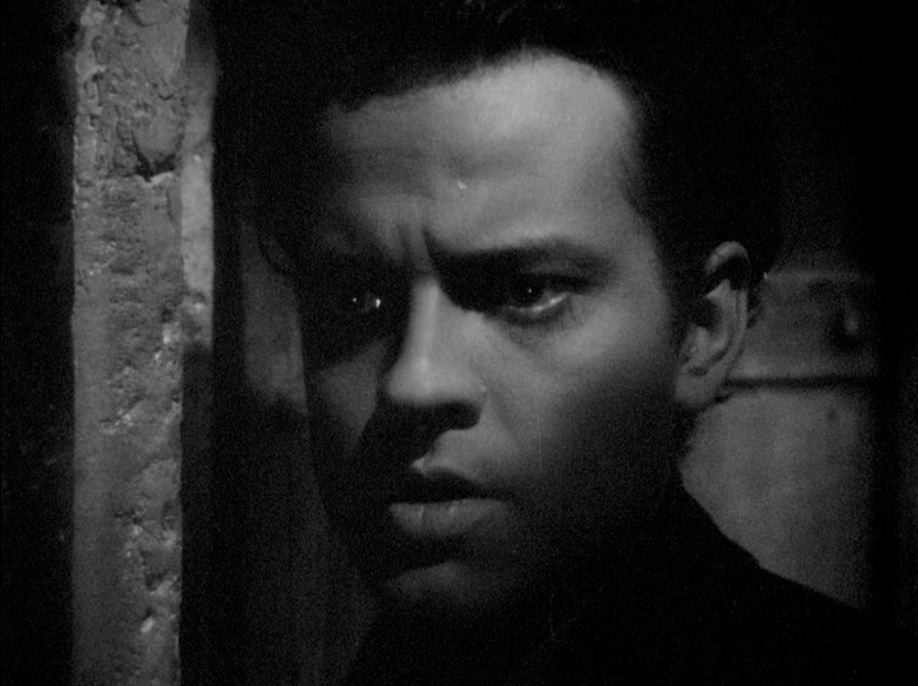
Both preserve much of the language – vital because it is through their dialogue that the central relationships (with Rochester and Rivers) live. (The ITV version – with Ciaran Hinds and Samantha Morton – makes this critical mistake of completely modernising much of the speech, which jars oddly against the period dress). Where Moira Buffini (the book’s adapter) has elided speeches, the underlying tone or the intention in the speech generally remains preserved. I think there is a real attempt to keep the wrestling between person and soul which defines the original – and, specifically, there is one moment where Jane speaks of maintaining her personhood and self-respect. Whilst not directly from the book, this deftly picks out an aspect that is part of its appeal to modern women readers and interpreters.
These are not meant as carping nitpicks of a ‘yes, but is it like the book’ variety (for starters, Brontë herself sets in “___-shire” avoiding realistic references to place and the idea of fidelity to the original literature is much less an emphasis these days). The film, interestingly to me, actually seemed to assume a substantial knowledge in the audience – often apparently playing off what we already remembered.
Director Cary Joji Fukanaga also concentrated on that conundrum of how to bring the central character’s interiority to life on screen (sometimes done through conventional montages) – and Mia Wasikowska (Jane) has a great capacity to render the conflict and her struggle passing across her at crucial moments in her face. Jamie Bell creates a convincingly repressed, and repressive, St.John Rivers. Michael Fassbender delivers the Byronic hero with a tortured soul, looking properly dissolute. There have been criticisms of a lack of chemistry – and there is something, for me, about the lack of close-up and two shot that I want to think about – creating a distance that emphasises her independent resistance of him more than her seduction? There was an occasional dramatic emphasis on his potential danger (a gothic touch) but generally (and this is despite aspects of the marketing) the film seemed to move much more towards the picaresque journey of its central character – her coming of age – rather than move towards a genre style.
This has been described as an outsider’s viewpoint on Jane Eyre, made by the director of Sin Nombre (2009) and it certainly has a clean, unfussy visual style that de-emphasises the traditional pleasures of the costume drama (BBC Films appears as a producer. No immediate info re budget but it does not appear lavish or beyond $20 million? Focus Features – the U.S. ‘Indiewood’ company is also involved). In fact, textures are used dramatically – the moment of the wedding dress arrival used very effectively to communicate more about characters than an opportunity to drool. It has a freshness of perspective in its naturalism – from the Japanese-Swedish Californian director – which places it alongside the modern versions of the literary adaptation such as Pride and Prejudice (2005), with a soft Byronic-style hero at its core (for its modern female audience). It’s the early notices for the girl from Kent’s Wuthering Heights that suggest where a taste for more radical reinvention might be found (See reviews from the Venice Film Festival of Andrea Arnold’s Wuthering Heights).
 itp Global Film
In one sense I think that the film is ‘conventional’ and I would agree with the view that the film is less of a romance (i.e. about a love story) than a film about a young woman’s discovery of self. In this respect, while Fassbender’s performance is strong and fits the gothic expectations, the standout performances are from Mia Wasikowska and Jamie Bell who both manage to convey internal thoughts via subtle external gestures and tiny facial movements. What perhaps surprised me was not the force of Jane’s determination but the rather terrifying certitude of St. John and the dreadful knowledge that what he would get up to India (with his views) would probably do little for the colonial subjects he harangued into his fold as a missionary or for himself. I guess what is interesting about the work of both the Brontes and, earlier, Jane Austen for me is these little indications of what British colonialism meant in the early 19th century – and how they are rarely brought to the fore in discussions of the novels or their filmic adaptations. Another good reason to look forward to the Andrea Arnold?
LikeLike
I was pretty impressed, as Rona points out, by the cinematography and the lead performances. I also loved Judi Dench’s.
The film does elide some important plot developments from the book: generally it did these quite well – the one exception is the ending. Two crucial aspects from the book are missing [ones that I remember as being in other versions] and I found the ending too rushed. I did wonder if there were cuts to bring in a 120 minute running time.
LikeLike
Speaking at an event in Haworth itself, Moira Buffini (screenwriter) and Alison Owen (producer) gave a fascinating insight into some of the decisions that had been made in the process of the film (as well as indicating, by their comments, their clear involvement throughout the filming and their passion for this seminal piece of women’s literature). Owen, feeling that no definitive version of the novel existed for her on film, looked to cast at a more accurate age for the character of Jane, to reflect the ‘bildungsroman’ aspect of the novel. Buffini, who has appeared on BBC Radio 4’s Film Programme and has spoken eloquently about screenwriting (archived programme: 15.10.2010: http://www.bbc.co.uk/programmes/b006r5jt/episodes/player?page=2) gave some good insights into the writing process. She commented on the change to the structure, which came about after she had written a traditional linear draft of the novel and realised it wouldn’t work at all (She talks to Francine Stock about this: 2 September 2011: http://www.bbc.co.uk/programmes/b006r5jt), basically because it unbalances a film structure by introducing important characters two-thirds of the way through.
One key issue, I feel, did come up in the discussions. Moira Buffini felt Brontë herself would criticise the absence of Jane’s relationship to God. This is an intriguing conundrum for any modern adaptation of the novel – given that is a strength that sustains Jane so clearly and guides her actions. Deleted scenes (on the U.S. DVD) contain the ghost of Helen Burns – on the moors and as Jane leaves Rochester (both done very powerfully) – creating a direct reference to Jane’s commitment to this spirituality. Alison Owen (producer)’s comment here was that the religious themes could pervade the film’s atmosphere more disparately – in a less concrete way than the book and these more expressionistic scenes were cut.
A final gossipy nugget – Alison Owen talked of Ellen Page as an initial casting possibility.
LikeLike
Interesting Rona,
but nothing apparently about the ending. In this film Jane, having rejected St John Rivers’ proposal, appears to dash off onto the moors and thence back to Rochester.
If so, it makes at least part of the story rahter like adream or a reverie?
LikeLike