
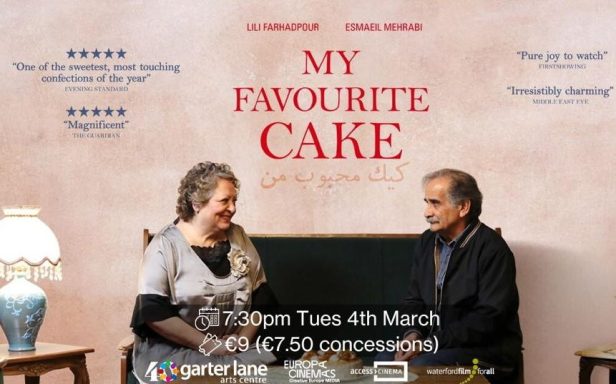
Released in UK cinemas in September 2024 and widely available on streaming platforms, My Favourite Cake is both a joy to watch and yet another example of that seeming contradiction in that the more repressive the Iranian regime becomes in its attack on its own citizens, the more it prompts wonderful artistic expressions from filmmakers it tries to control. It helps that these filmmakers are supported by overseas co-producers, especially in European countries with significant Iranian diaspora audiences. International distributors then take these films from major festivals, Berlin in this case, and distribute them around the world. The Iranian censors are really adept at scoring own goals.
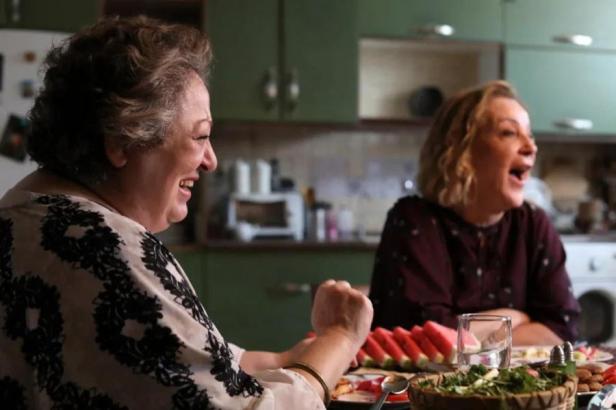
The basic narrative premise of the film is that women over a certain age are ‘invisible’ in Iranian society – except when the Morality Police are bored or short of someone to arrest. These invisible women are also possibly lonely if like the central character Mahin (Lily Farhadpour) they live on their own. Mahin is a 70 year-old widow with a daughter living abroad. She lives in a comfortable house with her own garden she tends each day. But she has difficulty sleeping during the night and consequently falls asleep very late, not waking until 11.00 a.m. She has occasional meals with her women friends. These are quite jolly affairs but at other times she has time on her hands.
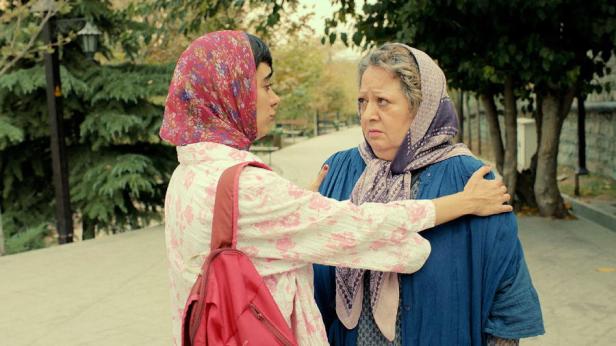
One day Mahin decides to become ‘pro-active’ and sets out to find a potential male partner. Her attempts to do so are fairly basic, e.g. sitting in the park where she thinks men attempting to keep fit might be jogging/walking. Doing this means that she’s in the park when the Morality Police arrive on a trawl for young women to punish for not covering their hair. Mahin remonstrates with the police and actually manages to cause enough disturbance to allow one young woman to get away and meet her boyfriend. It’s a worthwhile ‘good turn’ but when Mahin decides to visit a restaurant that accepts ‘pensioner credit’ vouchers she feels isolated again. The men in a group take no notice of her but she spies a man on his own. When he leaves after his meal she tries to find out where he lives/works and tracks him down. He’s a taxi driver and she can hire him to drive her home. She has her man! The remainder of the narrative is the brief romantic interlude in the lives of both Mahin and the taxi driver, Faramarz (Esmaeil Mehrabi).
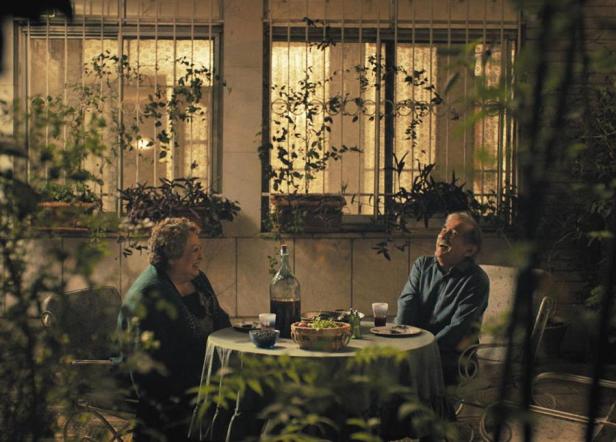
Writer-directors Maryam Moghadam and Behtash Sanaeeha have the problem that, in the second half of the film, they have their characters contained within Mahin’s apartment. But it isn’t really that much of a problem since the apartment is on the ground floor and has a walled garden. They are inventive in using the various spaces and are helped by Mohamad Hadadi’s cinematography and Moghadam’s own production design. Mahin is a great host and Faramarz is an appreciative guest. There is music, dancing, wine and food, including the cake of the title. All of this was too much for the Iranian authorities and this film became another in which the film was in effect smuggled out of the country to be shown at Berlin. The directors, who have already been in the courts in Iran couldn’t travel but the actors could in order to walk the red carpet and discuss the film. Here are some quotes from the directors printed in the Press Pack:
The film is the story of a woman living on her own, and attempting to be independent in a traditional society. Mahin has no choice but to worry about the views and threats of a religious and misogynistic wider society. She is a woman whose basic freedoms are restricted by laws that are intrinsically anti-woman.
Iranian people have been staring into sorrows and desolation for many years and they know that if they get a chance to be happy, they should appreciate it well. Because maybe that moment will be the only chance they get. This is also a story about seizing that moment.
Women have never been allowed to have their real lives depicted on screen, as they are in their homes, and this time we decided to cross the red lines. We accept the consequences of this choice.
As these quotes suggest, the attempts to suppress films like this make them ‘political’ films. The filming itself took place during the period in Iran when young women rose up to declare their frustration and rage at the restrictions they face. This was the time of the ‘Woman, Life, Freedom’ movement and the imprisonment and death of Jina Amini a 22 year-old Kurdish-Iranian student, beaten by police because she wasn’t wearing a hijab correctly. The anniversaries of her death have been celebrated and women will prevail against misogyny in Iran in the years to come. Films like this are important .
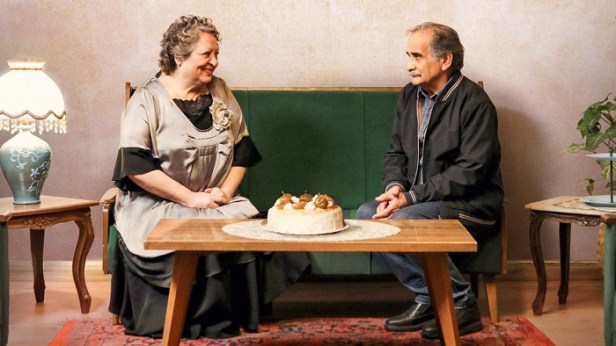
This is a wonderful film. Support women in Iran and watch and enjoy. I watched the film on BFI Player in the UK. It is available on a host of streamers in the UK and also in the co-production partners’ countries and on Apple TV in some other territories.
 itp Global Film