
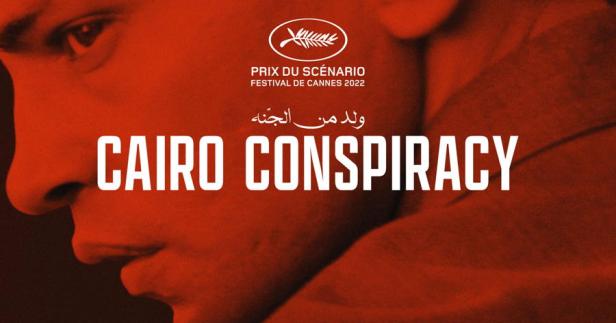
Streaming free in the UK on iPlayer for the next 11 months and available on most other major streamers, Cairo Conspiracy is Tarik Saleh’s follow-up to The Nile Hilton Incident (Sweden-Denmark-Germany 2017). The earlier film dealt with the corruption that develops within many police forces when mixed with the security forces protecting politicians. Tarik Saleh was unable to shoot the film in Egypt and had to shoot in Morocco. This second film in a ‘Cairo Trilogy’ focuses on the election of a new Grand Imam for the élite Islamic study centre at Al-Azhar University, a position of power enmeshed in the politics of Egypt. Once again Saleh was forced to shoot the film outside Egypt in Istanbul. The concluding film in the trilogy, Eagles of the Republic which tackles political issues in that other important Egyptian institutional space, the entertainment industry, was screened at Cannes this year but has not yet been released in the UK. Saleh was born in Sweden and the finance for these films comes from typical European co-productions, but the films are deeply rooted in Egyptian issues. Besides Saleh, the figure who links the three films together is the lead actor Fares Fares, born in Lebanon but active across Nordic and international film and television productions.
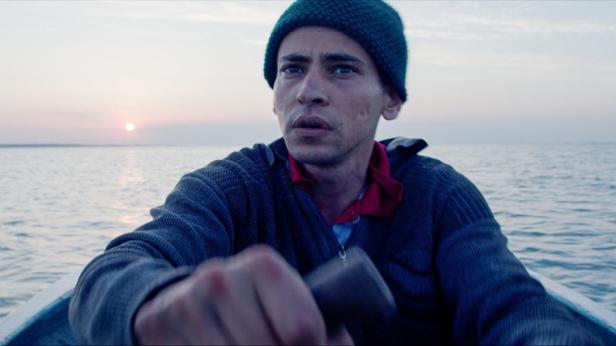
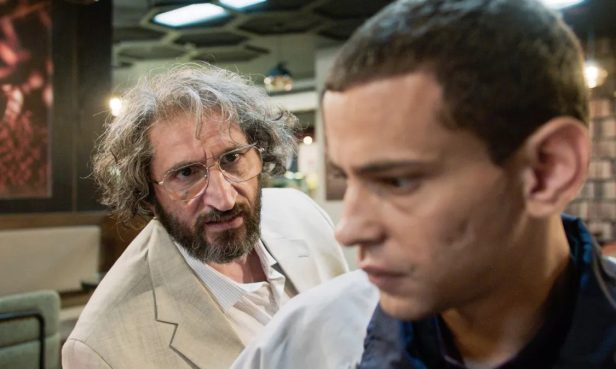
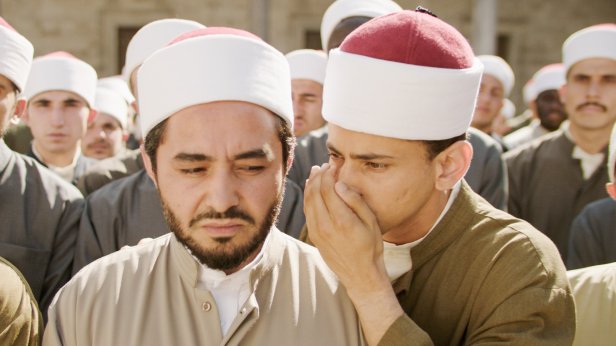
The film’s narrative begins and ends on the same basic sequence of a small boat in coastal waters. In between we find out what happens to Adam Taha (Tawfeek Barhom), a young man from a fishing village who is offered a scholarship to Al-Azhar and whose experiences in Cairo will form the bulk of the narrative. Soon after he joins the student body, the current holder of the position of Grand Imam falls ill and soon after dies. Immediately there is consternation among not just the clerics but also the politicians in Cairo since it is an important post to fill. A meeting of the great and good is soon convened and the process of finding a new incumbent begins. Standing out against the clerics in their long robes, the politicians in dark suits and the military is a figure in a cream suit, dishevelled long curly hair, beard and designer glasses is Colonel Ibrahim (Fares Fares) of the Security Services. He carries files on some of the obvious candidates and as he picks them out, he is told which might be acceptable or unacceptable. Ibrahim is the man in the middle and he will need to find someone on the inside who will be an informer and eventually a ‘fixer’ to produce the required outcome. Has Adam been chosen in advance or does he become that figure by accident?
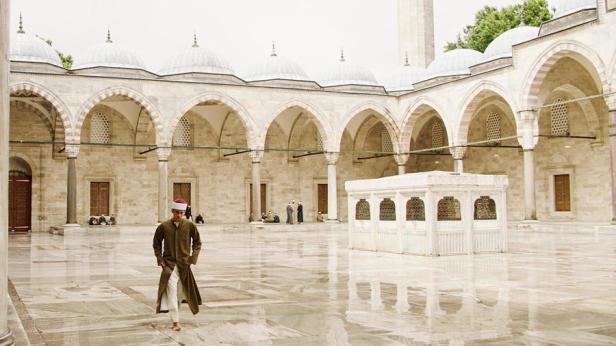
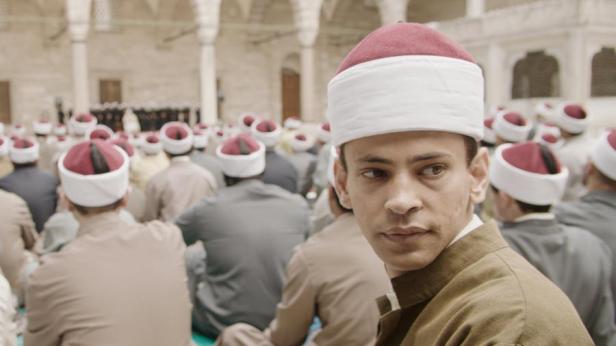
Cairo Conspiracy is presented in ‘Scope (2.39:1) and looks (and sounds) very good. Pierre Aïm is again the cinematographer, shooting all three films for Saleh. The mosque (actually the Süleymanye in Istanbul) provides several interesting locations for a thriller and the busy nighttime street scenes are suitably disturbing for a fisherman’s son. Inevitably, recent screenings of the film such as via BBC4 and now iPlayer have seen comparisons to Conclave (UK-US 2024). I haven’t yet seen that film but I can see possible similarities and differences. If you follow Cairo Conspiracy closely I think you will recognise that it is a ‘howdunnit’ rather than a mystery thriller. What is chilling about the narrative is the sense that the whole process is managed in the interests of those currently in power, though as the story unfolds the individual scenes/incidents are certainly not predictable. The script by Saleh himself won the prize at Cannes in 2022.
The film is around two hours but the tension is maintained throughout. I need to make same observation that I made about The Nile Hilton Incident, namely that the lead actors are from the Arabic-speaking diaspora. As well as the director and his lead player Fares Fares, Tawfeek Barhom is a Palestinian born in Israel (I realise now that he was the lead in The Idol (Palestine 2015)). Two of the other leading players are also Palestinians. I think Palestinian Arabic is close to Egyptian Arabic so that is not really a problem but another actor is from Belgium and two are originally from Syria. None of this matters for an international audience but it might for an Egyptian audience – if they ever get the chance to see the film.
The film is known in Nordic countries as ‘Boy From Heaven’. It seems odd to have an English title in Nordic countries which is then changed for a wider international release. It certainly makes it difficult to find box office figures. It is noticeable that because France was a co-production partner the film received a wider release in France achieving nearly US$ 4 million, compared to a mere US$ 58,000 in the UK. The dire fate of most foreign language films in the UK (and in this case the US) is shown up with films like this. Picturehouse as a distributor in the UK does pick up some important films but then doesn’t really promote them outside its own small chain of cinemas. I have recently noticed that Tarik Saleh’s work has been influential for some filmmakers internationally and I think his films need to be seen more widely, especially when he is dealing with the politics of the major player in the Arab world. This film is highly recommended.
 itp Global Film
I really loved this movie. No frills directing style and well paced.
LikeLike
Yes. The pacing is key. There is real skill in maintaining interest and suspense in this form of narrative.
LikeLike