
There are just over 2 million people in Slovenia but somehow the country produces a few films each year and the ones I’ve seen exude imagination and high technical skills (see in particular Class Enemy (Slovenia 2013)). In checking my records I see that all four Slovenian films I’ve seen were in festivals. I’m not able to be a festival-goer at the moment so I was pleased to find this recent film on BFI Player. The BFI is distributing the film and it had a brief release in the UK in August last year on just 15 prints. I’m not surprised that I missed it.
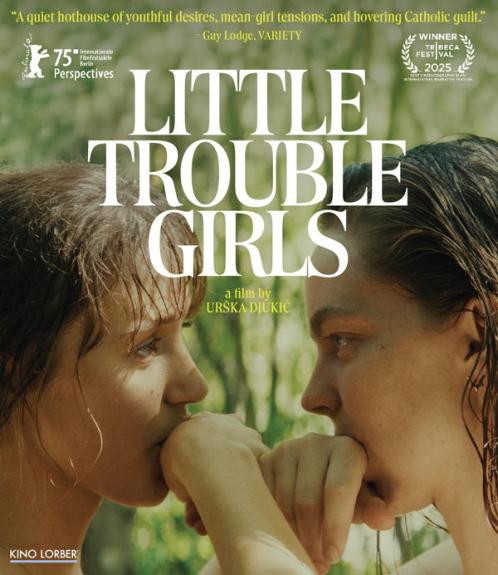
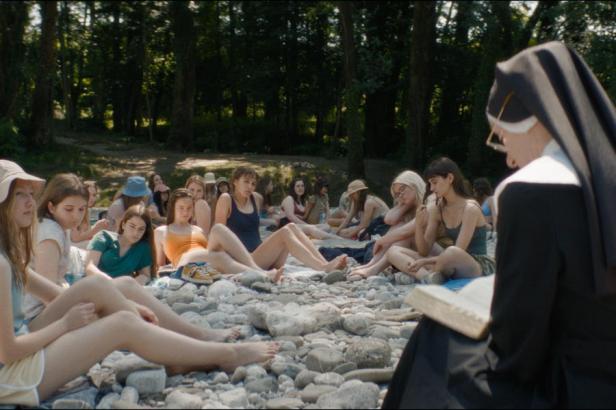
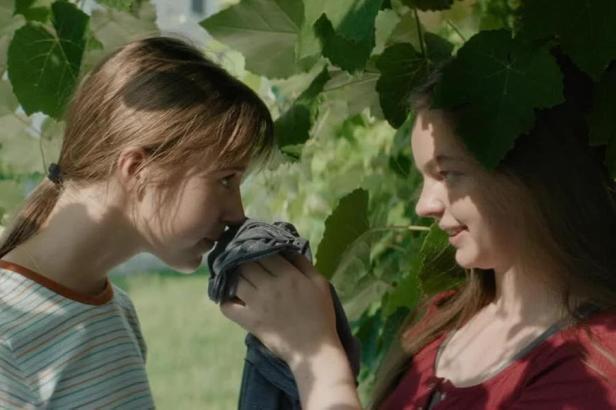
Little Trouble Girls (the title was inspired by a Sonic Youth track which plays over the end credits) is a wonderful small film with beautiful imagery and a terrific soundtrack but most of all a stellar performance from Jara Sofija Ostan in what I imagine must have been her first film as Lucija, a young 16 year-old student who joins her school’s female choir. The narrative is very straightforward (until the final closing sequence) and follows Lucija throughout. We just have time to see Lucija with her rather stern and restricting mother before we become intrigued as to how the newest member of the choir will get on. Soon she is with the other girls as they spend a few days over the border in Italy in a convent in Cividale del Friuli. Lucija is an attractive young woman but she is not socially adept and teams up with a trio of other girls led by Ana-Marija (Mina Svajger). This trio quickly realise that Lucija’s seeming naïveté might afford them some fun. But Lucija is also intelligent, inquisitive and determined. Eventually she will feel torn between the feelings aroused when Ana-Marija teaches her how to kiss, the intense feelings aroused by her sighting of a naked man (one of the foreign workers maintaining the convent) bathing in the river and finally by the passions aroused by the nuns’ own choir and what Lucija learns about what giving oneself to the Lord might actually mean.
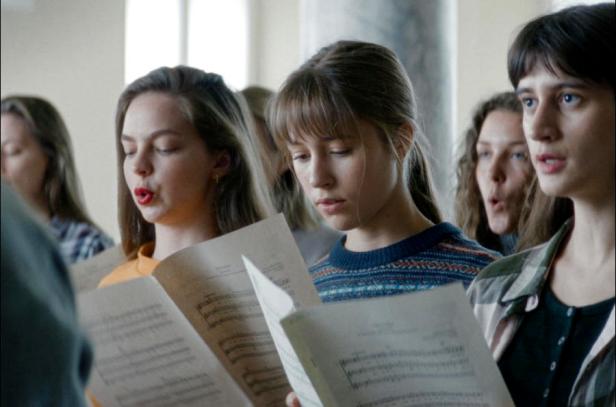
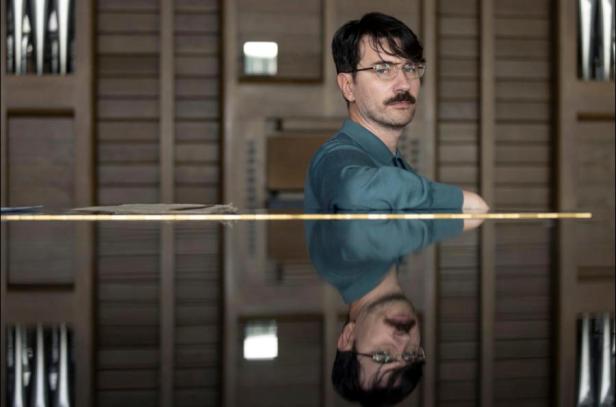
The film was co-written and directed by Urška Djukić. Like many European directors, Djukić had several credits for prizewinning short films before completing this, her début feature, in her late thirties. As in some other recent films and particularly Girls Will Be Girls (India-France 2024), Djukić has opted for a boxy aspect ratio of 1.50:1. The usual explanation for this is that this suggests a sense of intimacy and intense focus and indeed it does here, supported by its soundtrack and visual symbols with close-ups of bees searching for nectar in flowers. I would like to see the film on a big cinema screen where, for once, that over-used term ‘immersive’ might actually be appropriate. Having said that there are also some important long shots in the film as Lucija switches her attention from her immediate surroundings to more distant goings on. But if the film looks and sound so good it also exists in a tense relationship with various genre repertoires. We are first aware of the choir and choir narratives do have particular emotions. If you have sung in a choir you are probably aware of the sheer physicality of the act of singing that is then amplified by being among others also singing. Music itself also arouses passions and particularly sacred music. I’ve only experienced adult choirs of any size but I can imagine that the passion in young women’s choirs is potentially overwhelming. Some of this might be influenced by the choir leader but in this case the leader is a male teacher, Saša Tabaković, who seems an odd choice for a girls’ choir visiting a convent. He doesn’t seem well suited to his role and behaves quite badly in respect of Lucija, picking on her as she tries to find her feet.
If the ‘choir’ narrative is one genre category, another must be the ‘coming-of-age’ film, especially in the hothouse atmosphere of a girl’s dormitory. In this case it is a queer experience as Lucija wonders about a possible attraction to Ana-Marija but also a fascination with the naked swimmer. And then there are the nuns. Some reviewers do seem to have got hot under their collars with one simply referring to Catholic guilt, nuns and celibacy etc. For anyone who worries about these things, there is a brief flash of full-frontal male nudity but overall the film is much more about symbolism and imagined arousal. Throughout all of this, Lucija attempts to make sense of what she experiences.The unconventional ending seemed quite appropriate to me. Little Problem Girls is screening at the 40th BFI Flare London LGBTQIA+ Festival on March 29th – but I see that it is already sold out.
I enjoyed this film very much. I recommend it heartily and I hope it gets more widely seen. The US trailer below does a reasonable job in highlighting the style and feel of the film.
 itp Global Film