
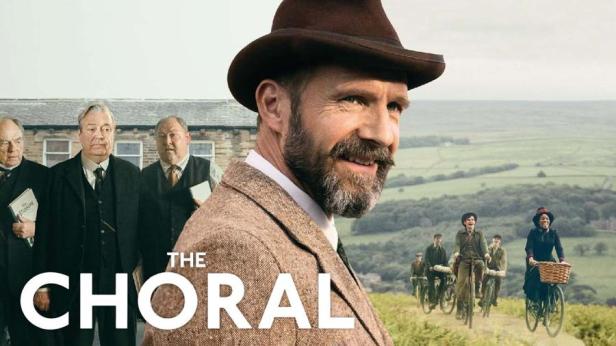
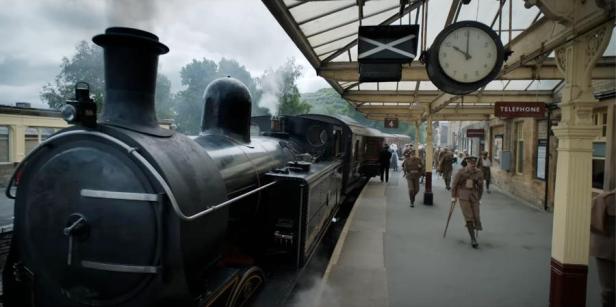
I went to see this film primarily because it was set in a fictionalised version of our region’s World Heritage site, Saltaire Model Village, and the Keighley Station platforms of the Keighley and Worth Valley Railway. Other locations in Yorkshire and interiors built in Versa Studios, Leeds make it is a genuine local product. The narrative is about (re-)forming a choir to give a performance and I’ve actually song in a community choir in some of the locations in the film. But this isn’t a contemporary story, it’s a period piece set in 1916 and the problem is that with so many men in the armed forces the choir is short of singers. It’s written by Alan Bennett and directed by Nicholas Hytner. I like much of Bennett’s work for TV but I’m less fond of his theatre work and the films based on those productions. Bennett and Hytner have produced quite a lot of work together and I think their work together is becoming a bit too familiar. Perhaps it should have been directed by somebody with different ideas.
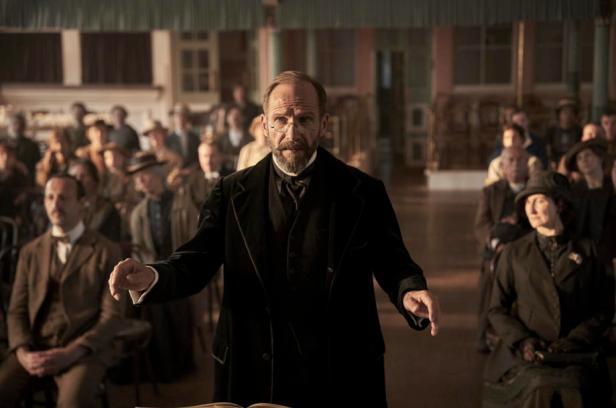
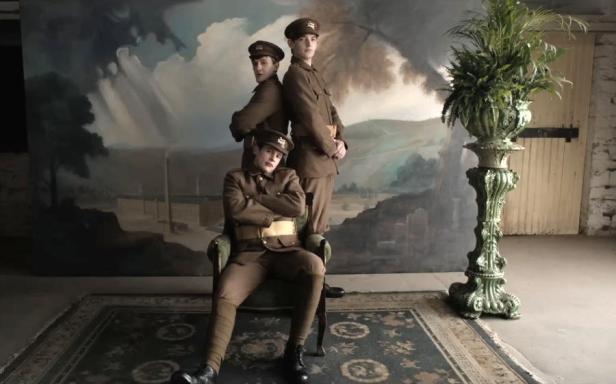
This film has seemingly split audiences or perhaps it’s just that some audiences don’t get it – according to some of the North American reviews following its screening at Toronto. The fundamental problem is that the film’s narrative structure uses the familiar ‘putting on a show’ process. In this case the aim is to produce a choral concert by the choir of the local small town. The choir is subsidised by the local mill owner who always has the lead tenor part. Auditions do attract new members for the choir but then problems start to arise when the choirmaster enlists. A new choirmaster is sought but Dr. Guthrie proves a controversial choice because of his admiration for German composers and artists and also because of doubts about his ‘masculinity’. As well as the clear generic narrative line, the script also explores several minor characters including a trio of young men, not yet 18 and therefore waiting for call-up. Their adventures include desperate sexual encounters as well as some contradictory ideas about the war at the front and about the way the class system marginalises working people in any kind of activity. It’s worth noting here that the town is fictionalised as ‘Ramsden’, a good Yorkshire name (the Ramsden family owned most of Huddersfield up until 1920) but in Bradford in 1893 the Independent Labour Party was started and it wouldn’t be unreasonable to see some millhands being interested in what the ILP might achieve. The script does mention the closure of evening classes in wartime but again it is likely some young workers might have been radicalised by the Mechanics Institutes in Bradford and Keighley. I personally don’t see a problem with either the desperate search for ways to lose your virginity before being sent to the front or complaining about the middle classes but it does get in the way of ‘putting on the show’. The anti-war satire was more expertly done in the Joan Littlewood/Richard Attenborough productions of Oh! What a Lovely War (films 1965/69).
I think that perhaps the major problem with this film is how it deals with both the choral singing and the live musical accompaniment. The film begins with the aim of producing a concert offering Bach’s St. Matthew Passion which the choir knows well. But Bach is a ‘Hun’, like most of the best composers in the canon and the suggestion is to switch to the definitively English Edward Elgar (trying not to focus on his Catholicism since the choir leaders are Protestant). There is an interesting discussion of how to mount a performance of The Dream of Gerontius without the required soloists and orchestra. Eventually a concert is organised after Dr Guthrie ‘adapts’ Elgar’s score but Hytner then decides that he can’t resist a full scale theatrical extravaganza in which the Hallé Orchestra from Manchester ‘fills in’ and a cast of what seemed like extras transforms Elgar’s work. The incongruity of this spectacle is emphasised by the staging in Saltaire’s Victoria Hall, a beloved community venue for locals. The rousing finale doesn’t work because it doesn’t fit the ‘feel’ of the rest of the film.


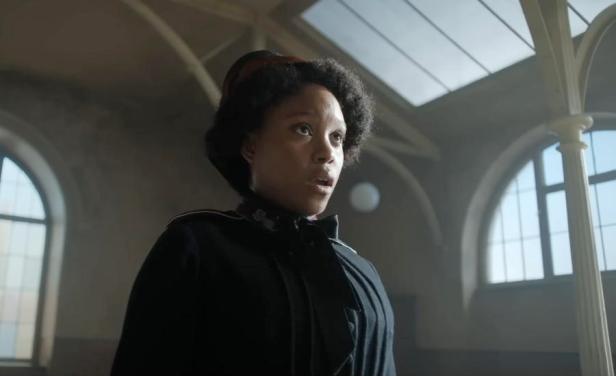
Despite these problems, however, many audiences are enjoying the film and I admire the craftsmanship of the use of Saltaire as a location. It should do a lot to encourage visitors . I’m sure there are audiences who think the locations are created by CGI but the model village has been carefully preserved since its original construction in the 1850s and 60s through to 1871. People will come to see Alan Bennett’s work and at 91 he doesn’t disappoint with the characters and the one liners. Ralph Fiennes is the star of the film as Dr Guthrie but a host of familiar faces such as Roger Allam as the mill owner, Alun Armstrong and Mark Addy as committee members give substance to the cast. Alun Armstrong worked with Bennett’s scripts as far back as the 1970s and Roger Allam, I learned from newspaper interviews recently, originally trained as a singer. I’ve seen some criticism of the younger players but I thought they were very good. Amara Okereke, already building a career in musical theatre in the West End, plays the Salvation Army Girl who sings the part of the Angel in Gerontius. I’m not sure about some of the other singers, I wasn’t able to follow all the credits in the cinema and I think some voices were dubbed by professional singers just as the music was enhanced.

If you like Alan Bennett’s work I think you’ll enjoy the film in the cinema. If you are a musical purist you may well struggle with what’s on offer here, but please visit to see the glory of Saltaire as captured by Mike Eley’s camera and to celebrate the grand tradition of choral singing in the industrial towns of Northern England.
 itp Global Film