

This new Springsteen film turned out to be rather different than some of the reviews suggested. Some of the more negative reviews argued it is “just another clichéd biopic”. Some reviewers clearly didn’t like it or were not moved by it. I really enjoyed it and thought it was very good but I’m not surprised by some of the audience comments in the US and the UK. It is a thoughtful, serious film and often quite slow and reflective with only a limited number of over-loud concert excerpts.
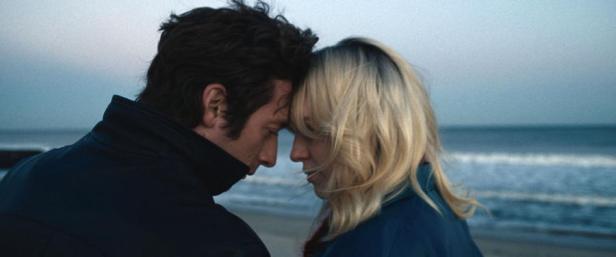
I followed Springsteen’s career from his first album and his first UK tour back in the early 1970s but for some reason, which I now can’t remember, I didn’t buy any of his music until ‘The River’ and then went back to ‘Darkness on the Edge of Town’ which I played a lot. I knew about ‘Nebraska’ but didn’t hear anything from that album. It was only later that I became interested in Springsteen again. The title of this new film seems odd but after the screening I realised that it comes from a chapter title in Springsteen’s autobiographical book from 2016 titled ‘Born to Run’ and, re-reading the chapter, the film hews fairly closely to Springsteen’s telling of his own story. Trying to categorise the film is very difficult but its approach is similar to last year’s Dylan picture A Complete Unknown in focusing on a relatively short period of three or four years during which something happens to change Springsteen’s career. The difference is that the Dylan picture is able to use many of Dylan’s early songs which, although not hits at the time, have since become much more well-known. The songs Springsteen wrote for ‘Nebraska’ are still less well-known (at least to me and a general audience) and there is much more attention to how they were constructed and then recorded on a ‘Portastudio’, a relatively recent innovation in 1981. This in my view makes the Springsteen picture much more interesting. On the other hand for non-fans it isn’t very ‘exciting’. One other similarity with the earlier film is that a fictional romance replaces the actual relationship Springsteen had in the period. I don’t know why this was necessary but I’m assuming the ‘real’ woman in question didn’t wish to be named. Odessa Young who plays the fictional character Faye is very good in the role and this didn’t annoy me as much as the replacement of Suze Rotolo in the Dylan film which reduced the political discourse in that film, though I think this was at Dylan’s insistence. As far as I can see Springsteen was very close to this presentation of his story and often on the set, so he presumably OK’d the fiction.

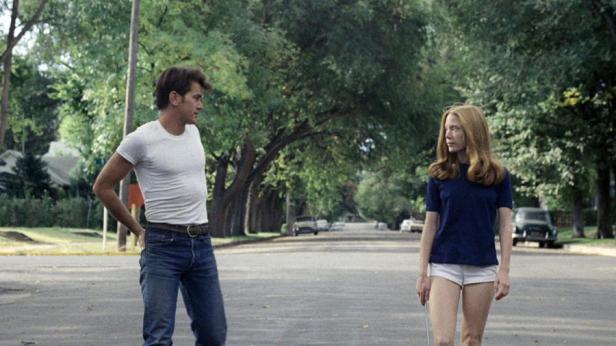
The promotional material for the film stresses that Jeremy Allen White, the actor who plays Springsteen, learned both how to sing and play like Springsteen and also how to move and gesture like him on stage. Springsteen was there for several of his performances and the pair appeared together on ‘The Graham Norton Show’ in the UK. It must have been difficult for White but I was very impressed with his all round performance. The narrative begins with the final concert of ‘The River Tour’ at which point an exhausted Springsteen returned to New Jersey and rented a house in the woods a little way outside his home town. As he tries to make sense of everything that has happened since he began to sell out venues at home and in Europe, director Scott Cooper flashes back to 1957 to find the young Bruce sent to drag his father (a knockout Stephen Graham performance) out of a bar. These memories and a TV broadcast of Terrence Malick’s Badlands (US 1973) trigger the writing of the first song of the ‘Nebraska’ period. The challenge for Cooper is to make what is an intensely ‘interior’ narrative into something more than watching Springsteen strum a few chords and write a few lines. A second film-watching memory combines film-watching and his father’s actions in taking young Bruce to see Night of the Hunter (US 1955), a film which in the UK was certificated ‘X’ and was not perhaps the best choice for an 8 year-old? This whole central sequence works for me but I can see that for many mainstream audiences it could be a real ‘turn off’ and I’ve read some comments of “boring”.
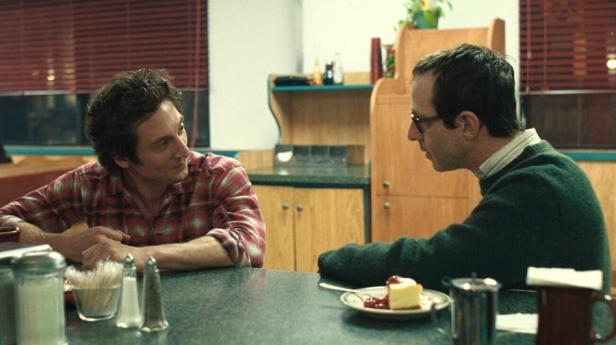
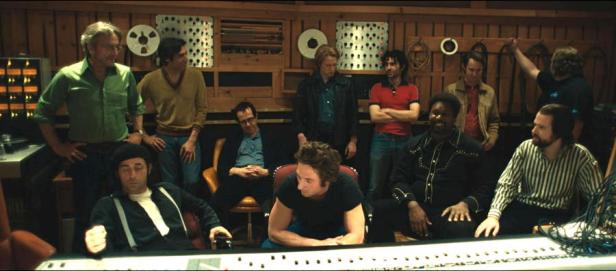
It’s worth considering the director Scott Cooper, who seems to have made relatively few films as actor, writer or director. I’ve seen only two of his directorial efforts, Crazy Heart (US 2009) for which Jeff Bridges won the Best Actor Oscar as an aging country music star and Hostiles (US 2017) an intriguing late Western, both of which I liked but I questioned their status as mainstream movies. Looking back now at what I wrote about them I see that it chimes with what I think about the Springsteen film. Cooper wrote the screenplay for this new film based on the book by Warren Zanes, Deliver Me From Nowhere. The film was photographed by Masanobu Takayanagi and presented in ‘Scope framings. Takayanagi also shot Hostiles. The other major acting role in the film is taken by Jeremy Strong as John Landau who does well in quite a difficult role in the sense that he has to be a calming presence as Springsteen’s manager and negotiator with the record label CBS. In fact the whole cast is very good including Gaby Hoffman as Bruce’s mother, Matthew Pellicano Jr. as the young Bruce in the flashbacks and Paul Walter Hauser as the guitar engineer who is the main visitor to the house in the woods.
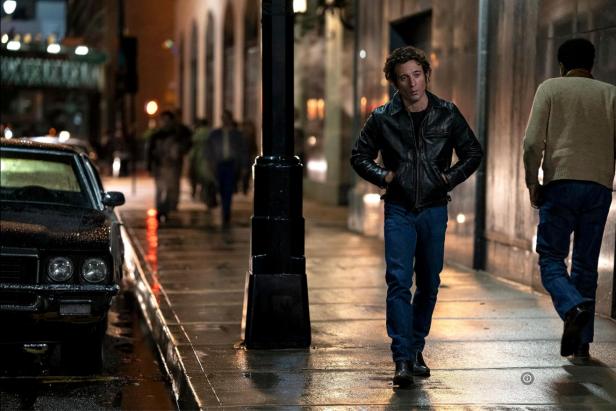
The best thing I’ve read about the film is a piece by Richard Newby in The Hollywood Reporter. He knows more about Scott Cooper than I do and analyses Cooper’s intention to avoid a ‘crowd-pleasing music biopic’ and to focus on the creative struggle to write songs triggered by the memory of childhood and the realisation that what had been achieved over the previous ten years or so was not quite what Springsteen wanted. Newby picks out the moment when Springsteen turns off his car radio which is playing ‘Hungry Heart’ from ‘The River’ and also observes that Springsteen can’t carry through the romance with Odessa because he feels she deserves something better than what he can offer her at this point in his life. It’s worth remembering that Springsteen is in his early thirties in this narrative, rather late perhaps to cope with some of the issues which disturb him and the film deals with his resulting depression. I should warn you that this leads to a very dark place for Springsteen who is helped to overcome his problems by Landau and a psychiatrist. We are dealing with an art film (though the subject is familiar as that of a struggling artist) whereas many audiences will have been expecting music performances like the earlier and later Springsteen concerts. I read Newby’s piece on MSN accompanied by 20-odd negative comments, mainly by Trump supporters slagging him off for criticising MAGA. How representative are they of the current American cinema audience? I don’t know but I will say that I wouldn’t have gone to see this film on an IMAX screen. It’s too intimate. Two last thoughts. Stephen Graham is immense in this film. He has only a few lines but his physical presence is astounding. I was very moved by parts of the film and in particular when ‘The Last Mile of the Way’ by Sam Cooke and the Soul Stirrers is played. Not enough has been said about Springsteen’s trawl through various forms of American roots music to find the ideas he wanted to explore. Here’s a trailer that is actually pretty good at introducing the story:
 itp Global Film