

Released in the UK in February 2024 soon after its US release in December 2023 this is an African American film that I wanted to see but it didn’t seem to last long on local cinema screens. It’s just been on BBC iPlayer but leaves today. A release from MGM-Amazon Studios via Curzon it opened well on 188 screens but fell 45% on the second weekend despite increasing the number of screens to 194, just hanging on in the Top 15 to make nearly £1 million. After that I don’t have any data. I mention these details because distribution of African American films that don’t easily fit mainstream genre categories has always been difficult in the UK. Amazon does seem to be a bit more flexible than other streamers when it comes to cinema releases so I’m sorry I missed the cinema release for what is a great début film from Cord Jefferson as a screenwriter turned director.

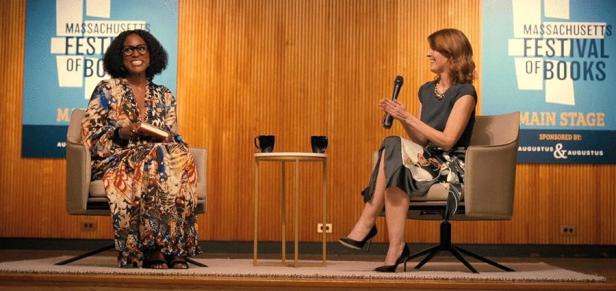
American Fiction is a good title for an adaptation of the novel Erasure by Percival Everett. The title has a double meaning . The narrative deals with a novelist writing ‘literary fiction’ but it also points to the current debates about questions around identity and the distinction between fiction and non-fiction as well as who writes and for whom they write. The central character is Thelonious Ellison (Jeffrey Wright) who has the inevitable nickname of ‘Monk’ or ‘Monkie’ after the jazz great. Monk is a literature teacher in a college in California who has run into a problem with a white student who won’t accept that it’s OK to use the ‘N’ word when studying particular literary works like a well-known short story by Flannery O’Connor published in a 1955 collection. The college dithers about backing him and the principal suggests he takes a break from teaching. Monk has another ‘difficult’ book that his agent is attempting to promote to publishers and he’s on his way back to Boston where he grew up in his family home. It’s a family of doctors but his father has died and his sister works in family planning and is now being threatened by anti-abortionists. Meanwhile his brother is a plastic surgeon in California having finally ‘come out of the closet’. Monk’s reason for being in Boston is a book festival where he comes across a young black female writer Sintara Golden (Isa Rae) who is riding high with her first book ‘We’s Lives in Da Ghetto’. This, Monk imagines, is just the kind of book that he hates – a wallowing in all the clichés of working-class black lives that makes for a ‘good read’ for white folks. Sintara is certainly wowing the festival audience and Monk’s agent is already hinting he might consider a more clearly ‘Black’ book.
The final part of the opening of the narrative is that two family tragedies mean Monk stays in the family’s summer house on the coast and he meets Coraline who lives across the street. With his family responsibilities weighing him down and the words of his agent in his head as well as what he has learned about Sintara, Monk sits down to write what he thinks is a good joke – a book titled ‘My Pafology’ under the the name ‘Stagg R. Leigh’ and yes, you’ve guessed that the first publisher who sees the text offers the agent $750,000 for this new ‘Black’ book. I won’t spoil any more of the plot but it’s clear that Monk doesn’t know what to do about this. Should he accept the advance or should he disown what he intended as a joke? In the meantime he is part of a family melodrama. There are pressing decisions to make including deciding how to proceed in a relationship with Coraline.


I enjoyed this film and it reminded me of Spike Lee’s Bamboozled (US 2000) which has a similar theme although it refers to a different cultural context. Lee’s film is a more striking satire but then its target is the lasting impact of racism in the United States dating from the aftermath of the Civil War and the development of Jim Crow and the concept of minstrelsy. American Fiction is not as directly concerned with racism and Monk himself says he doesn’t believe in the concept of ‘race’ (but as his agent says, “everybody else does”). However both films have the same white characters in positions of power who want to “give the people what they want” in the form of popular black stories/entertainment. I confess that as an aged white European I appreciate American Fiction with a sense of gratitude in that it enables me to engage with aspects of African American culture without being alienated by the language of hip hop and rap music. This isn’t a criticism just a recognition that popular music forms have moved on and I haven’t. I can see that the problem is mine not the culture’s and that in contemporary cinema there is a wide range of African American narratives to choose from but in the UK film distributors still haven’t worked out how to release African American cinema. Perhaps I should try Percival Everett’s book?

American Fiction seems to have been well reviewed in the US but I think there have been some sniffy reviews elsewhere. The Sight and Sound Review by Alex Ramon and the Guardian review by Radheyan Simonpillai are both interesting with slightly different takes on the family melodrama aspect of the film. I think I’m with the latter in wanting a bit more of this but I think it would have made a longer, if richer, narrative and might have lost some of the satirical edge. The key I think is the presentation of Monk as a bit of a poseur. I think this is something that Jefferson and Wright achieve to make the satire work. Overall, I think the performances, writing and direction work very well and I recommend this highly. It will presumably be available on Amazon for some time. There is an interesting interview with the director on the Curzon website but I couldn’t find the film there. It does look though that Curzon has some kind of long-term deal with Curzon which unfortunately doesn’t have a cinema near me.
 itp Global Film
I did find this on general release probably about a year ago, but forget where. It was enjoyable but a bit meh I think because of the one-note grump of Thelonious Monk. It came to life when Sterling K Brown hopped on board as the brother, an actor whose star is in the ascendant now. Generally well produced but something didn’t quite click for me which is hopefully the reason why I cannot remember where I saw it, rather than further cognitive decline.
LikeLike
I can see that Monk might be an annoying character but I think he is presented as a grump who is arguably correct in terms of how things ought to be but also rather complacent about his own position. I personally think this makes the satire more effective than it would be if he was portrayed as a more likeable character.
LikeLike