

This major archive film festival runs from June 21st until June 29th in the city of Bologna. There are six cinema auditoriums plus open-air spaces. Over the week, those with sufficient stamina, can enjoy a selection of over four hundred movies; a substantial number on original 35mm prints. These include silent movies with live musical accompaniment., The biggest difficulty is deciding from the large variety of titles from world cinema from its earliest days until the recent past.
The presentation from the early years of cinema has reached 1905. A series of programmes, mainly on 35mm safety prints, includes major figures like Alice Guy, Georges Méliès, Albert Capellani and Louis Feuillade. It includes my favourite events which are the open-air screenings in the Piazzetta Pasolini presented from a carbon-arc projector. And this year we are also promised the experience of hand-cranked projection.
One Hundred Years Ago: 1925 includes two Soviet classics, Bronenosets Potyomkin and Stachka / Strike. And there are other famous and less well-known titles; an important one is the African-American film-maker Oscar Micheaux’s Body and Soul with a powerful performance by Paul Robeson.
Strike is one of the titles screening in the Piazza Maggiore, late evening screenings attended by several thousand people in the cities main square. Another title is the Indian classic Sholay (1975) in a director’s cut. As last year there is a screenings in 70mm: this year the director’s cut of Close Encounters of the Third Kind.
The focus on film-makers offers Sorrow and Passion, the Japanese director Naruse Mikio. A contemporary of Mizoguchi and Ozu, it took longer for his reputation to develop in the West. The programme offers his films between 1935 and 1939, early sound: all on 35mm, There is Wife! be Like a Rose ! / Tsuma yo bara no yô ni ; under the title Kimiko it was a rare film distributed in the West in the 1930s.

Lewis Milestone: Of Wars and Men was a Hollywood director whose career spanned the silent era up until the widescreen era of the 1950s. His classic All Quiet on the Western Front screens in the silent version. But there are other films set in the home USA like Hallelujah I’m a Bum (1933) starring Al Jolson in a depression movie.
Katharine Hepburn: Feminist, Acrobat and Lover the major Hollywood star with the most Academy nominations and Awards for Best Actress. There are her early dramas like Alice Adams (1935), set in ‘small-town America’ playing opposite Fred MacMurray. And her classic screwball comedies like Bringing up Baby (1938) opposite Cary Grant, but both upstaged by Asta the dog and Nissa the leopard.
Norden Noir features titles from Denmark, Norway and Sweden. This offers movies rarely seen outside Scandinavia. There have been some fine contemporary crime dramas from the region so it will be interesting to see how they handle the genre noted for its atmospheric low-key lighting. Death is a Caress / Døden er et kjærtegn (1949) was the first Norwegian film directed by a woman, Edith Calmar.
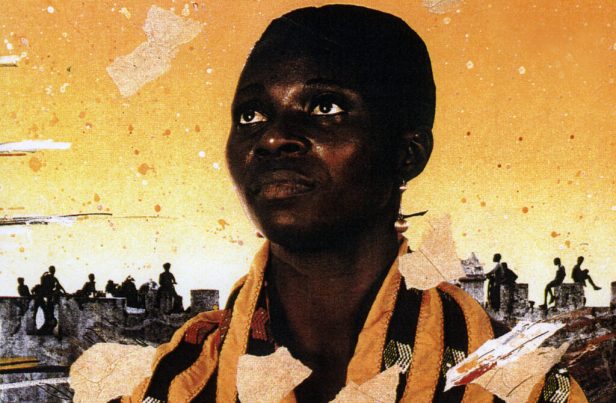
Cinema Libero explores the idea of world cinema as an ‘transnational space’. There are titles from Africa including Flora Gomez’s Mortu Nega (1988) from Guinea Bissau: Postchi / The Postman (1971), directed by Dariush Mehrjui and part of the Iranian new wave: and the Columbian La Paga (1962) directed by Ciro Durán; thought lost and now restored, a low-budget and uneven study of working class travails.
There lots more events, including other documentaries, presentations and discussions on featured films and film-makers and interviews with the latter. There is a book fair at the Cineteca and a bar/cafe in the Piazzetta and [for the hot weather] an ice cream stand. The city has a fine cuisine with many restaurants; and many streets have arcades, pleasant in the summer heat. And there are a number of galleries and museums worth visiting and some very pleasant parks. More than enough for a week.
 itp Global Film