
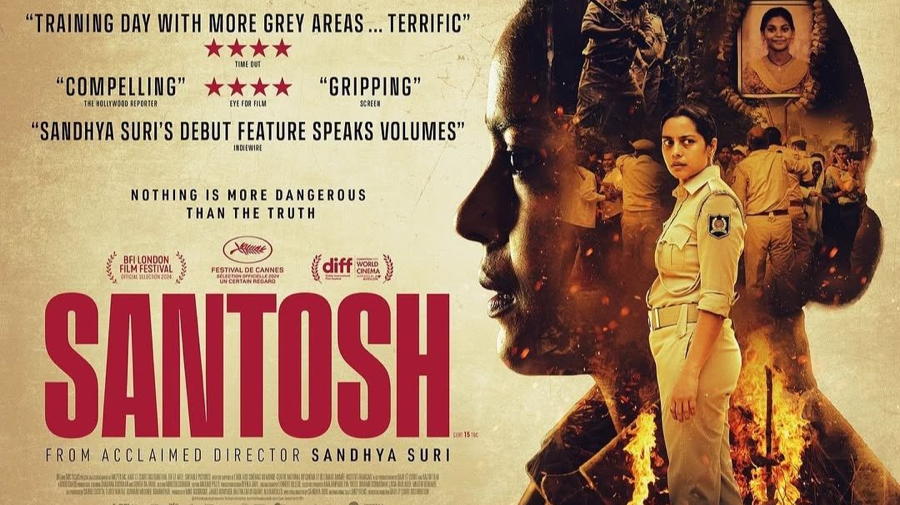
Santosh is a ‘diaspora film’ in which a British Indian, Sandhya Suri, presents a fierce statement about the policing culture in small town/rural North India. In doing so she joins the distinguished company of directors such as Mira Nair and Deepa Mehta or more precisely perhaps, Asif Kapadia in making films set in India but with North American and/or European producers. She was born and educated in the UK as the daughter of Indian immigrants to the UK. Her father set up as a GP in North East England and acquired cameras and sound recording equipment which was used to record family history. His daughter later used the family archive as part of her 2005 documentary I for India (UK-Germany) reflecting on the Indian immigrant experience in the UK. She trained at the UK National Film and TV School and has also worked in Japan. In 2018 she released Around India with a Movie Camera, a documentary constructed from clips of archive film detailing Indian life under the British Raj. In the same year her first fiction short, The Field (UK-France-India) was released, presenting a drama about a woman in Haryana who has “secret romantic interludes with her lover in the fields at night” (from the Wikipedia description). What is notable from this long period over which these three films were produced is Suri’s involvement with partners in France and Germany as well as the Sundance Institute Director’s Lab which accepted her in 2016. It has been a long period of preparation for a feature film début but one which has been recognised with awards and support and in 2024 Santosh was screened in the ‘Un certain regard’ strand at Cannes. It was also selected as the UK entry for Best International Feature at the 2025 Academy Awards.

Santosh focuses on Santosh Saini (Shahana Goswami). The opening sequence is a little difficult to follow, I think, or perhaps that’s just me as I was trying hard to work out what kind of ‘Indian film’ it was going to turn out to be. Santosh is presented as somehow a disappointment to the parents of her husband. We don’t have it spelled out until she meets a police official who interviews her as the widow of a police constable killed by a stone thrown during a protest riot. Santosh realises that apart from a widow’s pension her future looks desperate as she will lose her home. However, there is a scheme which allows a widow to take over the police job of her deceased husband. We learn very little about Santosh’s background but soon we are introduced to the new police constable and she turns out to be an impressive looking officer. But how will she cope?
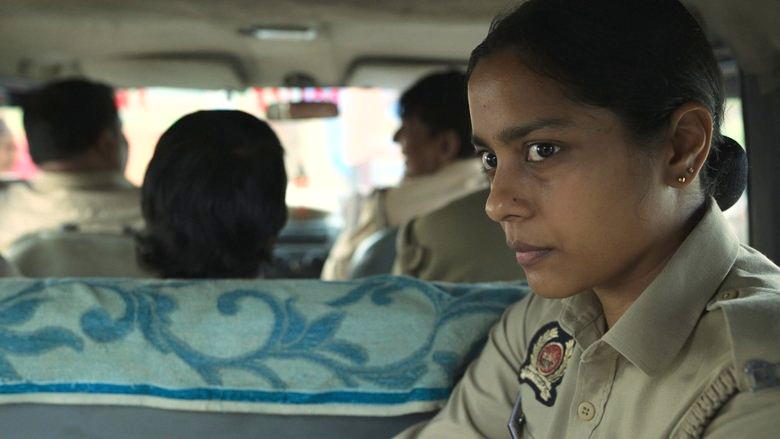
Police brutality is an all too familiar element of many Indian films and in this case the producers decided to make the setting fictional so that they could benefit from the support of the Lucknow authorities. The film was shot over a period of 42 days in rural villages and small towns in Uttar Pradesh but all locations are fictional. Despite the fictional setting, the film has run into trouble in India. Although the initial script was accepted by the Indian censor and classification board (CBFC) the finished film has been refused a certificate unless a long list of cuts are made – a condition that would destroy the coherence of the film and are completely unacceptable to Sandhya Suri and her producers. She argues that everything shown in the film has been seen in Indian cinema before. There are two suggested reasons why the film has been banned. One is the realist detail of scenes deriving from Suri’s documentary background and the other is the sense that in the story, there are no heroes and that all the participants are to some extent morally compromised by their actions. The inspiration for the story idea came from the 2012 Delhi gang rape case, widely known as the Nirbhaya case. That case involved the brutal rape of a woman by six men on a bus and made both national and international news headlines.
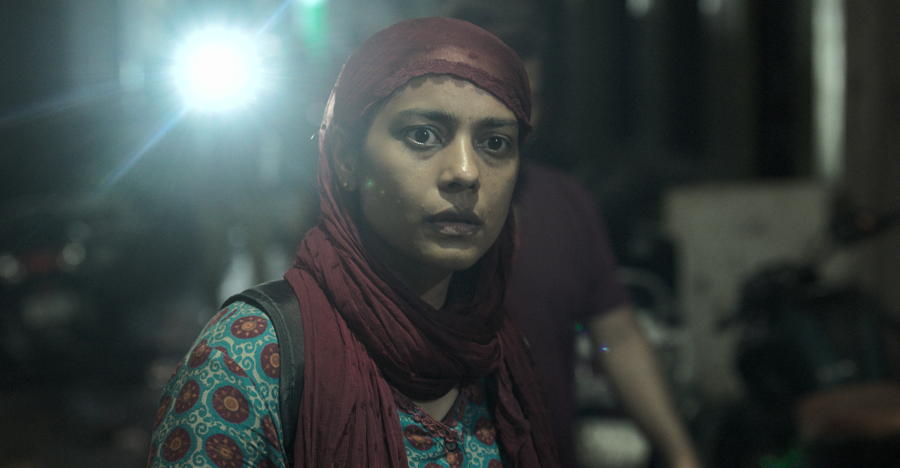
In her first days as a police officer Santosh experiences the usual ‘initiation’ into police culture (what in the UK is known as ‘canteen culture’). She meets the Inspector who leads her unit and who is a significant figure in the local villages. He is steeped in the police culture and tends to ignore the complaints of many local people. Santosh herself meets a cart driver who complains about the fact that his teenage daughter has been missing for two days and nobody seems to care. Santosh will eventually discover that the girl has been raped and killed and deposited in the village well. I don’t intend to describe the plot in detail but I need to pick out certain features. First there is clear anger among many people about police behaviour and Santosh’s husband was killed in a nearby small town during one protest and Santosh herself will have to visit the town. Second, the village where the girl was killed is a Dalit village and it appears that the land is owned by an upper caste family with considerable wealth and influence. The case will also involve a Muslim community. The triggers for social conflict are clearly identified – misogyny, caste, social class and religion.
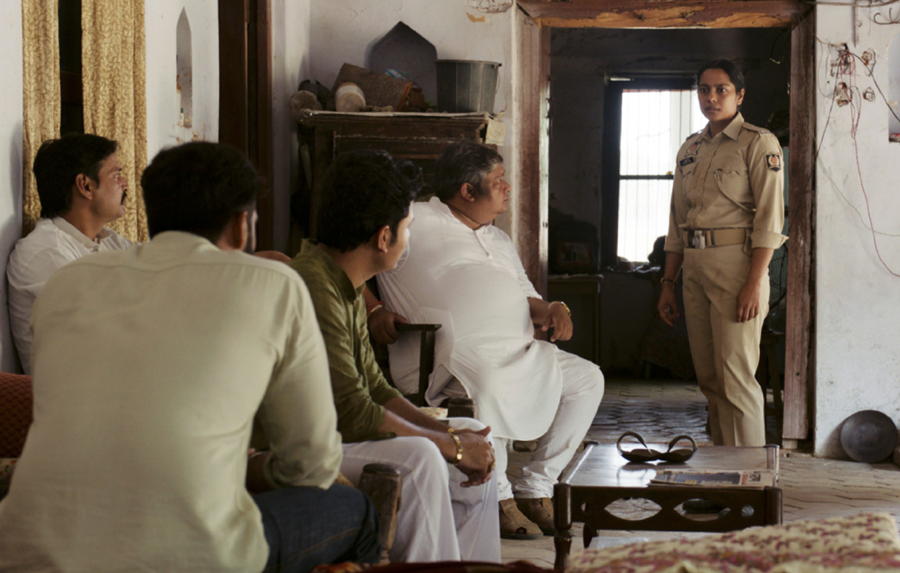
Suri is certainly justified in arguing that all the elements have been seen before. I was reminded of a couple of films discussed on this blog. Article 15 (India 2019) is an Indian Independent film which has a very similar mix of elements, but a more commercial style. ‘Article 15’ refers to the section of the Indian Constitution of 1950 which lays down equality in the eyes of the law for all Indian citizens irrespective of religion, ethnicity, caste, gender or place of birth. It has proved very difficult to enforce. The Incessant Fear of Rape (India 2019) is another Indian Independent film inspired by the 2012 Delhi rape case. However, this film focuses on the actions of women who decide to fight back against rapists. It is in one sense very different to Santosh, but it does share one element. Santosh is surprised one day to discover that the male Inspector has been transferred and replaced by a woman, Geeta Sharma (Sunita Rajwar). Inspector Sharma is quick to recognise the intelligence and commitment of Santosh and soon the two are working together closely. But Sharma is a fierce opponent of rapists in particular and isn’t too bothered by rules and regulations. There is also something equating to sexual tension in her dealings with Santosh. What is important is that Sharma is likely to find the rapist, using the results of the investigation conducted by Santosh – but that Santosh is also likely to find herself corrupted by Sharma’s methods.
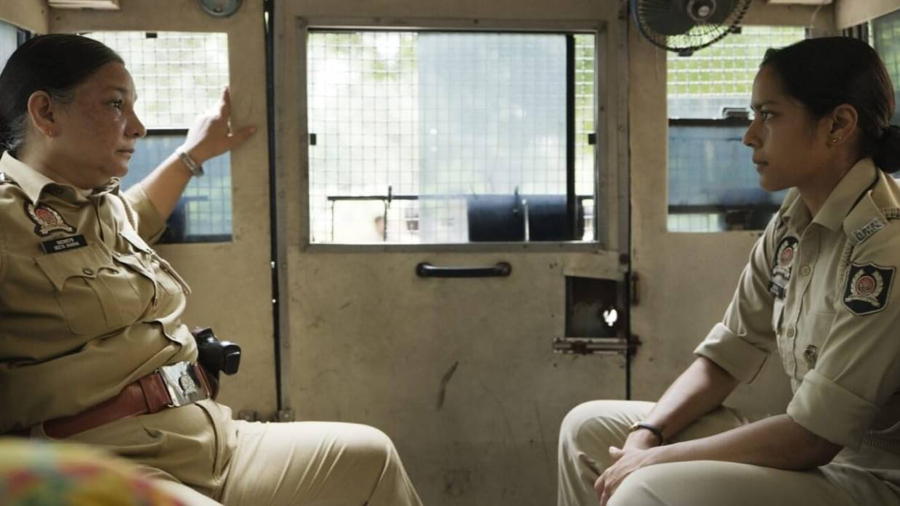
This is an excellent film. It’s quite long (128 minutes) and for much of the time the pacing is quite slow. There is some diegetic music – Sharma is quite fond of loud popular music. I think perhaps the pacing is similar to European police procedurals. I was gripped by the performances and the narrative and after the opening few minutes I never lost my complete engagement with the film. Sight and Sound April 2025, carries an interview with Suri and a review of the film. In the interview she discusses her documentary background and attention to detail. The detail is impressive and there were a couple of actions I didn’t fully understand because it is not my culture. The audience in the cinema didn’t as far as I could see include any South Asians. I am intrigued as to how the corruption and police brutality might be viewed by British South Asians. I am very aware of it in earlier Indian films and as Suri acknowledges, Bollywood popular films do explore that corruption and brutality but often soften it by providing a hero figure who rights the wrongs. I was not surprised that Suri mentions Bong Joon-ho’s Memories of Murder (South Korea 2003) and Tarik Saleh’s The Nile Incident (Sweden-Denmark-Germany 2017) as films she watched alongside some of the Hollywood 1970s crime films. If Suri’s film has one flaw it might be that, as Santosh, Shahana Goswami is just too good. Her performance is riveting. I realise now that I have seen her in earlier films and she is a commanding figure. The narrative of Santosh shows her drawn into the police culture and guilty of some of the behaviour we think she would condemn. Could she rise above it and rediscover her moral sense? The narrative resolution is intriguing. Santosh is still in some UK cinemas. With BBC and BFI support it will probably eventually appear on BFI Player or BBC iPlayer. Please try to see it. I haven’t seen a better British film or Indian film for some time.
 itp Global Film