

This is an annual event and the good news this year is that for the first time since 2010 titles from the programme will be screening in Leeds at the Hyde Park Picture House. In all the programme will be visiting 33 venues across Britain. There are 24 contemporary titles, released since 2018 and there are two ‘classics’ from the last century. The programme offers a variety of genres and themes whilst the title,
Am I Right? Justice, Justification and Judgement in Japanese Cinema
suggests a strong social element. The Programme web pages provide links to all the participating venues, with lists of the titles screening there and links to individual title pages.
The Hyde Park is screening four titles from mid-February to early March. One of these is a ‘classic’, though it seems that, unlike in earlier years, we will not enjoy a 35mm print.

Carmen Comes Home (Karumen kokyô ni kaeru 1951) is a comedy starring Takemine Hideko. Okin has left her rural home town in Nagano prefecture to work in Tokyo as a stripper, stage name Lily Carmen. She returns to the town with a friend where the local people are both fascinated and scandalised by this entertainer from the capital. Takemine Hideko was one of the major stars of Japanese cinema in a long career from late silent period (1929) until the 1970s. She worked with many of Japan’s most celebrated film-makers. This film was directed by Kinoshita Keisuke, whose very fine Snow Flurry was the classic film in the 2024 programme. Carmen was the first film to be made in colour in Japan, in Fujicolor and academy ratio. It was produced at the Shochiku Studio and the digital restoration was completed in 2012.
The other titles at the Picture House are all recent. Ghost Cat Anzu / Bakeneko Anzu-chan is a colour animation released in 2024. Anzu of the title is a Ghost Cat or Bakeneko; a supernatural entity found in a number of Japanese folk tales. In this quirky drama Anzu takes eleven-year-old Karin on a magical journey.
In the Wake (Mamorarenakatta mono-tachi e 2021) is a social thriller with serial killings but set in the city of Sendai (on the east coast of central Japan), struck in 2011 by the earthquake and subsequent tsunami, raising the wider problems of life there. Sakura (Kuchinai Sakura 2024) is another type of policier, here an investigation delves into the murky world of police and the national intelligence agency.
Oddly, it appears that none of them will be screening Bradford at the Media Museum. The Sheffield Showroom is screening nine titles, seven not in the Picture House programme.
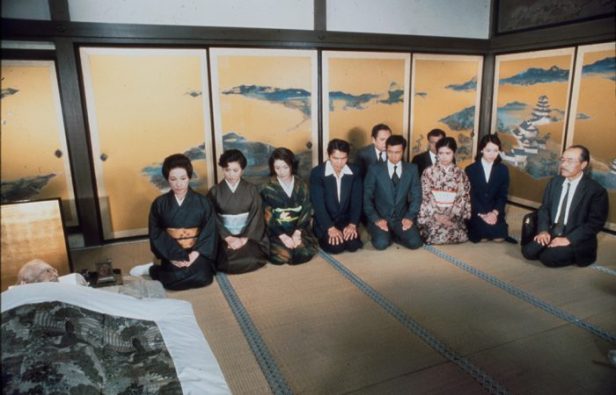
This will include the other classic in the Foundation programme, The Inugami Family (Inugami-ke no ichizoku 1976). The film was directed by Ichikawa Kon, a prolific film-maker whose best known works in the west are The Burmese Harp / Biruma no tategoto (1956, and remade in 1985) and An Actor’s Revenge (Yukinojô henge 1963). This film is reckoned to be an example of Japanese noir. The titular family come together for the will of the rich deceased family patriarch. The beneficiaries of the will and its surprising requirements lead to family dissensions. Then a murder occurs and a detective has to come in and solve the crime. Surprises abound right through the movie. It runs over two hours in colour and an unusual widescreen format.
If the programme is accessible for readers it is recommended. It would be something of a challenge to see all the titles. But in past years the programmes have offered a rich and varied menu from one of the world’s most interesting and rewarding cinemas.
 itp Global Film